
原代背根神经节神经元中核因子-κB通路对代谢型谷氨酸受体2/3表达的转录调控:L-乙酰肉碱镇痛作用的一种可能机制。
Transcriptional regulation of metabotropic glutamate receptor 2/3 expression by the NF-kappaB pathway in primary dorsal root ganglia neurons: a possible mechanism for the analgesic effect of L-acetylcarnitine.
作者信息
Chiechio Santina, Copani Agata, De Petris Laura, Morales Maria Elena P, Nicoletti Ferdinando, Gereau Robert W
机构信息
Washington University Pain Center and Department of Anesthesiology, Washington University School of Medicine, St Louis, MO, USA.
出版信息
Mol Pain. 2006 Jun 9;2:20. doi: 10.1186/1744-8069-2-20.
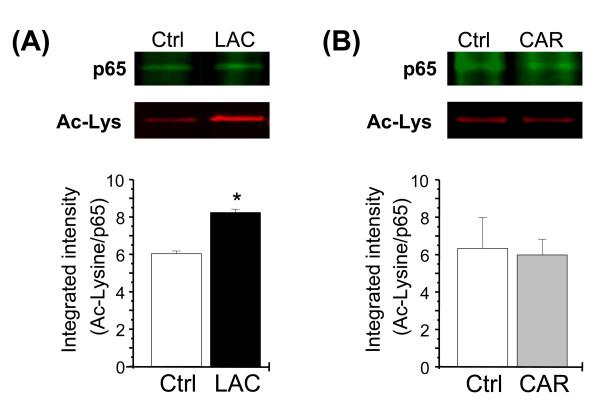
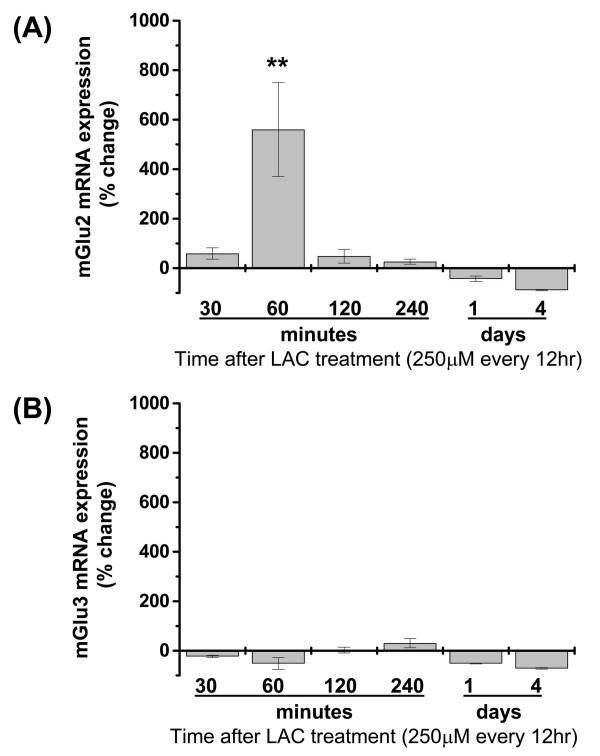
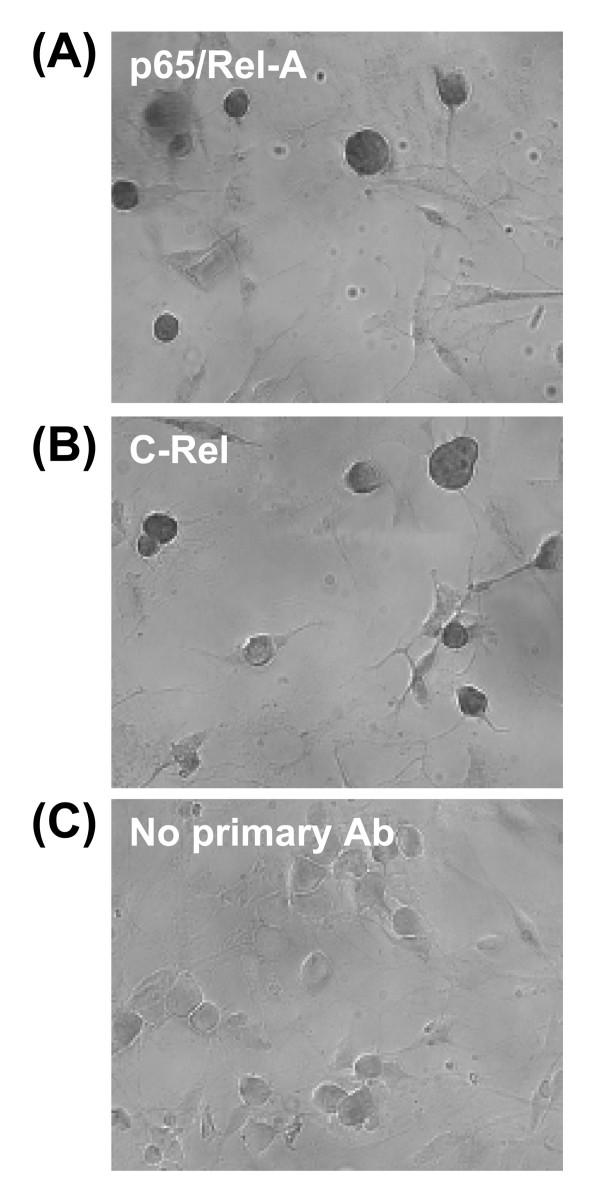
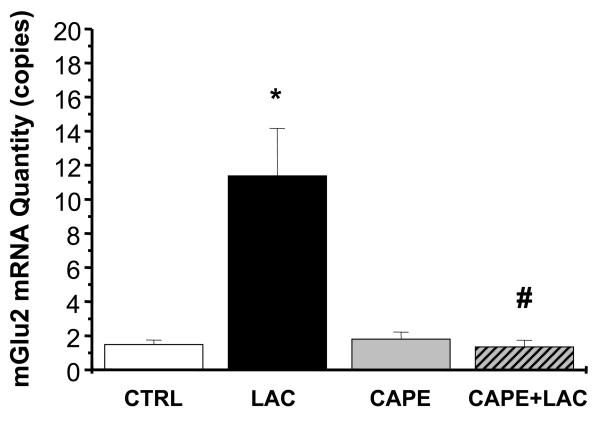
L-acetylcarnitine (LAC), a drug utilized for the treatment of neuropathic pain in humans, has been shown to induce analgesia in rodents by up-regulating the expression of metabotropic glutamate receptor 2 (mGlu2) in dorsal root ganglia (DRG). We now report that LAC-induced upregulation of mGlu2 expression in DRG cultures involves transcriptional activation mediated by nuclear factor-kappaB (NF-kappaB). A single application of LAC (250 muM) to DRG cultures induced a transient increase in mGlu2 mRNA, which was observable after 1 hour and was no longer detectable after 1 to 4 days. In contrast, LAC treatment had no effect on mGlu3 mRNA expression. Pharmacological inhibition of NF-kappaB binding to DNA by caffeic acid phenethyl ester (CAPE) (2.5 microg/ml for 30 minutes) reduced the constitutive expression of mGlu2 and mGlu3 mRNA after 1-4 days and reduced the constitutive expression of mGlu2/3 protein at 4 days. This evidence combined with the expression of p65/RelA and c-Rel in DRG neurons indicated that expression of mGlu2 and mGlu3 is endogenously regulated by the NF-kappaB family of transcription factors. Consistent with this idea, the transient increase in mGlu2 mRNA induced by LAC after 1 hour was completely suppressed by CAPE. Furthermore, LAC induced an increase in the acetylation of p65/RelA, a process that enhances the transcriptional activity of p65/RelA. These results are consistent with the hypothesis that LAC selectively induces the expression of mGlu2 by acting as a donor of acetyl groups, thus enhancing the activity of the NF-kappaB family of transcription factors. Accordingly, we show that carnitine, which has no effect on pain thresholds, had no effect on p65/RelA acetylation and did not enhance mGlu2 expression. Taken together, these results demonstrate that expression of mGlu2 and mGlu3 mRNA is regulated by the NF-kappaB transcriptional machinery, and that agents that increase acetylation and activation of NF-kappaB transcription factors might induce analgesia via upregulation of mGlu2 in DRG neurons.
L-乙酰肉碱(LAC)是一种用于治疗人类神经性疼痛的药物,已被证明可通过上调背根神经节(DRG)中代谢型谷氨酸受体2(mGlu2)的表达在啮齿动物中诱导镇痛作用。我们现在报告,LAC诱导DRG培养物中mGlu2表达上调涉及由核因子-κB(NF-κB)介导的转录激活。向DRG培养物单次应用LAC(250μM)可诱导mGlu2 mRNA短暂增加,1小时后可观察到,1至4天后不再可检测到。相比之下,LAC处理对mGlu3 mRNA表达没有影响。咖啡酸苯乙酯(CAPE)(2.5μg/ml,处理30分钟)对NF-κB与DNA结合的药理学抑制作用在1至4天后降低了mGlu2和mGlu3 mRNA的组成性表达,并在4天时降低了mGlu2/3蛋白的组成性表达。这一证据与p65/RelA和c-Rel在DRG神经元中的表达相结合,表明mGlu2和mGlu3的表达受NF-κB转录因子家族的内源性调节。与此观点一致,CAPE完全抑制了LAC在1小时后诱导的mGlu2 mRNA的短暂增加。此外,LAC诱导p65/RelA乙酰化增加,这一过程增强了p65/RelA的转录活性。这些结果与以下假设一致,即LAC通过作为乙酰基团供体选择性诱导mGlu2的表达,从而增强NF-κB转录因子家族的活性。因此,我们表明,对疼痛阈值没有影响的肉碱对p65/RelA乙酰化没有影响,也不会增强mGlu2表达。综上所述,这些结果表明mGlu2和mGlu3 mRNA的表达受NF-κB转录机制调节,并且增加NF-κB转录因子乙酰化和激活的药物可能通过上调DRG神经元中的mGlu2诱导镇痛作用。


 Zotero 插件