
人类细胞分裂自身抗原-1表达的变化影响弓形虫的生长和发育。
Changes in the expression of human cell division autoantigen-1 influence Toxoplasma gondii growth and development.
作者信息
Radke Jay R, Donald Robert G, Eibs Amy, Jerome Maria E, Behnke Michael S, Liberator Paul, White Michael W
机构信息
Department of Veterinary Molecular Biology, Montana State University, Bozeman, Montana, USA.
出版信息
PLoS Pathog. 2006 Oct;2(10):e105. doi: 10.1371/journal.ppat.0020105.
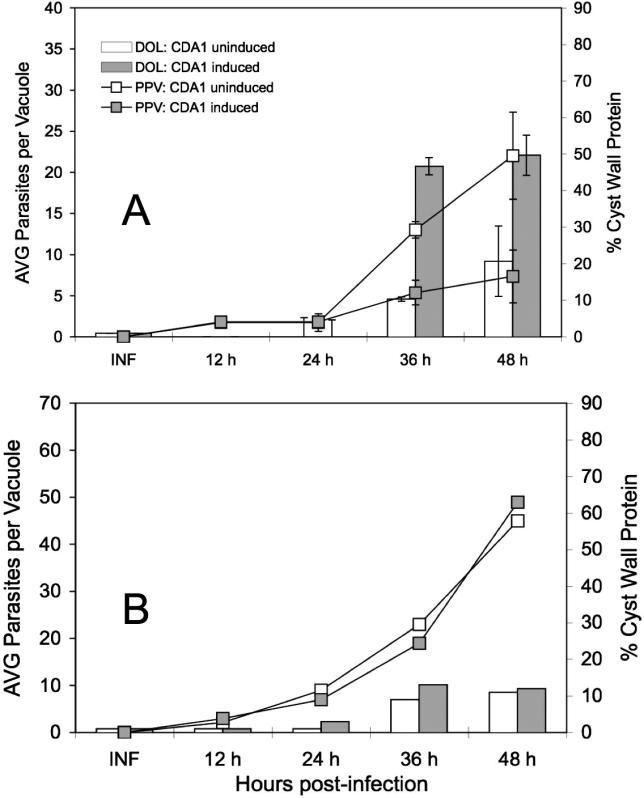
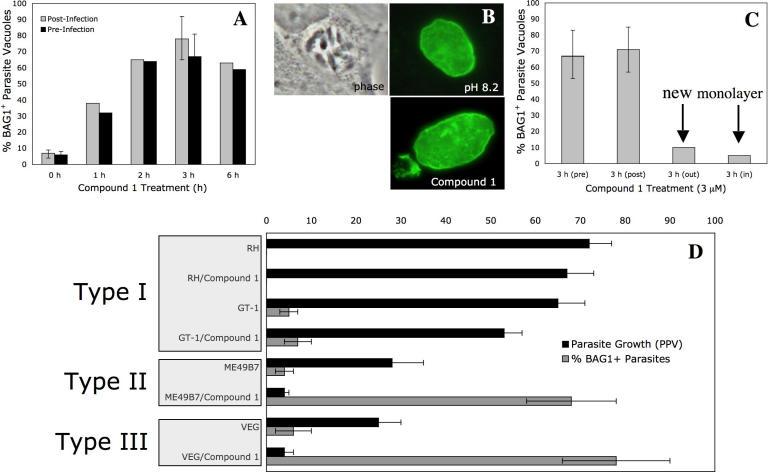
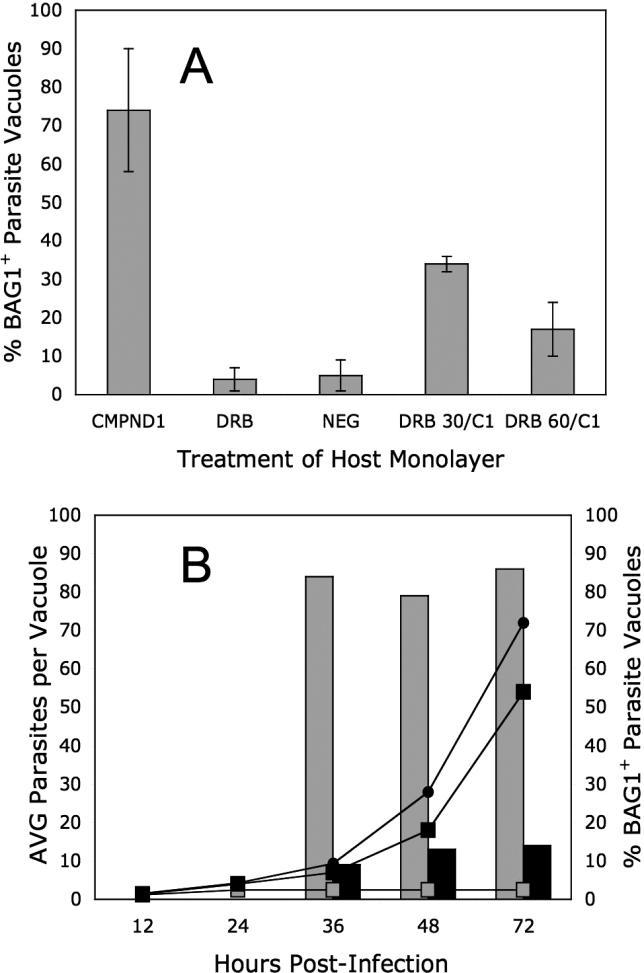
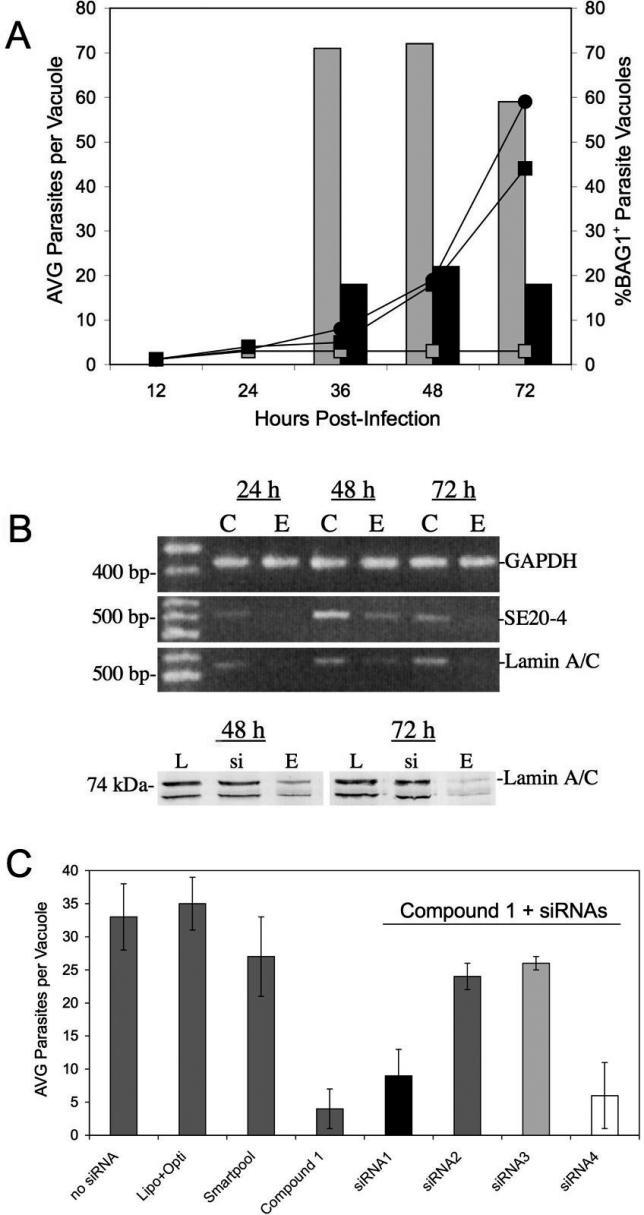
Toxoplasma is a significant opportunistic pathogen in AIDS, and bradyzoite differentiation is the critical step in the pathogenesis of chronic infection. Bradyzoite development has an apparent tropism for cells and tissues of the central nervous system, suggesting the need for a specific molecular environment in the host cell, but it is unknown whether this environment is parasite directed or the result of molecular features specific to the host cell itself. We have determined that a trisubstituted pyrrole acts directly on human and murine host cells to slow tachyzoite replication and induce bradyzoite-specific gene expression in type II and III strain parasites but not type I strains. New mRNA synthesis in the host cell was required and indicates that novel host transcripts encode signals that were able to induce parasite development. We have applied multivariate microarray analyses to identify and correlate host gene expression with specific parasite phenotypes. Human cell division autoantigen-1 (CDA1) was identified in this analysis, and small interfering RNA knockdown of this gene demonstrated that CDA1 expression causes the inhibition of parasite replication that leads subsequently to the induction of bradyzoite differentiation. Overexpression of CDA1 alone was able to slow parasite growth and induce the expression of bradyzoite-specific proteins, and thus these results demonstrate that changes in host cell transcription can directly influence the molecular environment to enable bradyzoite development. Investigation of host biochemical pathways with respect to variation in strain type response will help provide an understanding of the link(s) between the molecular environment in the host cell and parasite development.
弓形虫是艾滋病中一种重要的机会性致病原,而缓殖子分化是慢性感染发病机制中的关键步骤。缓殖子的发育对中枢神经系统的细胞和组织具有明显的嗜性,这表明宿主细胞需要特定的分子环境,但尚不清楚这种环境是由寄生虫导向的,还是宿主细胞自身特定分子特征的结果。我们已经确定,一种三取代吡咯直接作用于人和小鼠宿主细胞,以减缓速殖子的复制,并在II型和III型菌株寄生虫而非I型菌株中诱导缓殖子特异性基因表达。宿主细胞中需要新的mRNA合成,这表明新的宿主转录本编码能够诱导寄生虫发育的信号。我们应用多变量微阵列分析来鉴定宿主基因表达并将其与特定的寄生虫表型相关联。在这项分析中鉴定出了人类细胞分裂自身抗原-1(CDA1),对该基因进行小干扰RNA敲低表明,CDA1的表达会导致寄生虫复制受到抑制,随后导致缓殖子分化的诱导。单独过表达CDA1能够减缓寄生虫生长并诱导缓殖子特异性蛋白的表达,因此这些结果表明宿主细胞转录的变化可以直接影响分子环境以促进缓殖子发育。研究宿主生化途径对菌株类型反应变化的影响,将有助于理解宿主细胞分子环境与寄生虫发育之间的联系。
 Zotero 插件