
铜绿假单胞菌通过激活秀丽隐杆线虫中的DAF-2胰岛素样信号通路来抑制宿主免疫。
Pseudomonas aeruginosa suppresses host immunity by activating the DAF-2 insulin-like signaling pathway in Caenorhabditis elegans.
作者信息
Evans Eric A, Kawli Trupti, Tan Man-Wah
机构信息
Department of Genetics, Stanford University School of Medicine, Stanford, California, United States of America.
出版信息
PLoS Pathog. 2008 Oct;4(10):e1000175. doi: 10.1371/journal.ppat.1000175. Epub 2008 Oct 17.
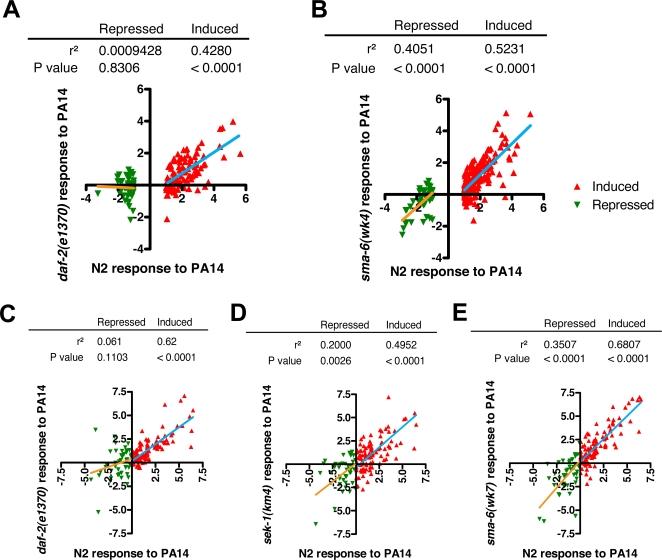
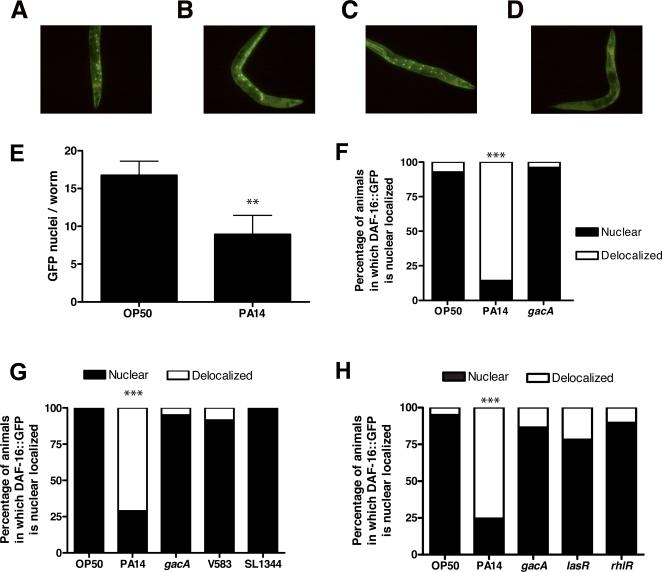
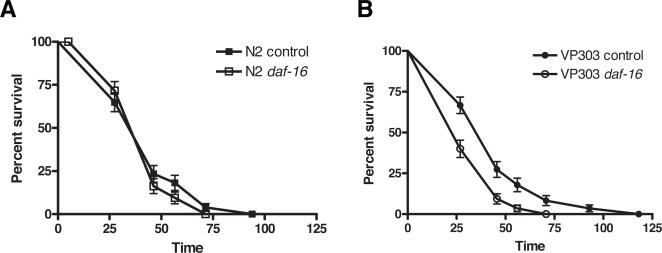
Some pathogens have evolved mechanisms to overcome host immune defenses by inhibiting host defense signaling pathways and suppressing the expression of host defense effectors. We present evidence that Pseudomonas aeruginosa is able to suppress the expression of a subset of immune defense genes in the animal host Caenorhabditis elegans by activating the DAF-2/DAF-16 insulin-like signaling pathway. The DAF-2/DAF-16 pathway is important for the regulation of many aspects of organismal physiology, including metabolism, stress response, longevity, and immune function. We show that intestinal expression of DAF-16 is required for resistance to P. aeruginosa and that the suppression of immune defense genes is dependent on the insulin-like receptor DAF-2 and the FOXO transcription factor DAF-16. By visualizing the subcellular localization of DAF-16::GFP fusion protein in live animals during infection, we show that P. aeruginosa-mediated downregulation of a subset of immune genes is associated with the ability to translocate DAF-16 from the nuclei of intestinal cells. Suppression of DAF-16 is mediated by an insulin-like peptide, INS-7, which functions upstream of DAF-2. Both the inhibition of DAF-16 and downregulation of DAF-16-regulated genes, such as thn-2, lys-7, and spp-1, require the P. aeruginosa two-component response regulator GacA and the quorum-sensing regulators LasR and RhlR and are not observed during infection with Salmonella typhimurium or Enterococcus faecalis. Our results reveal a new mechanism by which P. aeruginosa suppresses host immune defense.
一些病原体已经进化出通过抑制宿主防御信号通路和抑制宿主防御效应器的表达来克服宿主免疫防御的机制。我们提供的证据表明,铜绿假单胞菌能够通过激活DAF-2/DAF-16胰岛素样信号通路来抑制动物宿主秀丽隐杆线虫中一部分免疫防御基因的表达。DAF-2/DAF-16通路对于调节生物体生理的许多方面都很重要,包括新陈代谢、应激反应、寿命和免疫功能。我们表明,DAF-16的肠道表达是抵抗铜绿假单胞菌所必需的,并且免疫防御基因的抑制依赖于胰岛素样受体DAF-2和FOXO转录因子DAF-16。通过在感染期间观察活体动物中DAF-16::GFP融合蛋白的亚细胞定位,我们表明铜绿假单胞菌介导的一部分免疫基因的下调与将DAF-16从肠道细胞核中转运出来的能力有关。DAF-16的抑制是由一种胰岛素样肽INS-7介导的,它在DAF-2的上游起作用。DAF-16的抑制和DAF-16调节基因(如thn-2、lys-7和spp-1)的下调都需要铜绿假单胞菌的双组分反应调节因子GacA以及群体感应调节因子LasR和RhlR,而在感染鼠伤寒沙门氏菌或粪肠球菌期间未观察到这种情况。我们的结果揭示了铜绿假单胞菌抑制宿主免疫防御的一种新机制。




 Zotero 插件