
葡聚糖硫酸钠诱导的结肠炎临床和分子参数的时空分析
Temporal and spatial analysis of clinical and molecular parameters in dextran sodium sulfate induced colitis.
作者信息
Yan Yutao, Kolachala Vasantha, Dalmasso Guillaume, Nguyen Hang, Laroui Hamed, Sitaraman Shanthi V, Merlin Didier
机构信息
Division of Digestive Diseases, Department of Medicine, Emory University School of Medicine, Atlanta, GA, USA.
出版信息
PLoS One. 2009 Jun 29;4(6):e6073. doi: 10.1371/journal.pone.0006073.
BACKGROUND
Inflammatory bowel diseases (IBD), including mainly ulcerative colitis (UC) and Crohn's disease (CD), are inflammatory disorders of the gastrointestinal tract caused by an interplay of genetic and environmental factors. Murine colitis model induced by Dextran Sulfate Sodium (DSS) is an animal model of IBD that is commonly used to address the pathogenesis of IBD as well as to test efficacy of therapies. In this study we systematically analyzed clinical parameters, histological changes, intestinal barrier properties and cytokine profile during the colitic and recovery phase.
METHODS
C57BL/6 mice were administered with 3.5% of DSS in drinking water for various times. Clinical and histological features were determined using standard criteria. Myeloperoxidase (MPO) activity, transepithelial permeability and proinflammatory mediators were determined in whole colon or proximal and distal parts of colon.
RESULTS
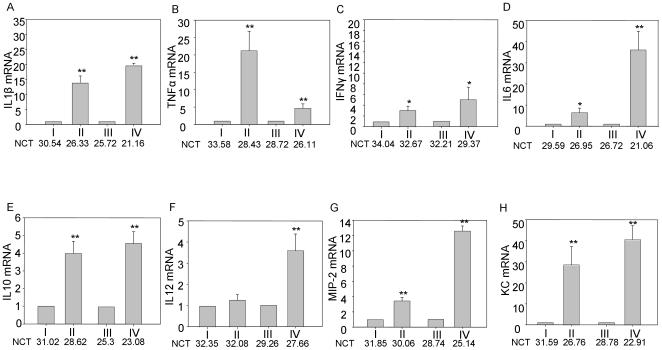
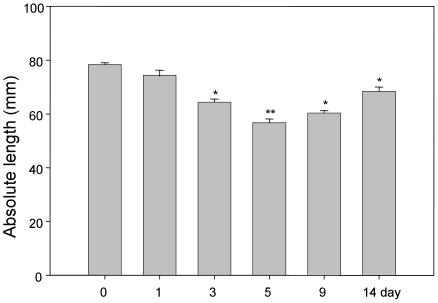
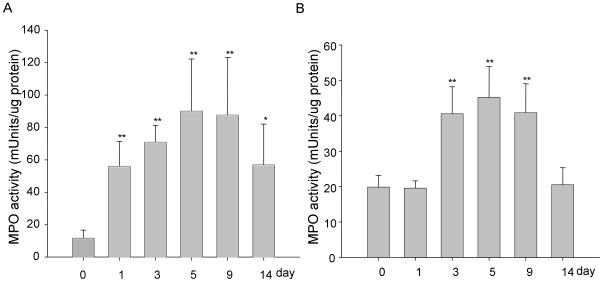
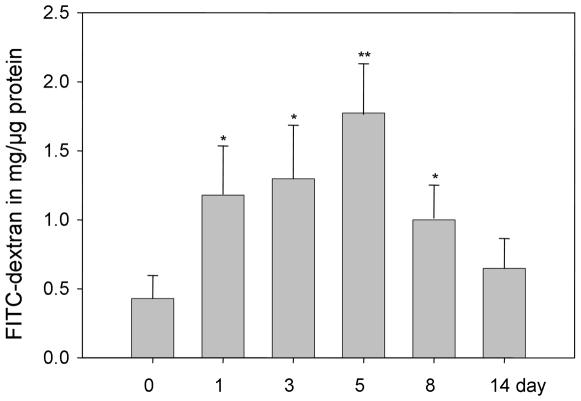
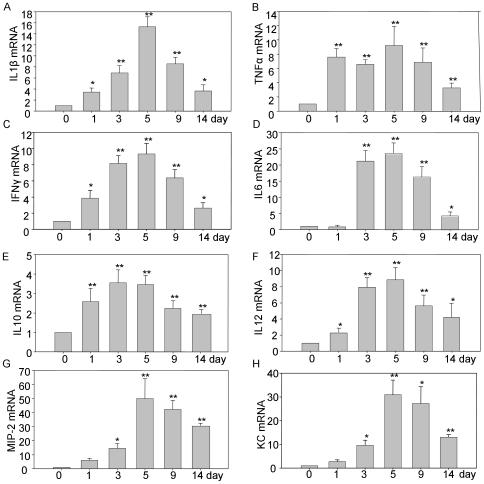
As expected after administration of DSS, mice manifest loss of body weight, shortening of colon length and bloody feces. Histological manifestations included shortening and loss of crypts, infiltration of lymphocytes and neutrophil, symptoms attenuated after DSS withdrawal. The MPO value, as inflammation indicator, also increases significantly at all periods of DSS treatment, and even after DSS withdrawal, it still held at very high levels. Trans-mucosal permeability increased during DSS treatment, but recovered to almost control level after DSS withdrawal. The production of proinflammatory mediators by colonic mucosa were enhanced during DSS treatment, and then recovered to pre-treated level after DSS withdrawal. Finally, enhanced expression of proinflammatory mediators also revealed a different profile feature in proximal and distal parts of the colon.
CONCLUSION
Experimental colitis induced by DSS is a good animal model to study the mechanisms underlying the pathogenesis and intervention against IBD, especially UC.
背景
炎症性肠病(IBD)主要包括溃疡性结肠炎(UC)和克罗恩病(CD),是由遗传和环境因素相互作用引起的胃肠道炎症性疾病。葡聚糖硫酸钠(DSS)诱导的小鼠结肠炎模型是一种常用的IBD动物模型,用于研究IBD的发病机制以及测试治疗效果。在本研究中,我们系统分析了结肠炎期和恢复期的临床参数、组织学变化、肠道屏障特性和细胞因子谱。
方法
给C57BL/6小鼠饮用含3.5% DSS的水不同时间。使用标准标准确定临床和组织学特征。测定全结肠或结肠近端和远端的髓过氧化物酶(MPO)活性、跨上皮通透性和促炎介质。
结果
正如给予DSS后预期的那样,小鼠出现体重减轻、结肠长度缩短和便血。组织学表现包括隐窝缩短和消失、淋巴细胞和中性粒细胞浸润,DSS撤药后症状减轻。作为炎症指标的MPO值在DSS治疗的各个阶段也显著增加,甚至在DSS撤药后,它仍保持在非常高的水平。DSS治疗期间跨粘膜通透性增加,但DSS撤药后恢复到几乎对照水平。结肠粘膜促炎介质的产生在DSS治疗期间增强,然后在DSS撤药后恢复到治疗前水平。最后,促炎介质的表达增强在结肠近端和远端也显示出不同的特征。
结论
DSS诱导的实验性结肠炎是研究IBD发病机制和干预措施的良好动物模型,尤其是UC。


 Zotero 插件