
基于紧密连接蛋白9的离子渗透屏障对听力至关重要。
A claudin-9-based ion permeability barrier is essential for hearing.
作者信息
Nakano Yoko, Kim Sung H, Kim Hyoung-Mi, Sanneman Joel D, Zhang Yuzhou, Smith Richard J H, Marcus Daniel C, Wangemann Philine, Nessler Randy A, Bánfi Botond
机构信息
Department of Anatomy and Cell Biology, University of Iowa, Iowa City, Iowa, USA.
出版信息
PLoS Genet. 2009 Aug;5(8):e1000610. doi: 10.1371/journal.pgen.1000610. Epub 2009 Aug 21.
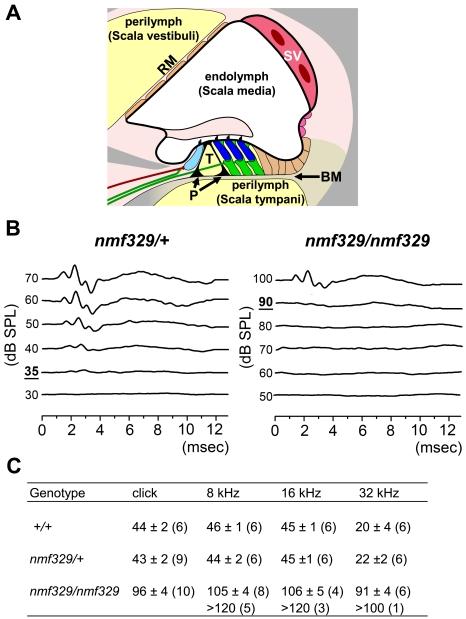
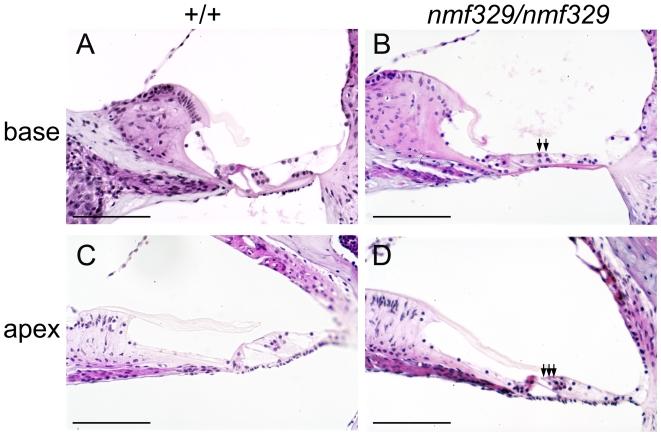
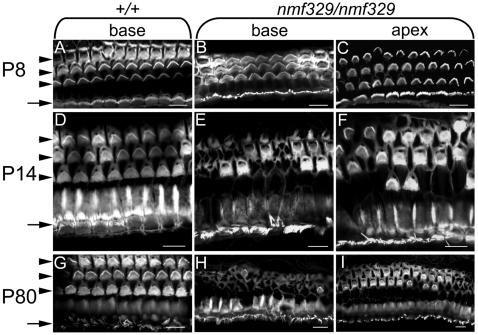
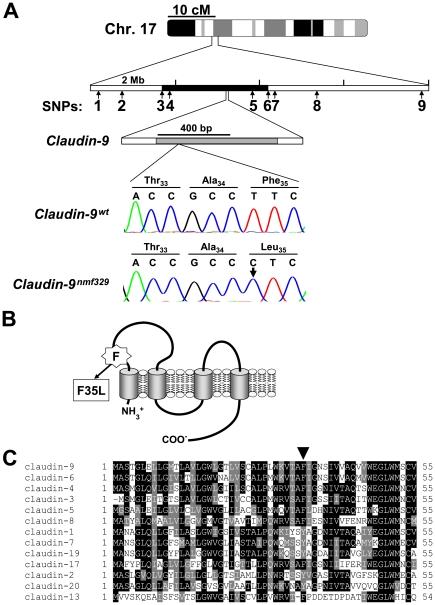
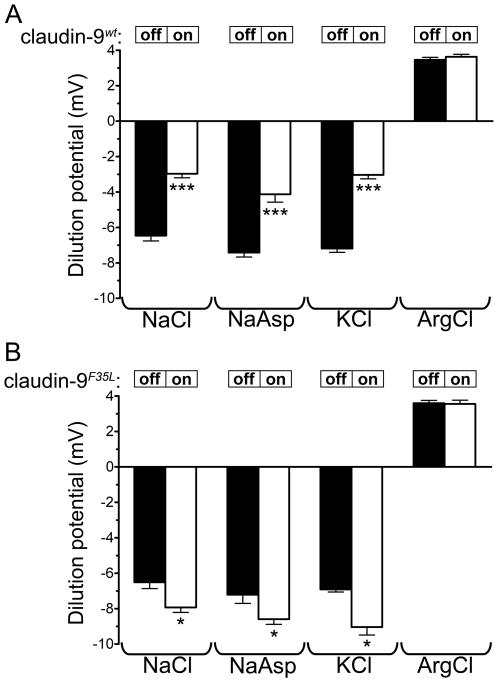
Hereditary hearing loss is one of the most common birth defects, yet the majority of genes required for audition is thought to remain unidentified. Ethylnitrosourea (ENU)-mutagenesis has been a valuable approach for generating new animal models of deafness and discovering previously unrecognized gene functions. Here we report on the characterization of a new ENU-induced mouse mutant (nmf329) that exhibits recessively inherited deafness. We found a widespread loss of sensory hair cells in the hearing organs of nmf329 mice after the second week of life. Positional cloning revealed that the nmf329 strain carries a missense mutation in the claudin-9 gene, which encodes a tight junction protein with unknown biological function. In an epithelial cell line, heterologous expression of wild-type claudin-9 reduced the paracellular permeability to Na+ and K+, and the nmf329 mutation eliminated this ion barrier function without affecting the plasma membrane localization of claudin-9. In the nmf329 mouse line, the perilymphatic K+ concentration was found to be elevated, suggesting that the cochlear tight junctions were dysfunctional. Furthermore, the hair-cell loss in the claudin-9-defective cochlea was rescued in vitro when the explanted hearing organs were cultured in a low-K+ milieu and in vivo when the endocochlear K+-driving force was diminished by deletion of the pou3f4 gene. Overall, our data indicate that claudin-9 is required for the preservation of sensory cells in the hearing organ because claudin-9-defective tight junctions fail to shield the basolateral side of hair cells from the K+-rich endolymph. In the tight-junction complexes of hair cells, claudin-9 is localized specifically to a subdomain that is underneath more apical tight-junction strands formed by other claudins. Thus, the analysis of claudin-9 mutant mice suggests that even the deeper (subapical) tight-junction strands have biologically important ion barrier function.
遗传性听力损失是最常见的出生缺陷之一,然而,人们认为大多数听觉所需的基因仍未被发现。乙基亚硝基脲(ENU)诱变一直是生成新的耳聋动物模型和发现以前未被认识的基因功能的一种有价值的方法。在此,我们报告一种新的ENU诱导的小鼠突变体(nmf329)的特征,该突变体表现出隐性遗传的耳聋。我们发现,出生后第二周后,nmf329小鼠听觉器官中的感觉毛细胞广泛缺失。定位克隆显示,nmf329品系在claudin-9基因中携带一个错义突变,该基因编码一种生物学功能未知的紧密连接蛋白。在一个上皮细胞系中,野生型claudin-9的异源表达降低了细胞旁对Na+和K+的通透性,而nmf329突变消除了这种离子屏障功能,且不影响claudin-9在质膜上的定位。在nmf329小鼠品系中,发现外淋巴K+浓度升高,这表明耳蜗紧密连接功能失调。此外,当将外植的听觉器官在低钾环境中培养时,claudin-9缺陷型耳蜗中的毛细胞损失在体外得到挽救;当通过缺失pou3f4基因降低内淋巴K+驱动力时,在体内也得到挽救。总体而言,我们的数据表明,claudin-9是听觉器官中感觉细胞保存所必需的,因为claudin-9缺陷的紧密连接无法保护毛细胞的基底外侧免受富含K+的内淋巴的影响。在毛细胞的紧密连接复合体中,claudin-9特异性定位于一个亚结构域,该亚结构域位于由其他claudin形成的更顶端的紧密连接链下方。因此,对claudin-9突变小鼠的分析表明,即使是更深层(亚顶端)的紧密连接链也具有生物学上重要的离子屏障功能。




 Zotero 插件