
随机对照试验中排除患者对分析结果的影响:Meta 流行病学研究
The effects of excluding patients from the analysis in randomised controlled trials: meta-epidemiological study.
作者信息
Nüesch Eveline, Trelle Sven, Reichenbach Stephan, Rutjes Anne W S, Bürgi Elizabeth, Scherer Martin, Altman Douglas G, Jüni Peter
机构信息
Institute of Social and Preventive Medicine, University of Bern, Switzerland.
出版信息
BMJ. 2009 Sep 7;339:b3244. doi: 10.1136/bmj.b3244.
OBJECTIVE
To examine whether excluding patients from the analysis of randomised trials are associated with biased estimates of treatment effects and higher heterogeneity between trials.
DESIGN
Meta-epidemiological study based on a collection of meta-analyses of randomised trials.
DATA SOURCES
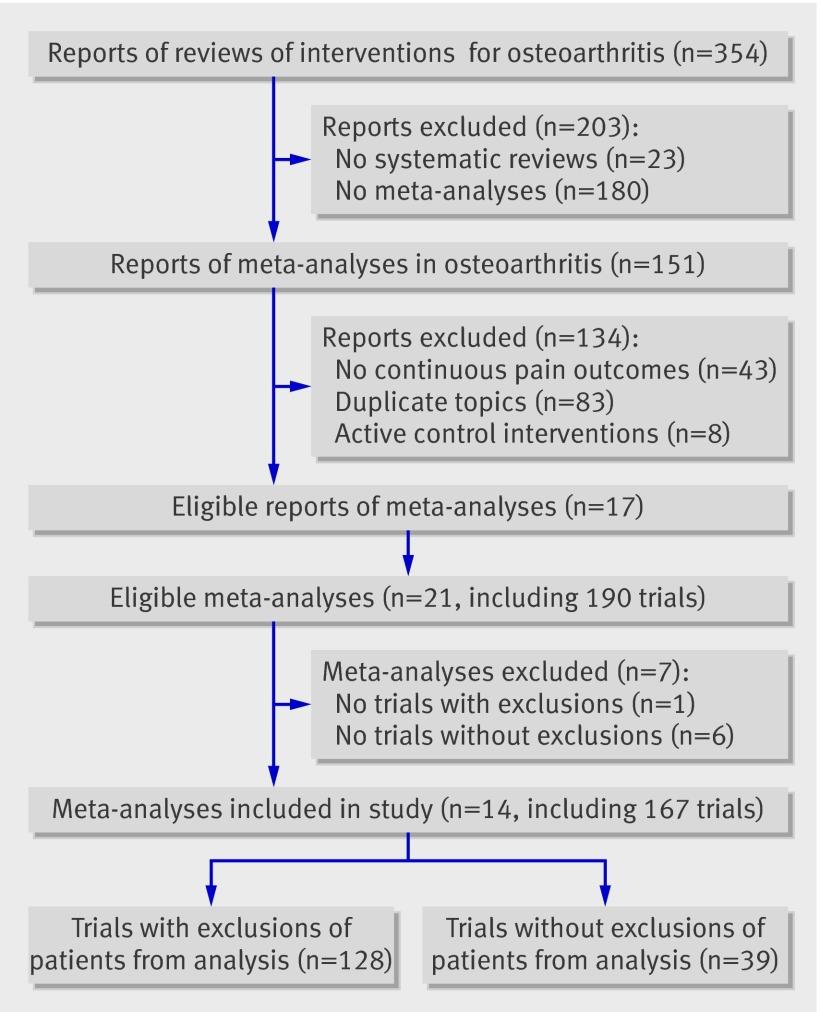
14 meta-analyses including 167 trials that compared therapeutic interventions with placebo or non-intervention control in patients with osteoarthritis of the hip or knee and used patient reported pain as an outcome.
METHODS
Effect sizes were calculated from differences in means of pain intensity between groups at the end of follow-up, divided by the pooled standard deviation. Trials were combined by using random effects meta-analysis. Estimates of treatment effects were compared between trials with and trials without exclusions from the analysis, and the impact of restricting meta-analyses to trials without exclusions was assessed.
RESULTS
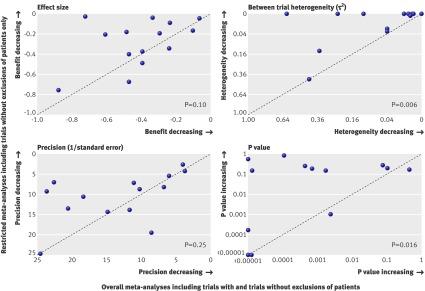
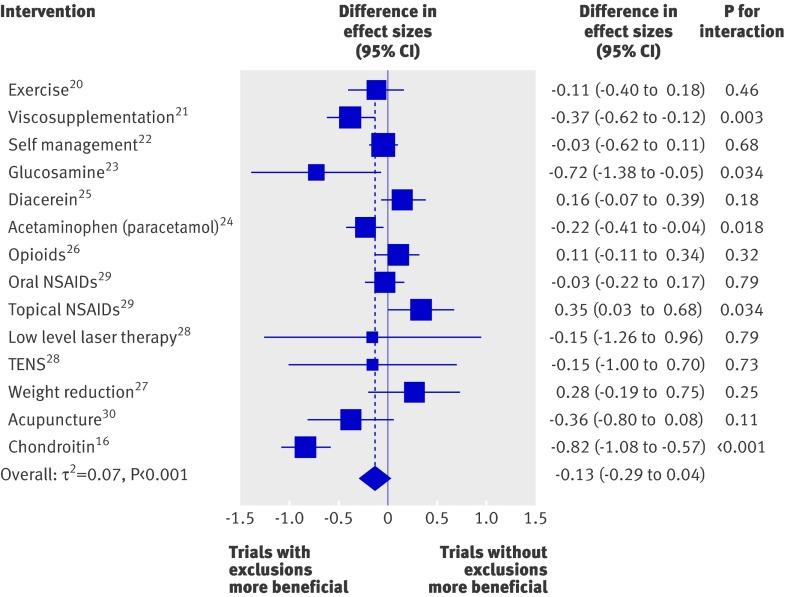
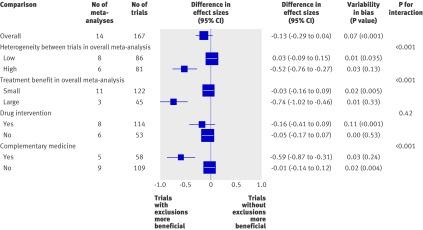
39 trials (23%) had included all patients in the analysis. In 128 trials (77%) some patients were excluded from the analysis. Effect sizes from trials with exclusions tended to be more beneficial than those from trials without exclusions (difference -0.13, 95% confidence interval -0.29 to 0.04). However, estimates of bias between individual meta-analyses varied considerably (tau(2)=0.07). Tests of interaction between exclusions from the analysis and estimates of treatment effects were positive in five meta-analyses. Stratified analyses indicated that differences in effect sizes between trials with and trials without exclusions were more pronounced in meta-analyses with high between trial heterogeneity, in meta-analyses with large estimated treatment benefits, and in meta-analyses of complementary medicine. Restriction of meta-analyses to trials without exclusions resulted in smaller estimated treatment benefits, larger P values, and considerable decreases in between trial heterogeneity.
CONCLUSION
Excluding patients from the analysis in randomised trials often results in biased estimates of treatment effects, but the extent and direction of bias is unpredictable. Results from intention to treat analyses should always be described in reports of randomised trials. In systematic reviews, the influence of exclusions from the analysis on estimated treatment effects should routinely be assessed.
目的
探讨在随机试验分析中排除患者是否会导致治疗效果的估计存在偏差以及试验间更高的异质性。
设计
基于一系列随机试验的荟萃分析进行的Meta流行病学研究。
数据来源
14项荟萃分析,包括167项试验,这些试验比较了髋或膝骨关节炎患者的治疗性干预与安慰剂或非干预对照,并将患者报告的疼痛作为结局指标。
方法
效应量通过随访结束时组间疼痛强度均值的差异除以合并标准差来计算。采用随机效应荟萃分析对试验进行合并。比较了分析中有无排除患者的试验之间的治疗效果估计,并评估了将荟萃分析限制在无排除患者的试验中的影响。
结果
39项试验(23%)在分析中纳入了所有患者。128项试验(77%)排除了部分患者。有排除患者的试验的效应量往往比无排除患者的试验更有利(差异为-0.13,95%置信区间为-0.29至0.04)。然而,各个荟萃分析之间的偏差估计差异很大(tau(2)=0.07)。在五项荟萃分析中,分析排除与治疗效果估计之间的相互作用检验呈阳性。分层分析表明,有排除患者和无排除患者的试验之间的效应量差异在试验间异质性高的荟萃分析、估计治疗益处大的荟萃分析以及补充医学的荟萃分析中更为明显。将荟萃分析限制在无排除患者的试验中会导致估计的治疗益处更小、P值更大,且试验间异质性显著降低。
结论
在随机试验分析中排除患者通常会导致治疗效果的估计存在偏差,但偏差的程度和方向是不可预测的。随机试验报告中应始终描述意向性分析的结果。在系统评价中,应常规评估分析排除对估计治疗效果的影响。
 Zotero 插件