
TRPM8 和 TRPA1 通道对冷感觉异常和神经性疼痛的贡献。
The contribution of TRPM8 and TRPA1 channels to cold allodynia and neuropathic pain.
机构信息
Klinik für Anaesthesiologie und operative Intensivmedizin, Charité Universitätsmedizin Berlin, Campus Benjamin Franklin, Berlin, Germany.
出版信息
PLoS One. 2009 Oct 8;4(10):e7383. doi: 10.1371/journal.pone.0007383.
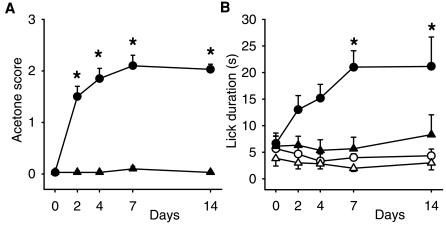
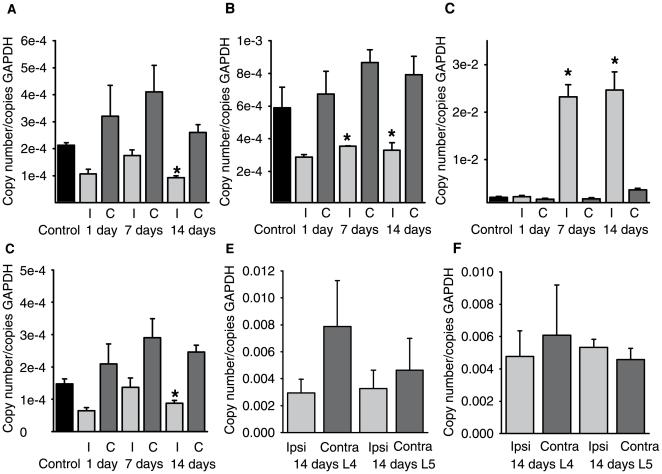
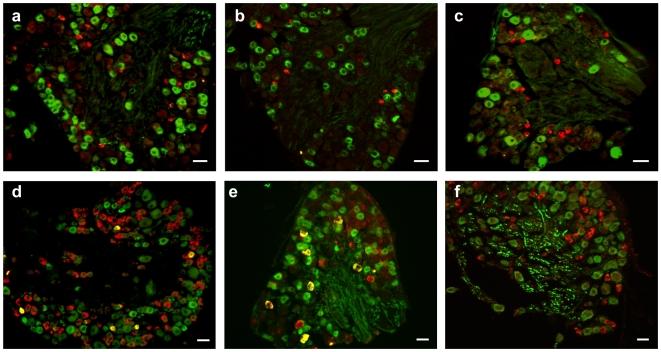
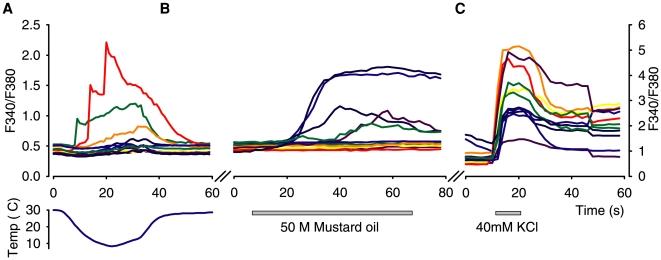
Cold allodynia is a common feature of neuropathic pain however the underlying mechanisms of this enhanced sensitivity to cold are not known. Recently the transient receptor potential (TRP) channels TRPM8 and TRPA1 have been identified and proposed to be molecular sensors for cold. Here we have investigated the expression of TRPM8 and TRPA1 mRNA in the dorsal root ganglia (DRG) and examined the cold sensitivity of peripheral sensory neurons in the chronic construction injury (CCI) model of neuropathic pain in mice.In behavioral experiments, chronic constriction injury (CCI) of the sciatic nerve induced a hypersensitivity to both cold and the TRPM8 agonist menthol that developed 2 days post injury and remained stable for at least 2 weeks. Using quantitative RT-PCR and in situ hybridization we examined the expression of TRPM8 and TRPA1 in DRG. Both channels displayed significantly reduced expression levels after injury with no change in their distribution pattern in identified neuronal subpopulations. Furthermore, in calcium imaging experiments, we detected no alterations in the number of cold or menthol responsive neurons in the DRG, or in the functional properties of cold transduction following injury. Intriguingly however, responses to the TRPA1 agonist mustard oil were strongly reduced.Our results indicate that injured sensory neurons do not develop abnormal cold sensitivity after chronic constriction injury and that alterations in the expression of TRPM8 and TRPA1 are unlikely to contribute directly to the pathogenesis of cold allodynia in this neuropathic pain model.
冷感觉异常是神经病理性疼痛的常见特征,但这种对冷的敏感性增强的潜在机制尚不清楚。最近,瞬时受体电位 (TRP) 通道 TRPM8 和 TRPA1 已经被鉴定出来,并被提议作为冷的分子传感器。在这里,我们研究了背根神经节 (DRG) 中 TRPM8 和 TRPA1 mRNA 的表达,并检查了慢性构建损伤 (CCI) 神经病理性疼痛模型中小鼠外周感觉神经元的冷敏感性。在行为实验中,坐骨神经慢性缩窄损伤 (CCI) 导致对冷和 TRPM8 激动剂薄荷醇的超敏反应,这种反应在损伤后 2 天发展并至少稳定 2 周。使用定量 RT-PCR 和原位杂交,我们检查了 DRG 中 TRPM8 和 TRPA1 的表达。两种通道在损伤后表达水平显著降低,但其在鉴定神经元亚群中的分布模式没有变化。此外,在钙成像实验中,我们没有检测到 DRG 中冷或薄荷醇反应神经元的数量或损伤后冷转导的功能特性发生改变。然而,有趣的是,TRPA1 激动剂芥末油的反应明显减弱。我们的结果表明,受损感觉神经元在慢性缩窄损伤后不会发展出异常的冷敏感性,并且 TRPM8 和 TRPA1 的表达改变不太可能直接导致这种神经病理性疼痛模型中冷感觉异常的发病机制。

 Zotero 插件