
鉴定癌症中失调的微小RNA的mRNA靶标:应用于透明细胞肾细胞癌
Identifying mRNA targets of microRNA dysregulated in cancer: with application to clear cell Renal Cell Carcinoma.
作者信息
Liu Huiqing, Brannon Angela R, Reddy Anupama R, Alexe Gabriela, Seiler Michael W, Arreola Alexandra, Oza Jay H, Yao Ming, Juan David, Liou Louis S, Ganesan Shridar, Levine Arnold J, Rathmell W K, Bhanot Gyan V
机构信息
BioMaPS Institute, Rutgers University, Piscataway, NJ 08854, USA.
出版信息
BMC Syst Biol. 2010 Apr 27;4:51. doi: 10.1186/1752-0509-4-51.
BACKGROUND
MicroRNA regulate mRNA levels in a tissue specific way, either by inducing degradation of the transcript or by inhibiting translation or transcription. Putative mRNA targets of microRNA identified from seed sequence matches are available in many databases. However, such matches have a high false positive rate and cannot identify tissue specificity of regulation.
RESULTS
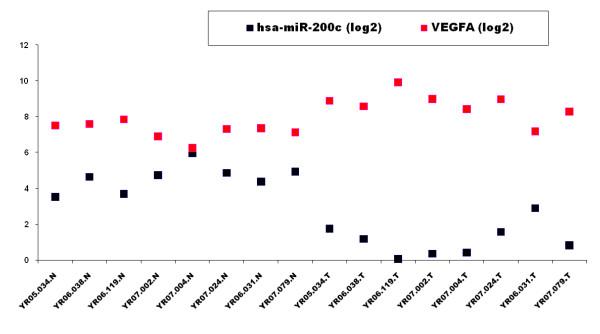
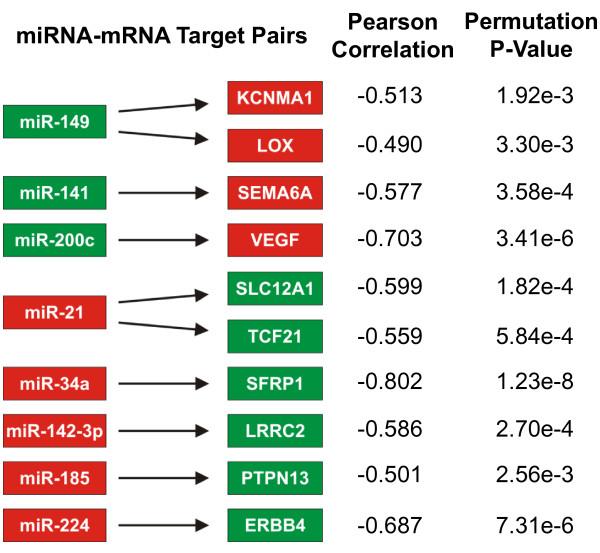
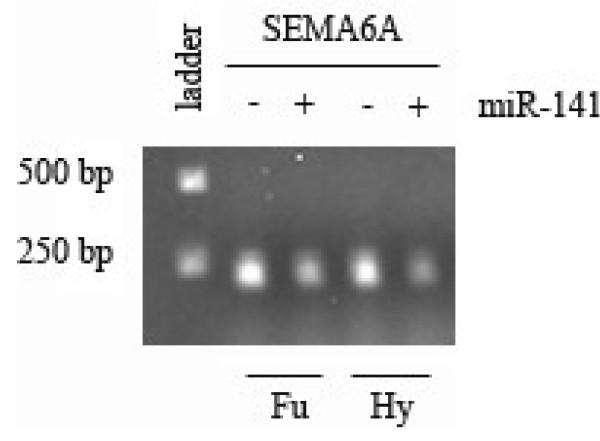
We describe a simple method to identify direct mRNA targets of microRNA dysregulated in cancers from expression level measurements in patient matched tumor/normal samples. The word "direct" is used here in a strict sense to: a) represent mRNA which have an exact seed sequence match to the microRNA in their 3'UTR, b) the seed sequence match is strictly conserved across mouse, human, rat and dog genomes, c) the mRNA and microRNA expression levels can distinguish tumor from normal with high significance and d) the microRNA/mRNA expression levels are strongly and significantly anti-correlated in tumor and/or normal samples. We apply and validate the method using clear cell Renal Cell Carcinoma (ccRCC) and matched normal kidney samples, limiting our analysis to mRNA targets which undergo degradation of the mRNA transcript because of a perfect seed sequence match. Dysregulated microRNA and mRNA are first identified by comparing their expression levels in tumor vs normal samples. Putative dysregulated microRNA/mRNA pairs are identified from these using seed sequence matches, requiring that the seed sequence be conserved in human/dog/rat/mouse genomes. These are further pruned by requiring a strong anti-correlation signature in tumor and/or normal samples. The method revealed many new regulations in ccRCC. For instance, loss of miR-149, miR-200c and mir-141 causes gain of function of oncogenes (KCNMA1, LOX), VEGFA and SEMA6A respectively and increased levels of miR-142-3p, miR-185, mir-34a, miR-224, miR-21 cause loss of function of tumor suppressors LRRC2, PTPN13, SFRP1, ERBB4, and (SLC12A1, TCF21) respectively. We also found strong anti-correlation between VEGFA and the miR-200 family of microRNA: miR-200a*, 200b, 200c and miR-141. Several identified microRNA/mRNA pairs were validated on an independent set of matched ccRCC/normal samples. The regulation of SEMA6A by miR-141 was verified by a transfection assay.
CONCLUSIONS
We describe a simple and reliable method to identify direct gene targets of microRNA in any cancer. The constraints we impose (strong dysregulation signature for microRNA and mRNA levels between tumor/normal samples, evolutionary conservation of seed sequence and strong anti-correlation of expression levels) remove spurious matches and identify a subset of robust, tissue specific, functional mRNA targets of dysregulated microRNA.
背景
微小RNA以组织特异性方式调节mRNA水平,其机制包括诱导转录本降解、抑制翻译或转录。许多数据库中可获取通过种子序列匹配鉴定出的微小RNA的假定mRNA靶标。然而,此类匹配具有较高的假阳性率,且无法鉴定调节的组织特异性。
结果
我们描述了一种简单方法,可从患者匹配的肿瘤/正常样本的表达水平测量中鉴定癌症中失调的微小RNA的直接mRNA靶标。此处“直接”一词严格用于:a)表示在其3'UTR中与微小RNA具有精确种子序列匹配的mRNA;b)种子序列匹配在小鼠、人类、大鼠和犬基因组中严格保守;c)mRNA和微小RNA表达水平可高度显著地区分肿瘤与正常样本;d)在肿瘤和/或正常样本中,微小RNA/mRNA表达水平呈强烈且显著的负相关。我们使用透明细胞肾细胞癌(ccRCC)和匹配的正常肾样本应用并验证了该方法,将分析限于因完美种子序列匹配而经历mRNA转录本降解的mRNA靶标。首先通过比较肿瘤与正常样本中的表达水平来鉴定失调的微小RNA和mRNA。从这些样本中使用种子序列匹配鉴定假定的失调微小RNA/mRNA对,要求种子序列在人类/犬/大鼠/小鼠基因组中保守。通过要求在肿瘤和/或正常样本中具有强烈的负相关特征进一步筛选这些对。该方法揭示了ccRCC中的许多新调控。例如,miR - 149、miR - 200c和mir - 141的缺失分别导致癌基因(KCNMA1、LOX)、VEGFA和SEMA6A功能获得,而miR - 142 - 3p、miR - 185、mir - 34a、miR - 224、miR - 21水平升高分别导致肿瘤抑制因子LRRC2、PTPN13、SFRP1、ERBB4和(SLC12A1、TCF21)功能丧失。我们还发现VEGFA与微小RNA的miR - 200家族:miR - 200a*、200b、200c和miR - 141之间存在强烈的负相关。在一组独立的匹配ccRCC/正常样本上验证了几个鉴定出的微小RNA/mRNA对。通过转染实验验证了miR - 141对SEMA6A的调控。
结论
我们描述了一种简单可靠的方法来鉴定任何癌症中微小RNA的直接基因靶标。我们施加的限制条件(肿瘤/正常样本之间微小RNA和mRNA水平的强烈失调特征、种子序列的进化保守性以及表达水平的强烈负相关)消除了虚假匹配,并鉴定出失调微小RNA的一组可靠、组织特异性、功能性mRNA靶标。



 Zotero 插件