
全反式维甲酸对脑肿瘤干细胞增殖和分化的影响。
Effect of all-trans retinoic acid on the proliferation and differentiation of brain tumor stem cells.
机构信息
Department of Neurosurgery, Anhui Provincial Hospital Affiliated to Anhui Medical University, Hefei, Anhui Province, 230001, China.
出版信息
J Exp Clin Cancer Res. 2010 Aug 17;29(1):113. doi: 10.1186/1756-9966-29-113.
OBJECTIVE
To investigate the effect of all-trans retinoic acid(ATRA) on the proliferation and differentiation of brain tumor stem cells(BTSCs) in vitro.
METHODS
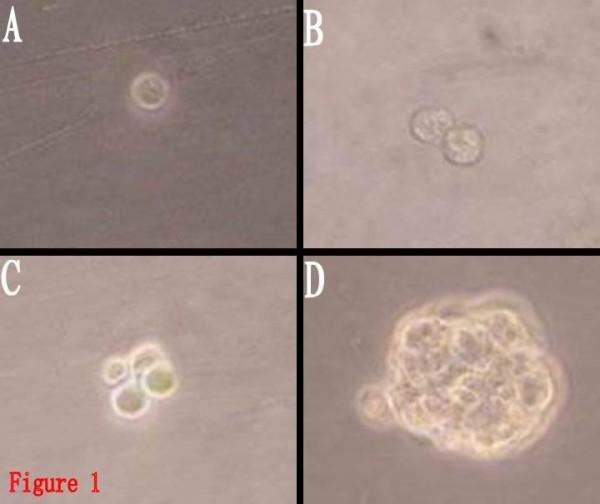
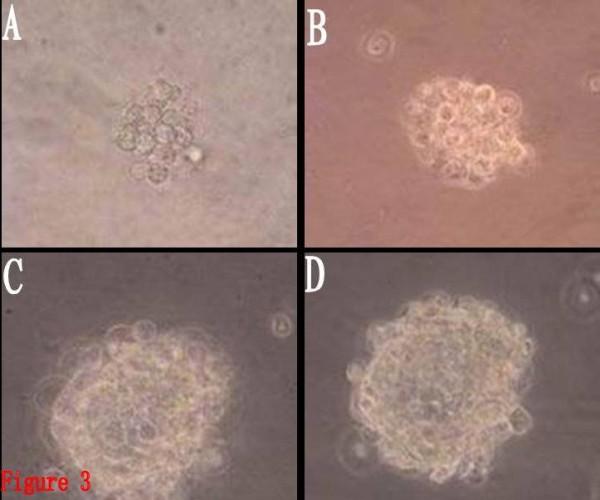
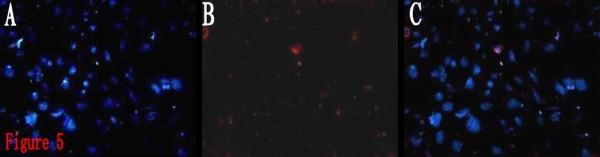
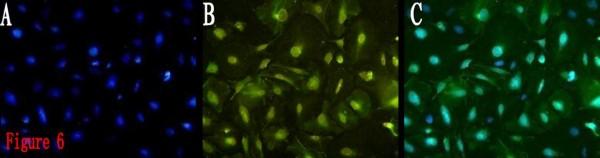
Limiting dilution and clonogenic assay were used to isolate and screen BTSCs from the fresh specimen of human brain glioblastoma. The obtained BTSCs, which were cultured in serum-free medium, were classified into four groups in accordance with the composition of the different treatments. The proliferation of the BTSCs was evaluated by MTT assay. The BTSCs were induced to differentiate in serum-containing medium, and classified into the ATRA group and control group. On the 10th day of induction, the expressions of CD133 and glial fibrillary acidic protein (GFAP) in the differentiated BTSCs were detected by immunofluorescence. The differentiated BTSCs were cultured in serum-free medium, the percentage and the time required for formation of brain tumor spheres (BTS) were observed.
RESULTS
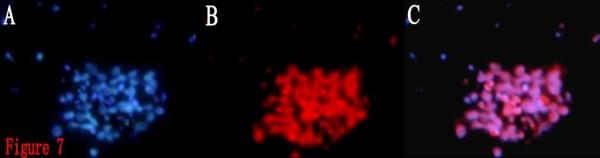
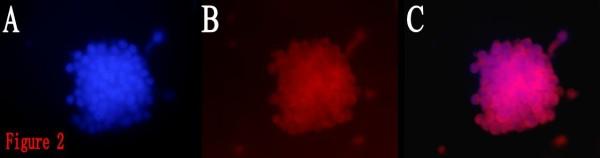
BTSCs obtained by limiting dilution were all identified as CD133-positive by immunofluorescence. In serum-free medium, the proliferation of BTSCs in the ATRA group was observed significantly faster than that in the control group, but slower than that in the growth factor group and ATRA/growth factor group, and the size of the BTS in the ATRA group was smaller than that in the latter two groups(P < 0.01). In serum-containing medium, the expression percentages of CD133 and GFAP in the differentiated BTSCs were (2.29% +/- 0.27%) and (75.60% +/- 4.03%) respectively in the ATRA group, and (7.05% +/- 0.49%) and (12.51% +/- 0.77%) respectively in the control group. The differentiation rate of BTSCs in the ATRA group was significantly higher than that in the control group (P < 0.05), but there was still CD133 expressed in the ATRA group. The differentiated BTSCs could re-form BTSs in serum-free medium. The percentage of BTS formation in the ATRA group was(4.84% +/- 0.32%), significantly lower than that in the control group (17.71% +/- 0.78%) (P < 0.05), and the time required for BTS formation in the ATRA group was (10.07 +/- 1.03)d, significantly longer than that in the control group (4.08 +/- 0.35)d (P < 0.05).
CONCLUSION
ATRA can promote the proliferation and induce the differentiation of BTSCs, but the differentiation is incomplete, terminal differentiation cannot be achieved and BTSs can be formed again.
目的
研究全反式维甲酸(ATRA)对体外脑肿瘤干细胞(BTSCs)增殖和分化的影响。
方法
采用有限稀释和克隆形成实验从人脑胶质母细胞瘤新鲜标本中分离筛选 BTSCs。将获得的 BTSCs 在无血清培养基中培养,根据不同处理方式的组成,将其分为四组。通过 MTT 法评估 BTSCs 的增殖情况。将 BTSCs 在含血清培养基中诱导分化,分为 ATRA 组和对照组。诱导分化第 10 天,通过免疫荧光法检测分化后的 BTSCs 中 CD133 和神经胶质纤维酸性蛋白(GFAP)的表达。将分化后的 BTSCs 在无血清培养基中培养,观察形成脑肿瘤球体(BTS)的比例和所需时间。
结果
通过有限稀释获得的 BTSCs 均通过免疫荧光鉴定为 CD133 阳性。在无血清培养基中,ATRA 组 BTSCs 的增殖速度明显快于对照组,但慢于生长因子组和 ATRA/生长因子组,ATRA 组的 BTS 体积小于后两组(P < 0.01)。在含血清培养基中,ATRA 组分化后的 BTSCs 中 CD133 和 GFAP 的表达百分比分别为(2.29% ± 0.27%)和(75.60% ± 4.03%),对照组分别为(7.05% ± 0.49%)和(12.51% ± 0.77%)。ATRA 组 BTSCs 的分化率明显高于对照组(P < 0.05),但 ATRA 组仍有 CD133 表达。分化后的 BTSCs 可在无血清培养基中重新形成 BTS。ATRA 组 BTS 形成的比例为(4.84% ± 0.32%),明显低于对照组的(17.71% ± 0.78%)(P < 0.05),ATRA 组形成 BTS 的时间为(10.07 ± 1.03)d,明显长于对照组的(4.08 ± 0.35)d(P < 0.05)。
结论
ATRA 可促进 BTSCs 的增殖并诱导其分化,但分化不完全,不能达到终末分化,且可再次形成 BTS。

 Zotero 插件