
2009 年甲型 H1N1 流感肺炎:CURB-65 评分预测严重程度和鼻咽取样诊断不可靠。
Pandemic influenza (H1N1) 2009 pneumonia: CURB-65 score for predicting severity and nasopharyngeal sampling for diagnosis are unreliable.
机构信息
Department of Respiratory Medicine, Sir Charles Gairdner Hospital, Nedlands, Western Australia, Australia.
出版信息
PLoS One. 2010 Sep 21;5(9):e12849. doi: 10.1371/journal.pone.0012849.
BACKGROUND
From the first case reports of pandemic influenza (H1N1) 2009 it was clear that a significant proportion of infected individuals suffered a primary viral pneumonia. The objective of this study was twofold; to assess the utility of the CURB-65 community acquired pneumonia (CAP) severity index in predicting pneumonia severity and ICU admission, and to assess the relative sensitivity of nasopharyngeal versus lower respiratory tract sampling for the detection of pandemic influenza (H1N1) CAP.
METHODS
A retrospective cohort study of 70 patients hospitalised for pandemic influenza (H1N1) 2009 in an adult tertiary referral hospital. Characteristics evaluated included age, pregnancy status, sex, respiratory signs and symptoms, smoking and alcohol history, CURB-65 score, co-morbidities, disabling sequelae, length of stay and in-hospital mortality outcomes. Laboratory features evaluated included lymphocyte count, C-reactive protein (CRP), nasopharyngeal and lower respiratory tract pandemic influenza (H1N1) 2009 PCR results.
RESULTS
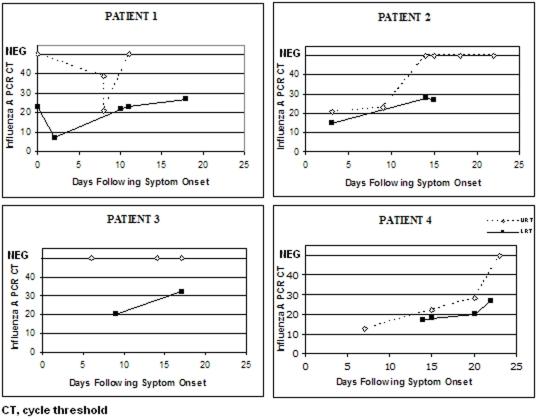
Patients with pandemic (H1N1) 2009 influenza CAP differed significantly from those without pneumonia regarding length of stay, need for ICU admission, CRP and the likelihood of disabling sequelae. The CURB-65 score did not predict CAP severity or the need for ICU admission (only 2/11 patients admitted to ICU had CURB-65 scores of 2 or 3). Nasopharyngeal specimens for PCR were only 62.9% sensitive in CAP patients compared to 97.8% sensitivity for lower respiratory tract specimens.
CONCLUSIONS
The CURB-65 score does not predict severe pandemic influenza (H1N1) 2009 CAP or need for ICU admission. Lower respiratory tract specimens should be collected when pandemic (H1N1) 2009 influenza CAP is suspected.
背景
从 2009 年大流行性流感(H1N1)的首例病例报告中可以清楚地看出,相当一部分感染个体患有原发性病毒性肺炎。本研究的目的有两个;评估 CURB-65 社区获得性肺炎(CAP)严重指数在预测肺炎严重程度和 ICU 入院方面的效用,并评估鼻咽与下呼吸道采样在检测大流行性流感(H1N1)CAP 方面的相对敏感性。
方法
对一家成人三级转诊医院因 2009 年大流行性流感(H1N1)住院的 70 例患者进行回顾性队列研究。评估的特征包括年龄、妊娠状态、性别、呼吸体征和症状、吸烟和饮酒史、CURB-65 评分、合并症、致残后遗症、住院时间和院内死亡率。评估的实验室特征包括淋巴细胞计数、C 反应蛋白(CRP)、鼻咽和下呼吸道大流行性流感(H1N1)2009 年 PCR 结果。
结果
患有大流行(H1N1)2009 年流感 CAP 的患者与无肺炎患者在住院时间、需要 ICU 入院、CRP 和致残后遗症的可能性方面存在显著差异。CURB-65 评分不能预测 CAP 严重程度或需要 ICU 入院(只有 2/11 例 ICU 入院患者的 CURB-65 评分分别为 2 或 3)。鼻咽标本用于 PCR 的敏感性仅为 62.9%,而用于 CAP 患者的下呼吸道标本的敏感性为 97.8%。
结论
CURB-65 评分不能预测严重的大流行性流感(H1N1)2009 年 CAP 或需要 ICU 入院。怀疑患有大流行性(H1N1)2009 年流感 CAP 时,应采集下呼吸道标本。

 Zotero 插件