
脊椎动物瞬时受体电位香草素 3 通道的进化:哺乳动物和西方爪蟾之间的温度敏感性相反。
Evolution of vertebrate transient receptor potential vanilloid 3 channels: opposite temperature sensitivity between mammals and western clawed frogs.
机构信息
Division of Cell Signaling, Okazaki Institute for Integrative Bioscience, National Institute for Physiological Sciences, National Institutes of Natural Sciences, Okazaki, Aichi, Japan.
出版信息
PLoS Genet. 2011 Apr;7(4):e1002041. doi: 10.1371/journal.pgen.1002041. Epub 2011 Apr 7.
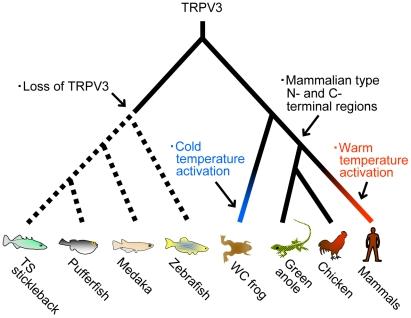
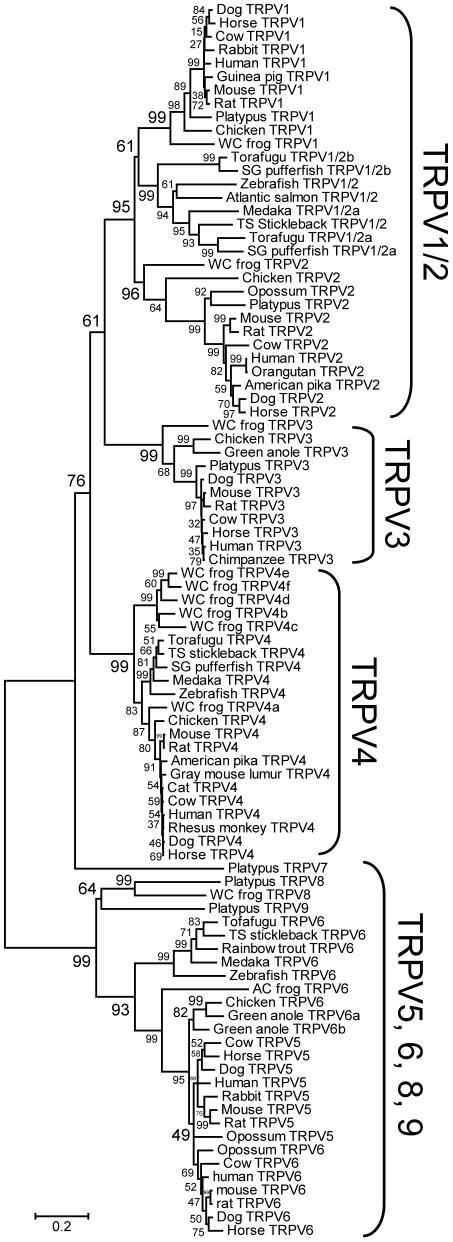
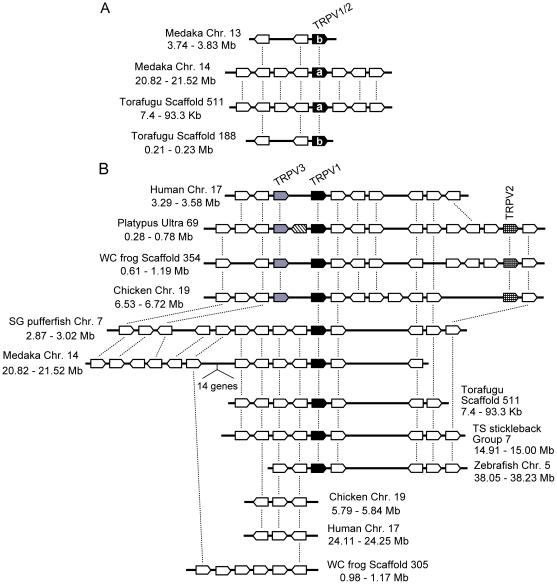
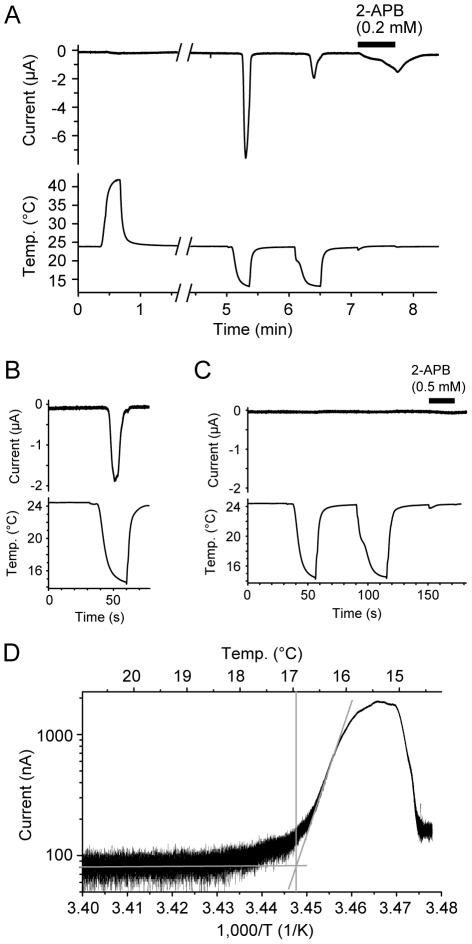
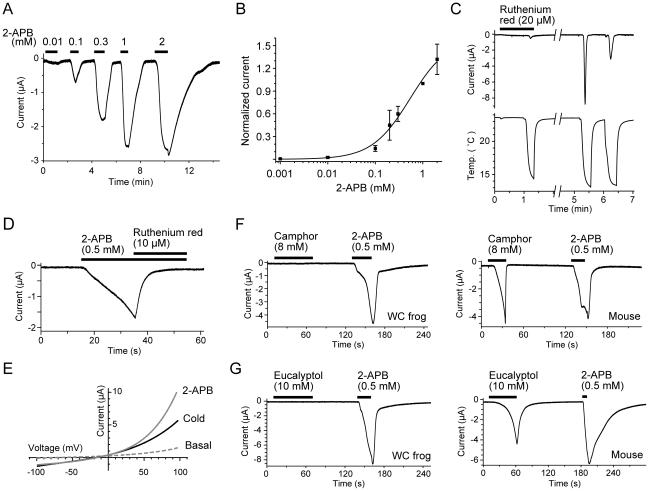
Transient Receptor Potential (TRP) channels serve as temperature receptors in a wide variety of animals and must have played crucial roles in thermal adaptation. The TRP vanilloid (TRPV) subfamily contains several temperature receptors with different temperature sensitivities. The TRPV3 channel is known to be highly expressed in skin, where it is activated by warm temperatures and serves as a sensor to detect ambient temperatures near the body temperature of homeothermic animals such as mammals. Here we performed comprehensive comparative analyses of the TRPV subfamily in order to understand the evolutionary process; we identified novel TRPV genes and also characterized the evolutionary flexibility of TRPV3 during vertebrate evolution. We cloned the TRPV3 channel from the western clawed frog Xenopus tropicalis to understand the functional evolution of the TRPV3 channel. The amino acid sequences of the N- and C-terminal regions of the TRPV3 channel were highly diversified from those of other terrestrial vertebrate TRPV3 channels, although central portions were well conserved. In a heterologous expression system, several mammalian TRPV3 agonists did not activate the TRPV3 channel of the western clawed frog. Moreover, the frog TRPV3 channel did not respond to heat stimuli, instead it was activated by cold temperatures. Temperature thresholds for activation were about 16 °C, slightly below the lower temperature limit for the western clawed frog. Given that the TRPV3 channel is expressed in skin, its likely role is to detect noxious cold temperatures. Thus, the western clawed frog and mammals acquired opposite temperature sensitivity of the TRPV3 channel in order to detect environmental temperatures suitable for their respective species, indicating that temperature receptors can dynamically change properties to adapt to different thermal environments during evolution.
瞬时受体电位 (TRP) 通道作为多种动物的温度感受器,在热适应中必然发挥了关键作用。TRP 香草素 (TRPV) 亚家族包含几个具有不同温度敏感性的温度感受器。已知 TRPV3 通道在皮肤中高度表达,其被温暖的温度激活,并作为一种传感器来检测接近恒温动物(如哺乳动物)体温的周围温度。在这里,我们对 TRPV 亚家族进行了全面的比较分析,以了解进化过程;我们鉴定了新的 TRPV 基因,并对 TRPV3 在脊椎动物进化过程中的进化灵活性进行了特征描述。我们从西方爪蟾 Xenopus tropicalis 中克隆了 TRPV3 通道,以了解 TRPV3 通道的功能进化。尽管中央部分得到了很好的保守,但 TRPV3 通道的 N 和 C 末端区域的氨基酸序列与其他陆地脊椎动物 TRPV3 通道的序列高度多样化。在异源表达系统中,几种哺乳动物 TRPV3 激动剂不能激活西方爪蟾的 TRPV3 通道。此外,蛙 TRPV3 通道对热刺激没有反应,而是被冷温度激活。激活的温度阈值约为 16°C,略低于西方爪蟾的低温极限。鉴于 TRPV3 通道在皮肤中表达,其可能的作用是检测有害的冷温度。因此,西方爪蟾和哺乳动物获得了 TRPV3 通道相反的温度敏感性,以检测适合其各自物种的环境温度,表明温度感受器可以在进化过程中动态改变特性以适应不同的热环境。


 Zotero 插件