
在膜上形成与信号序列无关的 SRP-SR 复合物表明了 SRP 循环内的一种替代靶向途径。
Signal sequence-independent SRP-SR complex formation at the membrane suggests an alternative targeting pathway within the SRP cycle.
机构信息
Institut für Biochemie und Molekularbiologie, ZBMZ, 79104 Freiburg, Germany.
出版信息
Mol Biol Cell. 2011 Jul 1;22(13):2309-23. doi: 10.1091/mbc.E11-02-0152. Epub 2011 May 5.
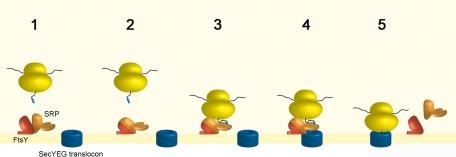
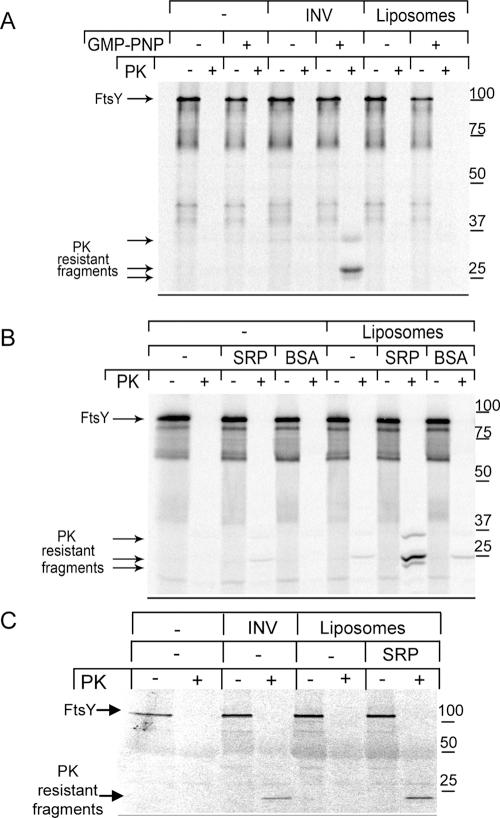
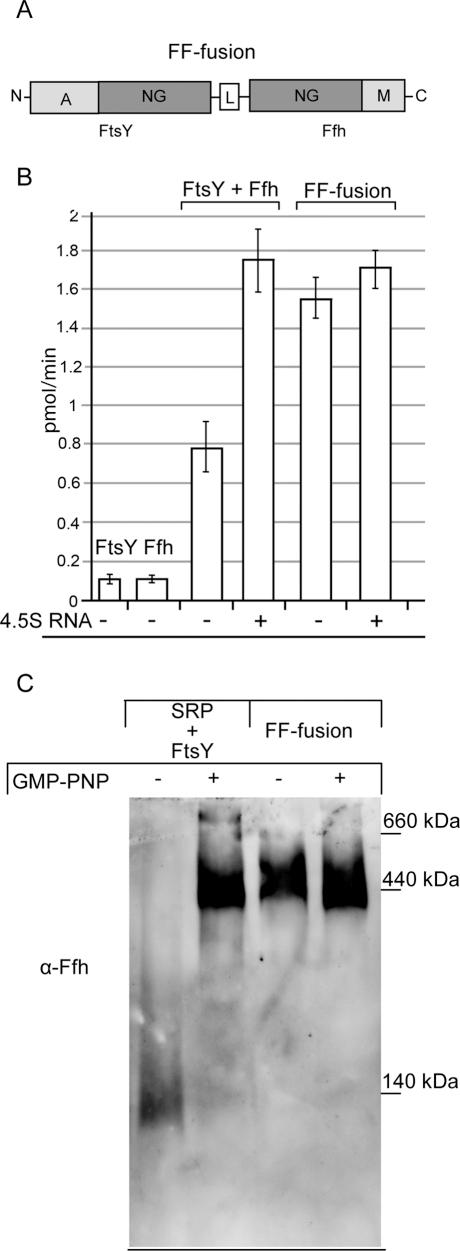
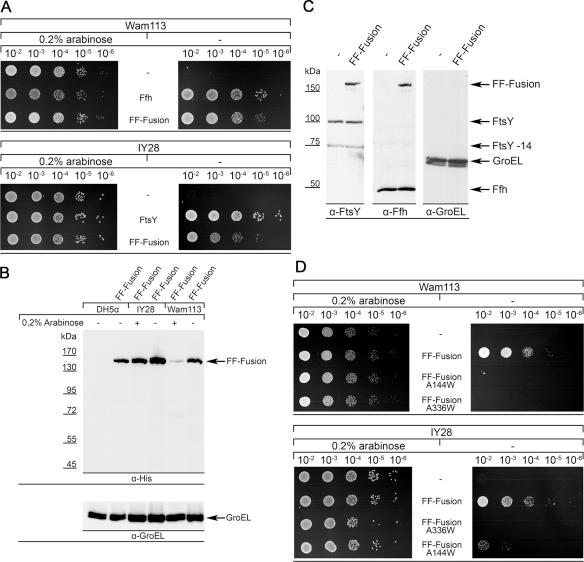
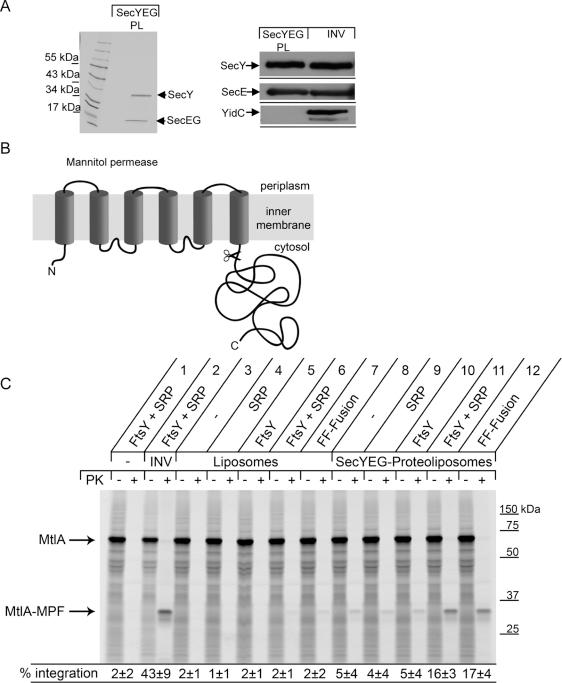
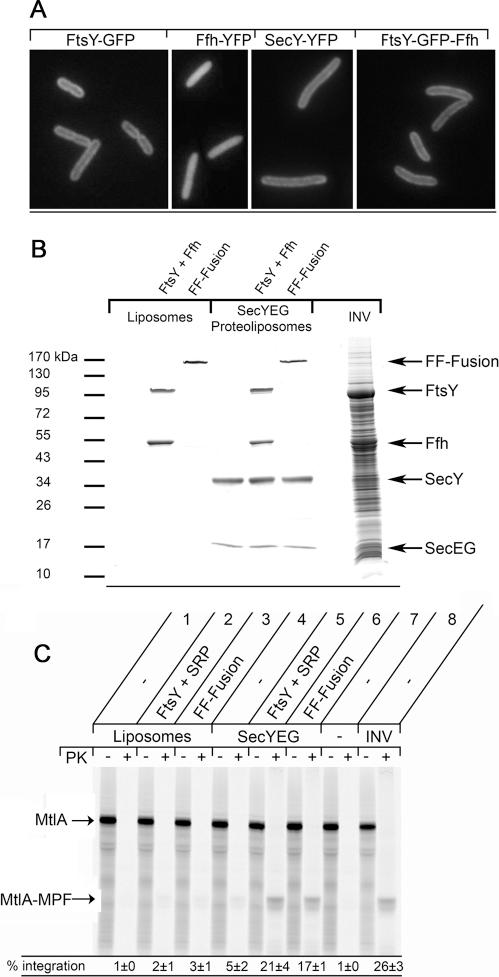
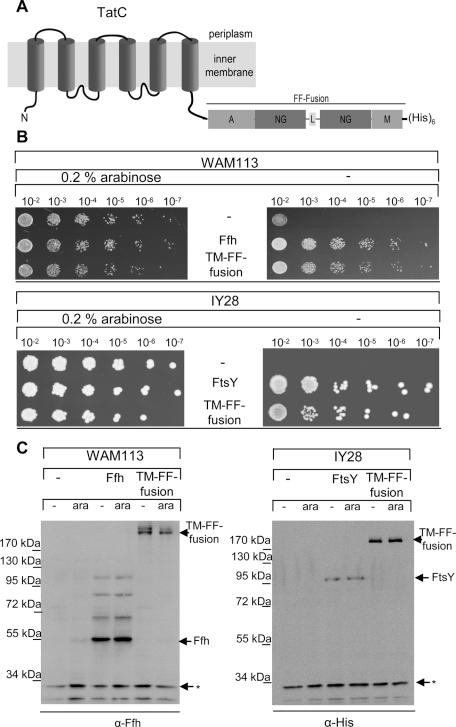
Protein targeting by the signal recognition particle (SRP) and the bacterial SRP receptor FtsY requires a series of closely coordinated steps that monitor the presence of a substrate, the membrane, and a vacant translocon. Although the influence of substrate binding on FtsY-SRP complex formation is well documented, the contribution of the membrane is largely unknown. In the current study, we found that negatively charged phospholipids stimulate FtsY-SRP complex formation. Phospholipids act on a conserved positively charged amphipathic helix in FtsY and induce a conformational change that strongly enhances the FtsY-lipid interaction. This membrane-bound, signal sequence-independent FtsY-SRP complex is able to recruit RNCs to the membrane and to transfer them to the Sec translocon. Significantly, the same results were also observed with an artificial FtsY-SRP fusion protein, which was tethered to the membrane via a transmembrane domain. This indicates that substrate recognition by a soluble SRP is not essential for cotranslational targeting in Escherichia coli. Our findings reveal a remarkable flexibility of SRP-dependent protein targeting, as they indicate that substrate recognition can occur either in the cytosol via ribosome-bound SRP or at the membrane via a preassembled FtsY-SRP complex.
蛋白质通过信号识别颗粒(SRP)和细菌 SRP 受体 FtsY 靶向需要一系列紧密协调的步骤,这些步骤监测底物、膜和空转位体的存在。尽管底物结合对 FtsY-SRP 复合物形成的影响已有详细记录,但膜的贡献在很大程度上尚不清楚。在本研究中,我们发现带负电荷的磷脂会刺激 FtsY-SRP 复合物的形成。磷脂作用于 FtsY 中保守的带正电荷的两亲性螺旋,诱导强烈增强 FtsY-脂相互作用的构象变化。这种膜结合的、信号序列非依赖性的 FtsY-SRP 复合物能够将 RNC 招募到膜上,并将其转移到 Sec 转位体。重要的是,同样的结果也在通过跨膜结构域与膜结合的人工 FtsY-SRP 融合蛋白中观察到。这表明可溶性 SRP 对底物的识别对于大肠杆菌中的共翻译靶向并非必不可少。我们的发现揭示了 SRP 依赖性蛋白质靶向的显著灵活性,因为它们表明底物识别可以通过核糖体结合的 SRP 在细胞质中进行,也可以通过预先组装的 FtsY-SRP 复合物在膜上进行。


 Zotero 插件