
免疫异常作为慢性疲劳综合征/肌痛性脑脊髓炎的潜在生物标志物。
Immunological abnormalities as potential biomarkers in Chronic Fatigue Syndrome/Myalgic Encephalomyelitis.
机构信息
Population Health and Neuroimmunology Unit, Faculty of Health Science and Medicine, Bond University, Robina, Queensland, Australia.
出版信息
J Transl Med. 2011 May 28;9:81. doi: 10.1186/1479-5876-9-81.
BACKGROUND
Chronic Fatigue Syndrome/Myalgic Encephalomyelitis (CFS/ME) is characterised by severe prolonged fatigue, and decreases in cognition and other physiological functions, resulting in severe loss of quality of life, difficult clinical management and high costs to the health care system. To date there is no proven pathomechanism to satisfactorily explain this disorder. Studies have identified abnormalities in immune function but these data are inconsistent. We investigated the profile of markers of immune function (including novel markers) in CFS/ME patients.
METHODS
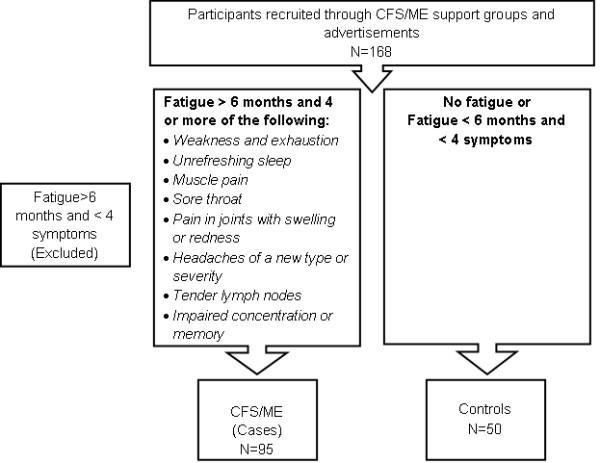
We included 95 CFS/ME patients and 50 healthy controls. All participants were assessed on natural killer (NK) and CD8(+) T cell cytotoxic activities, Th1 and Th2 cytokine profile of CD4(+) T cells, expression of vasoactive intestinal peptide receptor 2 (VPACR2), levels of NK phenotypes (CD56(bright) and CD56(dim)) and regulatory T cells expressing FoxP3 transcription factor.
RESULTS
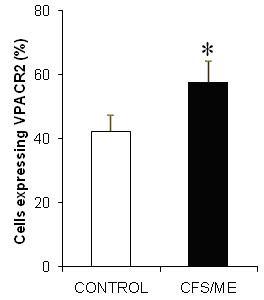
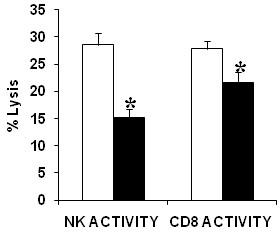
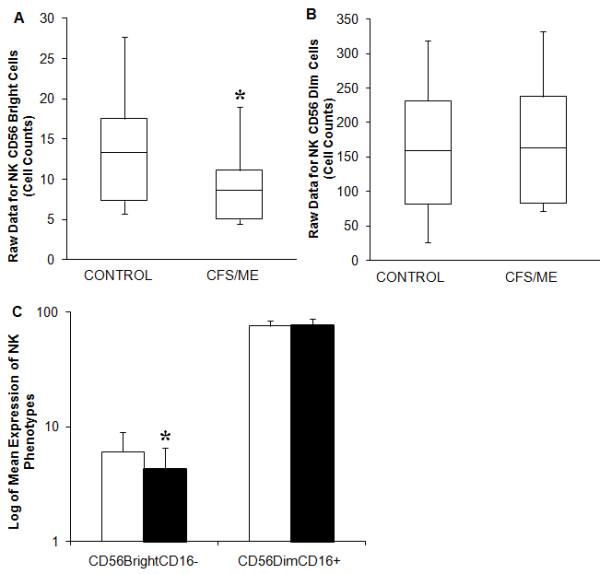
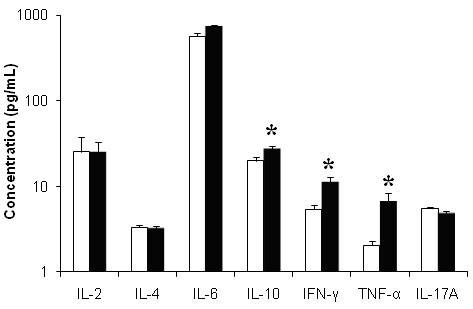
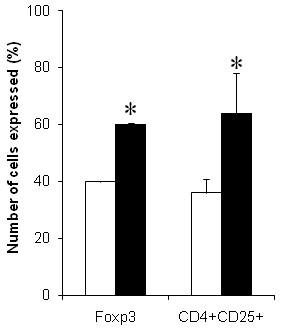
Compared to healthy individuals, CFS/ME patients displayed significant increases in IL-10, IFN-γ, TNF-α, CD4(+)CD25(+) T cells, FoxP3 and VPACR2 expression. Cytotoxic activity of NK and CD8(+) T cells and NK phenotypes, in particular the CD56(bright) NK cells were significantly decreased in CFS/ME patients. Additionally granzyme A and granzyme K expression were reduced while expression levels of perforin were significantly increased in the CFS/ME population relative to the control population. These data suggest significant dysregulation of the immune system in CFS/ME patients.
CONCLUSIONS
Our study found immunological abnormalities which may serve as biomarkers in CFS/ME patients with potential for an application as a diagnostic tool.
背景
慢性疲劳综合征/肌痛性脑脊髓炎(CFS/ME)的特征是严重且持续的疲劳,认知和其他生理功能下降,导致生活质量严重下降,临床管理困难,医疗保健系统成本高。迄今为止,尚无已证实的发病机制可以令人满意地解释这种疾病。研究已经发现免疫功能异常,但这些数据不一致。我们研究了 CFS/ME 患者的免疫功能标志物(包括新标志物)的特征。
方法
我们纳入了 95 名 CFS/ME 患者和 50 名健康对照者。所有参与者均进行自然杀伤(NK)和 CD8(+)T 细胞细胞毒性活性、CD4(+)T 细胞 Th1 和 Th2 细胞因子谱、血管活性肠肽受体 2(VPACR2)表达、NK 表型(CD56(bright)和 CD56(dim))和表达 FoxP3 转录因子的调节性 T 细胞的检测。
结果
与健康个体相比,CFS/ME 患者的 IL-10、IFN-γ、TNF-α、CD4(+)CD25(+)T 细胞、FoxP3 和 VPACR2 表达显著增加。CFS/ME 患者的 NK 和 CD8(+)T 细胞细胞毒性活性以及 NK 表型,尤其是 CD56(bright)NK 细胞明显减少。此外,CFS/ME 患者中颗粒酶 A 和颗粒酶 K 的表达减少,而穿孔素的表达水平明显增加。这些数据表明 CFS/ME 患者的免疫系统存在显著失调。
结论
我们的研究发现了免疫异常,这些异常可能作为 CFS/ME 患者的生物标志物,具有作为诊断工具的应用潜力。

 Zotero 插件