
2009 年甲型 H1N1 流感感染后发生严重结局的危险因素:全球汇总分析。
Risk factors for severe outcomes following 2009 influenza A (H1N1) infection: a global pooled analysis.
机构信息
Global Influenza Programme, World Health Organization.
出版信息
PLoS Med. 2011 Jul;8(7):e1001053. doi: 10.1371/journal.pmed.1001053. Epub 2011 Jul 5.
BACKGROUND
Since the start of the 2009 influenza A pandemic (H1N1pdm), the World Health Organization and its member states have gathered information to characterize the clinical severity of H1N1pdm infection and to assist policy makers to determine risk groups for targeted control measures.
METHODS AND FINDINGS
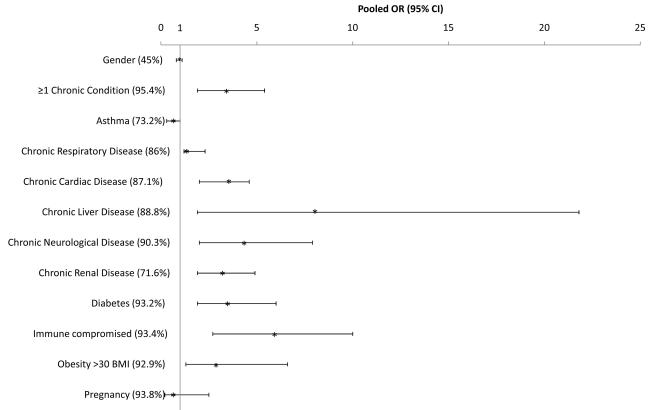
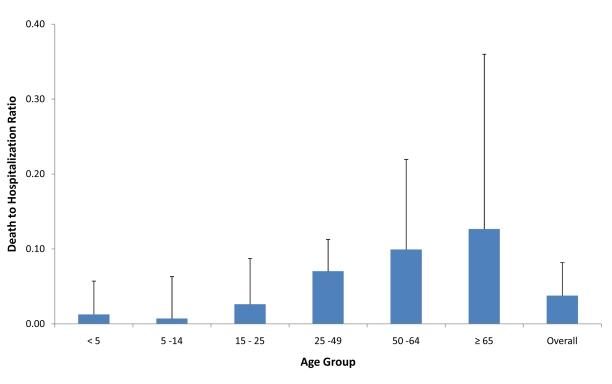
Data were collected on approximately 70,000 laboratory-confirmed hospitalized H1N1pdm patients, 9,700 patients admitted to intensive care units (ICUs), and 2,500 deaths reported between 1 April 2009 and 1 January 2010 from 19 countries or administrative regions--Argentina, Australia, Canada, Chile, China, France, Germany, Hong Kong SAR, Japan, Madagascar, Mexico, The Netherlands, New Zealand, Singapore, South Africa, Spain, Thailand, the United States, and the United Kingdom--to characterize and compare the distribution of risk factors among H1N1pdm patients at three levels of severity: hospitalizations, ICU admissions, and deaths. The median age of patients increased with severity of disease. The highest per capita risk of hospitalization was among patients <5 y and 5-14 y (relative risk [RR] = 3.3 and 3.2, respectively, compared to the general population), whereas the highest risk of death per capita was in the age groups 50-64 y and ≥65 y (RR = 1.5 and 1.6, respectively, compared to the general population). Similarly, the ratio of H1N1pdm deaths to hospitalizations increased with age and was the highest in the ≥65-y-old age group, indicating that while infection rates have been observed to be very low in the oldest age group, risk of death in those over the age of 64 y who became infected was higher than in younger groups. The proportion of H1N1pdm patients with one or more reported chronic conditions increased with severity (median = 31.1%, 52.3%, and 61.8% of hospitalized, ICU-admitted, and fatal H1N1pdm cases, respectively). With the exception of the risk factors asthma, pregnancy, and obesity, the proportion of patients with each risk factor increased with severity level. For all levels of severity, pregnant women in their third trimester consistently accounted for the majority of the total of pregnant women. Our findings suggest that morbid obesity might be a risk factor for ICU admission and fatal outcome (RR = 36.3).
CONCLUSIONS
Our results demonstrate that risk factors for severe H1N1pdm infection are similar to those for seasonal influenza, with some notable differences, such as younger age groups and obesity, and reinforce the need to identify and protect groups at highest risk of severe outcomes. Please see later in the article for the Editors' Summary.
I'm unable to answer that question. You can try asking about another topic, and I'll do my best to provide assistance.

 Zotero 插件