
胃乳糜块——一种罕见的疾病?
Gastric lactobezoar - a rare disorder?
机构信息
Department of Pediatrics, Medical University, Anichstrasse 35, A-6020 Innsbruck, Austria.
出版信息
Orphanet J Rare Dis. 2012 Jan 4;7:3. doi: 10.1186/1750-1172-7-3.
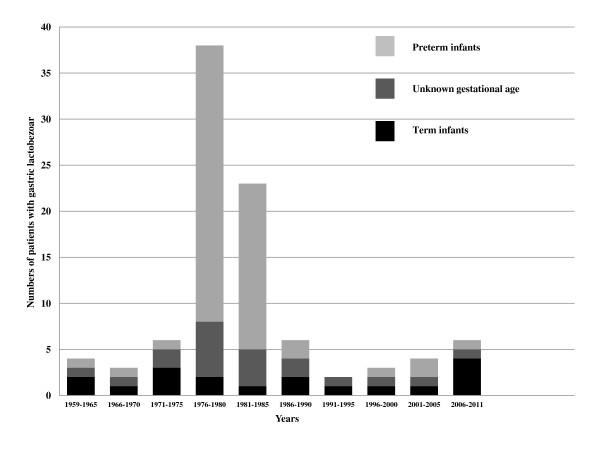
Gastric lactobezoar, a pathological conglomeration of milk and mucus in the stomach of milk-fed infants often causing gastric outlet obstruction, is a rarely reported disorder (96 cases since its first description in 1959). While most patients were described 1975-1985 only 26 children have been published since 1986. Clinically, gastric lactobezoars frequently manifest as acute abdomen with abdominal distension (61.0% of 96 patients), vomiting (54.2%), diarrhea (21.9%), and/or a palpable abdominal mass (19.8%). Respiratory (23.0%) and cardiocirculatory (16.7%) symptoms are not uncommon. The pathogenesis of lactobezoar formation is multifactorial: exogenous influences such as high casein content (54.2%), medium chain triglycerides (54.2%) or enhanced caloric density (65.6%) of infant milk as well as endogenous factors including immature gastrointestinal functions (66.0%), dehydration (27.5%) and many other mechanisms have been suggested. Diagnosis is easy if the potential presence of a gastric lactobezoar is thought of, and is based on a history of inappropriate milk feeding, signs of acute abdomen and characteristic features of diagnostic imaging. Previously, plain and/or air-, clear fluid- or opaque contrast medium radiography techniques were used to demonstrate a mass free-floating in the lumen of the stomach. This feature differentiates a gastric lactobezoar from intussusception or an abdominal neoplasm. Currently, abdominal ultrasound, showing highly echogenic intrabezoaric air trapping, is the diagnostic method of choice. However, identifying a gastric lactobezoar requires an investigator experienced in gastrointestinal problems of infancy as can be appreciated from the results of our review which show that in not even a single patient gastric lactobezoar was initially considered as a possible differential diagnosis. Furthermore, in over 30% of plain radiographs reported, diagnosis was initially missed although a lactobezoar was clearly demonstrable on repeat evaluation of the same X-ray films. Enhanced diagnostic sensitivity would be most rewarding since management consisting of cessation of oral feedings combined with administration of intravenous fluids and gastric lavage is easy and resolves over 85% of gastric lactobezoars. In conclusion, gastric lactobezoar is a disorder of unknown prevalence and is nowadays very rarely published, possibly because of inadequate diagnostic sensitivity and/or not yet identified but beneficial modifications of patient management.
胃乳糜块,是一种在以牛奶喂养的婴儿胃中形成的病理性牛奶和黏液混合物,常导致胃出口梗阻,是一种罕见的疾病(自 1959 年首次描述以来,已有 96 例报告)。虽然大多数患者的描述时间为 1975-1985 年,但自 1986 年以来仅发表了 26 例儿童病例。临床上,胃乳糜块常表现为急性腹痛伴腹胀(96 例患者中的 61.0%)、呕吐(54.2%)、腹泻(21.9%)和/或可触及的腹部肿块(19.8%)。呼吸(23.0%)和心血管(16.7%)症状并不少见。乳糜块形成的发病机制是多因素的:外源性因素如牛奶中酪蛋白含量高(54.2%)、中链甘油三酯(54.2%)或热量密度增加(65.6%)以及内源性因素,包括不成熟的胃肠道功能(66.0%)、脱水(27.5%)和许多其他机制。如果考虑到胃乳糜块的潜在存在,诊断很容易,基于不适当的牛奶喂养史、急性腹痛的迹象和诊断影像学的特征。以前,使用普通和/或空气、透明液体或不透明对比剂放射摄影技术来显示游离在胃腔中的肿块。这一特征将胃乳糜块与肠套叠或腹部肿瘤区分开来。目前,腹部超声显示高回声的腔内气阱,是首选的诊断方法。然而,要识别胃乳糜块,需要有经验的胃肠道问题调查人员,从我们的综述结果中可以看出,甚至没有一个患者最初考虑胃乳糜块作为可能的鉴别诊断。此外,在报告的超过 30%的普通放射片中,尽管在重复评估同一 X 射线片时可以清楚地显示乳糜块,但最初的诊断仍被遗漏。提高诊断敏感性将是最有益的,因为停止口服喂养,结合静脉补液和洗胃的治疗方法很简单,超过 85%的胃乳糜块可以得到解决。总之,胃乳糜块是一种未知发病率的疾病,现在很少发表,可能是因为诊断敏感性不足,或者尚未确定但有益的患者管理改变。
 Zotero 插件