
瘤胃在铜和硫钼酸盐吸收中的作用。
Role of the rumen in copper and thiomolybdate absorption.
机构信息
School of Veterinary Medicine and Science, University of Nottingham, Sutton Bonington Campus, Sutton Bonington, Loughborough LE12 5RD, UK.
出版信息
Nutr Res Rev. 2011 Dec;24(2):176-82. doi: 10.1017/S0954422411000059.
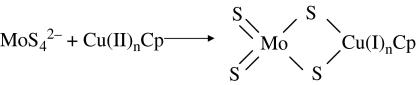
The rumen is the site of significant interactions between Cu, S and Mo. It also shows reactions between Cu, S and Fe. The interaction between Mo and S results in the formation of thiomolybdates, which in the absence of adequate quantities of rumen Cu are absorbed into the animal and bind to Cu in biological compounds. This is the cause of thiomolybdate toxicity, often misleadingly called Cu deficiency. The effects of thiomolybdates being absorbed into the animal are considered, especially how thiomolybdates bind to Cu-containing compounds such as enzymes, decreasing their activity without removing the active Cu component. The sources of Cu, Mo, Fe and S are examined, including the impacts of water and soil on the animal's intake. Within the present review we have been able to provide evidence that: all classes of thiomolybdates are formed in the rumen; in the absence of available Cu all thiomolybdates can be absorbed into the animal rapidly though the rumen wall or via the small intestine; thiomolybdates bind to Cu in biological compounds and are able to cause problems; effects of thiomolybdate are reversible in vivo and in vitro on cessation of thiomolybdate challenge; the tetra-thiomolybdate form is the most potent Cu binder with decreased potency with decreasing S in the compound. Fe will exacerbate a thiomolybdate problem but will not directly cause it.
瘤胃是铜、硫和钼之间发生显著相互作用的场所。它还显示出铜、硫和铁之间的反应。钼和硫之间的相互作用导致形成硫代钼酸盐,如果瘤胃中没有足够数量的铜,这些硫代钼酸盐就会被动物吸收,并与生物化合物中的铜结合。这就是硫代钼酸盐毒性的原因,这种毒性常被错误地称为铜缺乏症。本文考虑了硫代钼酸盐被动物吸收的影响,特别是硫代钼酸盐如何与含铜化合物(如酶)结合,在不除去活性铜成分的情况下降低其活性。本文还检查了铜、钼、铁和硫的来源,包括水和土壤对动物摄入的影响。在本综述中,我们已经能够提供证据证明:所有类型的硫代钼酸盐都在瘤胃中形成;在缺乏可用铜的情况下,所有硫代钼酸盐都可以迅速通过瘤胃壁或小肠被动物吸收;硫代钼酸盐与生物化合物中的铜结合,并能够引起问题;在停止硫代钼酸盐挑战后,体内和体外的硫代钼酸盐的影响是可逆的;四硫代钼酸盐形式是最有效的铜结合物,随着化合物中硫的减少,其结合能力降低。铁会加剧硫代钼酸盐的问题,但不会直接引起它。


 Zotero 插件