
新型没食子酰基腙席夫碱酮衍生物的合成、表征、X 射线晶体学、乙酰胆碱酯酶抑制和抗氧化活性。
Synthesis, characterization, X-ray crystallography, acetyl cholinesterase inhibition and antioxidant activities of some novel ketone derivatives of gallic hydrazide-derived Schiff bases.
机构信息
Department of Chemistry, Faculty of Science, University of Malaya, Kuala Lumpur 50603, Malaysia.
出版信息
Molecules. 2012 Feb 28;17(3):2408-27. doi: 10.3390/molecules17032408.
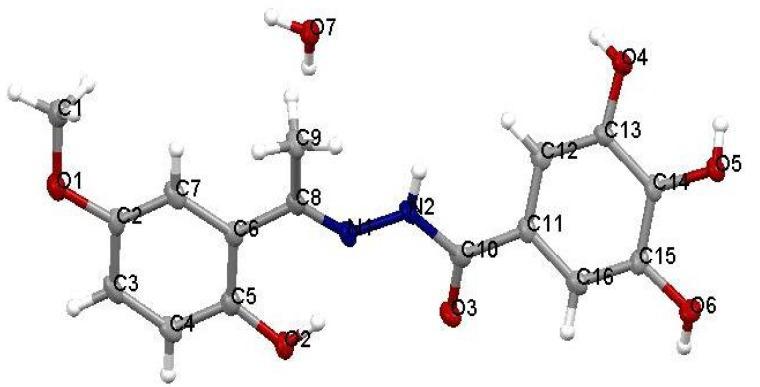
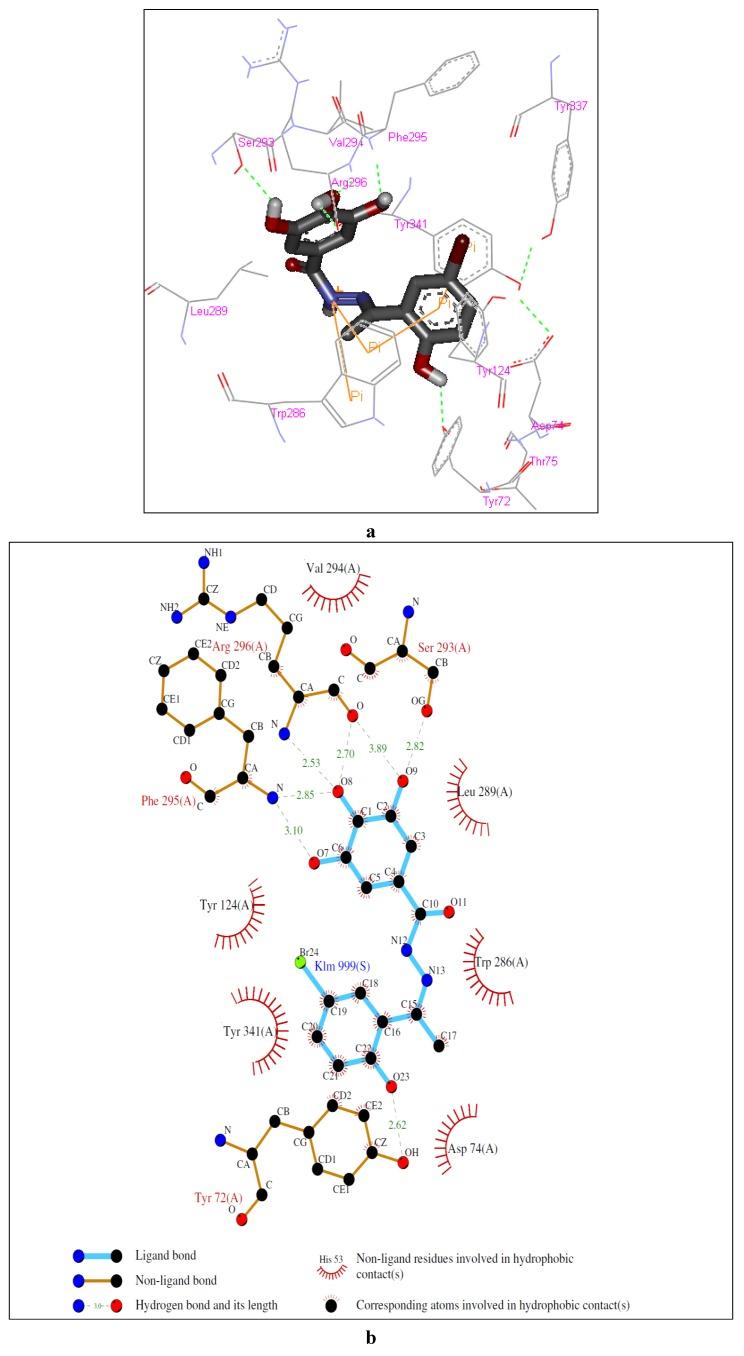
Alzheimer's disease (AD) is the most common form of dementia among older people and the pathogenesis of this disease is associated with oxidative stress. Acetylcholinesterase inhibitors with antioxidant activities are considered potential treatments for AD. Some novel ketone derivatives of gallic hydrazide-derived Schiff bases were synthesized and examined for their antioxidant activities and in vitro and in silico acetyl cholinesterase inhibition. The compounds were characterized using spectroscopy and X-ray crystallography. The ferric reducing antioxidant power (FRAP) and 2,2-diphenyl-1-picrylhydrazyl (DPPH) assays revealed that all the compounds have strong antioxidant activities. N-(1-(5-bromo-2-hydroxyphenyl)-ethylidene)-3,4,5-trihydroxybenzohydrazide (2) was the most potent inhibitor of human acetyl cholinesterase, giving an inhibition rate of 77% at 100 μM. Molecular docking simulation of the ligand-enzyme complex suggested that the ligand may be positioned in the enzyme's active-site gorge, interacting with residues in the peripheral anionic subsite (PAS) and acyl binding pocket (ABP). The current work warrants further preclinical studies to assess the potential for these novel compounds for the treatment of AD.
阿尔茨海默病(AD)是老年人中最常见的痴呆症形式,这种疾病的发病机制与氧化应激有关。具有抗氧化活性的乙酰胆碱酯酶抑制剂被认为是 AD 的潜在治疗方法。合成了一些新型的没食子酰肼衍生的席夫碱的酮衍生物,并研究了它们的抗氧化活性以及体外和计算机模拟乙酰胆碱酯酶抑制作用。使用光谱法和 X 射线晶体学对化合物进行了表征。铁还原抗氧化能力(FRAP)和 2,2-二苯基-1-苦基肼基(DPPH)测定表明,所有化合物均具有很强的抗氧化活性。N-(1-(5-溴-2-羟基苯基)-亚乙基)-3,4,5-三羟基苯甲酰肼(2)是最有效的人乙酰胆碱酯酶抑制剂,在 100 μM 时抑制率为 77%。配体-酶复合物的分子对接模拟表明,配体可能位于酶的活性部位峡谷中,与周围阴离子亚位点(PAS)和酰基结合口袋(ABP)中的残基相互作用。目前的工作需要进一步的临床前研究,以评估这些新型化合物治疗 AD 的潜力。



 Zotero 插件