
用人工合成纳米材料进行生态毒性测试方法的实用考虑因素:到目前为止我们学到了什么?
Practical considerations for conducting ecotoxicity test methods with manufactured nanomaterials: what have we learnt so far?
机构信息
Ecotoxicology Research and Innovation Centre, School of Biomedical & Biological Sciences, University of Plymouth, Plymouth, UK.
出版信息
Ecotoxicology. 2012 May;21(4):933-72. doi: 10.1007/s10646-012-0862-y. Epub 2012 Mar 16.
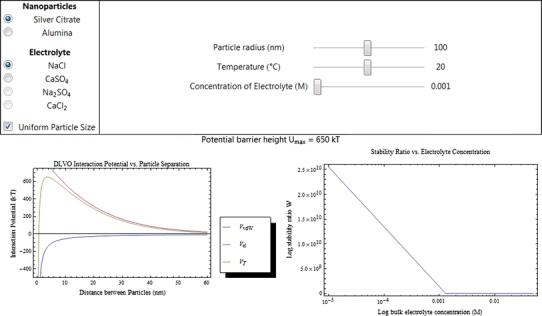
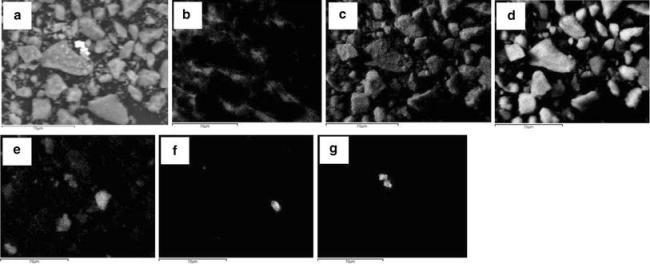
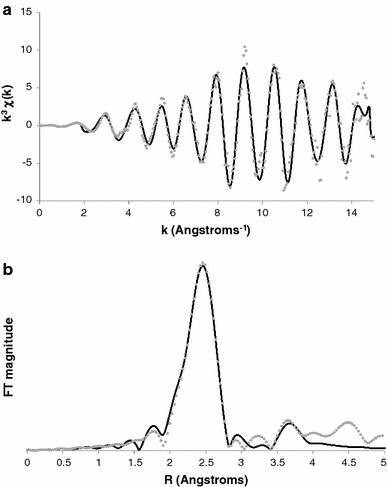
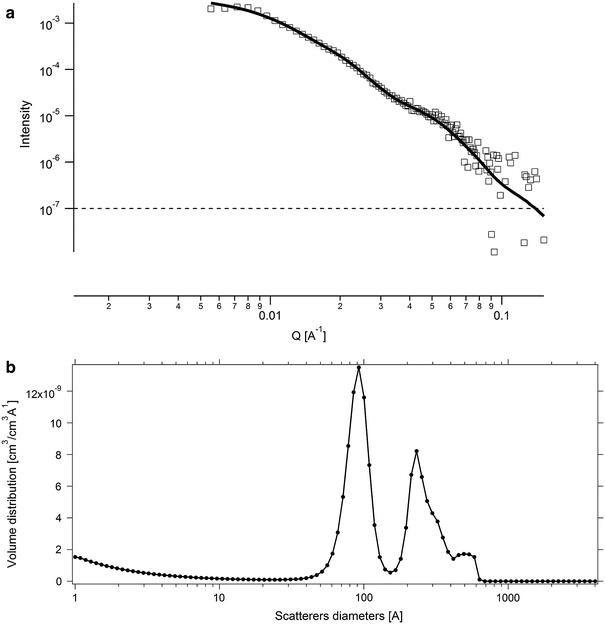
This review paper reports the consensus of a technical workshop hosted by the European network, NanoImpactNet (NIN). The workshop aimed to review the collective experience of working at the bench with manufactured nanomaterials (MNMs), and to recommend modifications to existing experimental methods and OECD protocols. Current procedures for cleaning glassware are appropriate for most MNMs, although interference with electrodes may occur. Maintaining exposure is more difficult with MNMs compared to conventional chemicals. A metal salt control is recommended for experiments with metallic MNMs that may release free metal ions. Dispersing agents should be avoided, but if they must be used, then natural or synthetic dispersing agents are possible, and dispersion controls essential. Time constraints and technology gaps indicate that full characterisation of test media during ecotoxicity tests is currently not practical. Details of electron microscopy, dark-field microscopy, a range of spectroscopic methods (EDX, XRD, XANES, EXAFS), light scattering techniques (DLS, SLS) and chromatography are discussed. The development of user-friendly software to predict particle behaviour in test media according to DLVO theory is in progress, and simple optical methods are available to estimate the settling behaviour of suspensions during experiments. However, for soil matrices such simple approaches may not be applicable. Alternatively, a Critical Body Residue approach may be taken in which body concentrations in organisms are related to effects, and toxicity thresholds derived. For microbial assays, the cell wall is a formidable barrier to MNMs and end points that rely on the test substance penetrating the cell may be insensitive. Instead assays based on the cell envelope should be developed for MNMs. In algal growth tests, the abiotic factors that promote particle aggregation in the media (e.g. ionic strength) are also important in providing nutrients, and manipulation of the media to control the dispersion may also inhibit growth. Controls to quantify shading effects, and precise details of lighting regimes, shaking or mixing should be reported in algal tests. Photosynthesis may be more sensitive than traditional growth end points for algae and plants. Tests with invertebrates should consider non-chemical toxicity from particle adherence to the organisms. The use of semi-static exposure methods with fish can reduce the logistical issues of waste water disposal and facilitate aspects of animal husbandry relevant to MMNs. There are concerns that the existing bioaccumulation tests are conceptually flawed for MNMs and that new test(s) are required. In vitro testing strategies, as exemplified by genotoxicity assays, can be modified for MNMs, but the risk of false negatives in some assays is highlighted. In conclusion, most protocols will require some modifications and recommendations are made to aid the researcher at the bench.
这篇综述文章报告了由欧洲网络 NanoImpactNet (NIN) 主办的技术研讨会的共识。该研讨会旨在回顾与制造纳米材料 (MNMs) 一起在实验室工作的集体经验,并建议修改现有的实验方法和经合组织协议。目前,用于清洁玻璃器皿的程序适用于大多数 MNMs,尽管可能会干扰电极。与传统化学品相比,MNMs 更难维持暴露。对于可能释放游离金属离子的金属 MNMs 实验,建议使用金属盐对照。如果必须使用分散剂,则应避免使用,但如果必须使用,则可以使用天然或合成分散剂,并进行分散控制。时间限制和技术差距表明,在生态毒性测试中对测试介质进行全面表征目前是不切实际的。电子显微镜、暗场显微镜、一系列光谱方法(EDX、XRD、XANES、EXAFS)、光散射技术(DLS、SLS)和色谱的详细信息进行了讨论。根据 DLVO 理论,开发用于预测测试介质中颗粒行为的用户友好型软件正在进行中,并且存在简单的光学方法来估计实验过程中悬浮液的沉降行为。然而,对于土壤基质,这种简单的方法可能不适用。或者,可以采用临界体残留物方法,其中生物体中的体浓度与效应相关,并得出毒性阈值。对于微生物测定,细胞壁是 MNMs 的一个巨大障碍,依赖于测试物质穿透细胞的终点可能不敏感。相反,应该为 MNMs 开发基于细胞包膜的测定方法。在藻类生长测试中,促进介质中颗粒聚集的非生物因素(例如离子强度)对于提供营养也很重要,并且控制介质以控制分散也可能抑制生长。应报告藻类测试中的量化阴影效应的对照物以及光照制度、摇晃或混合的精确细节。光合作用可能比藻类和植物的传统生长终点更敏感。对于无脊椎动物的测试应考虑到颗粒附着在生物体上的非化学毒性。使用鱼类的半静态暴露方法可以减少废水处理的后勤问题,并促进与 MMNs 相关的动物饲养方面。有人担心现有的生物积累测试对于 MNMs 在概念上存在缺陷,需要新的测试。体外测试策略,如遗传毒性测定,可以为 MNMs 进行修改,但是一些测定中假阴性的风险突出。总之,大多数方案都需要进行一些修改,并提出了一些建议,以帮助实验室的研究人员。
 Zotero 插件