
白藜芦醇通过抑制雷帕霉素靶蛋白抑制丙酮酸激酶 M2 从而抑制癌细胞代谢。
Resveratrol inhibits cancer cell metabolism by down regulating pyruvate kinase M2 via inhibition of mammalian target of rapamycin.
机构信息
National Centre of Applied Human Genetics, School of Life Sciences, Jawaharlal Nehru University, New Delhi, India.
出版信息
PLoS One. 2012;7(5):e36764. doi: 10.1371/journal.pone.0036764. Epub 2012 May 4.
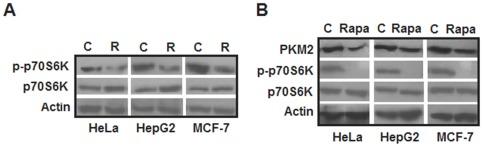
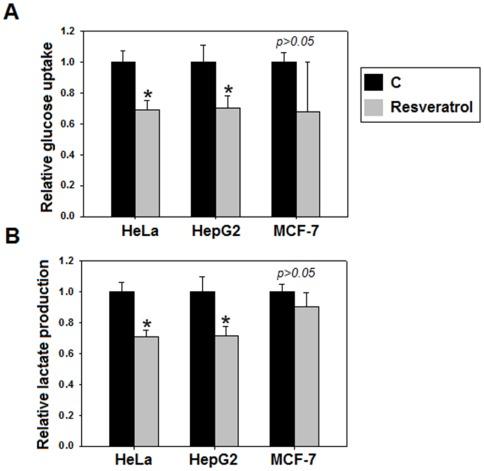
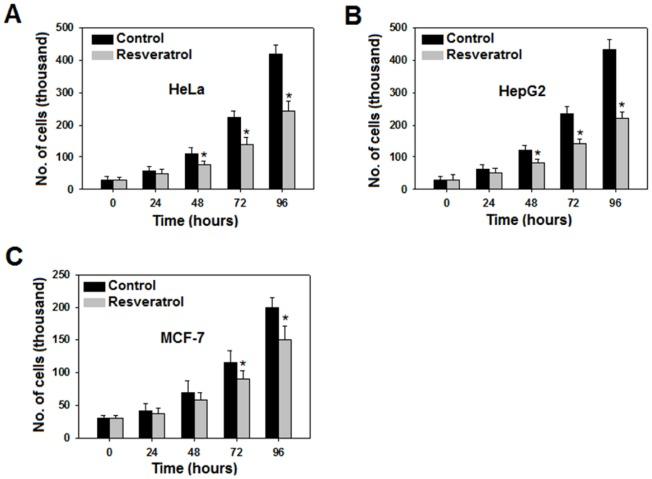
Metabolism of cancer cells with pyruvate kinase M2 (PKM2) at its centre stage has assumed a prime significance in cancer research in recent times. Cancer cell metabolism, characterized by enhanced glucose uptake, production of lactate and anabolism is considered an ideal target for therapeutic interventions. Expression of PKM2 switches metabolism in favor of cancer cells, therefore, the present study was designed to investigate the hitherto unknown effect of resveratrol, a phytoalexin, on PKM2 expression and resultant implications on cancer metabolism. We observed that resveratrol down-regulated PKM2 expression by inhibiting mTOR signaling and suppressed cancer metabolism, adjudged by decreased glucose uptake, lactate production (aerobic glycolysis) and reduced anabolism (macromolecule synthesis) in various cancer cell lines. A contingent decrease in intracellular levels of ribose-5-phosphate (R5P), a critical intermediate of pentose phosphate pathway, accounted for a reduced anabolism. Consequently, the state of suppressed cancer metabolism resulted in decreased cellular proliferation. Interestingly, shRNA-mediated silencing of PKM2 inhibited glucose uptake and lactate production, providing evidence for the critical role of PKM2 and its mediation in the observed effects of resveratrol on cancer metabolism. Further, an over-expression of PKM2 abolished the observed effects of resveratrol, signifying the role of PKM2 downregulation as a critical function of resveratrol. The study reports a novel PKM2-mediated effect of resveratrol on cancer metabolism and provides a new dimension to its therapeutic potential.
近年来,以丙酮酸激酶 M2(PKM2)为中心的癌细胞代谢在癌症研究中具有重要意义。癌细胞代谢的特征是增强葡萄糖摄取、乳酸生成和合成代谢,被认为是治疗干预的理想靶点。PKM2 的表达将代谢转向有利于癌细胞,因此,本研究旨在研究白藜芦醇(一种植物抗毒素)对 PKM2 表达的未知影响及其对癌症代谢的影响。我们观察到,白藜芦醇通过抑制 mTOR 信号通路下调 PKM2 的表达,抑制了各种癌细胞系的葡萄糖摄取、乳酸生成(有氧糖酵解)和合成代谢(大分子合成),从而抑制了癌症代谢。细胞内核糖-5-磷酸(R5P)水平的相应降低,这是戊糖磷酸途径的关键中间产物,导致合成代谢减少。因此,受抑制的癌症代谢状态导致细胞增殖减少。有趣的是,shRNA 介导的 PKM2 沉默抑制了葡萄糖摄取和乳酸生成,为 PKM2 的关键作用及其在白藜芦醇对癌症代谢观察到的影响中的介导作用提供了证据。此外,过表达 PKM2 消除了白藜芦醇的观察到的效果,表明 PKM2 下调是白藜芦醇的关键功能。该研究报告了白藜芦醇对癌症代谢的一种新的 PKM2 介导的作用,并为其治疗潜力提供了一个新的维度。




 Zotero 插件