
刺突蛋白融合肽与猫冠状病毒的毒力。
Spike protein fusion peptide and feline coronavirus virulence.
机构信息
Virology Division, Department of Infectious Diseases and Immunology, Veterinary Faculty, Utrecht University, Utrecht, the Netherlands.
出版信息
Emerg Infect Dis. 2012 Jul;18(7):1089-95. doi: 10.3201/eid1807.120143.
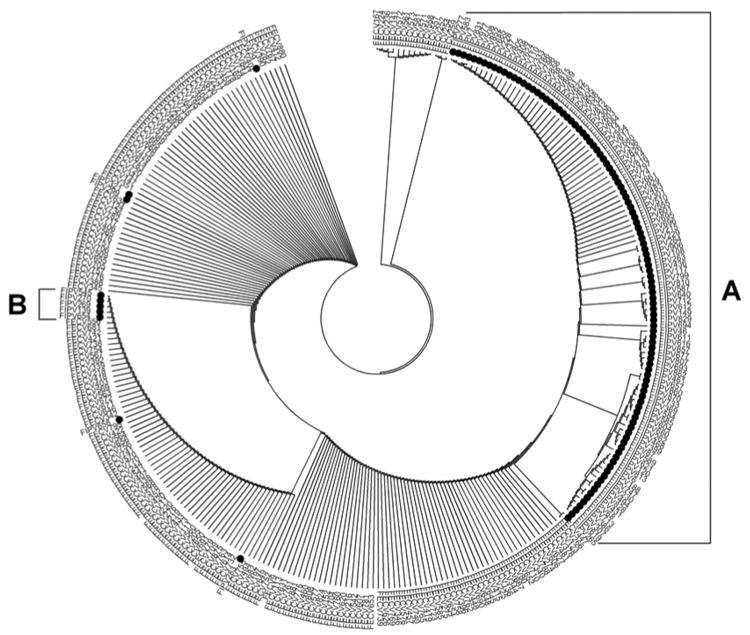
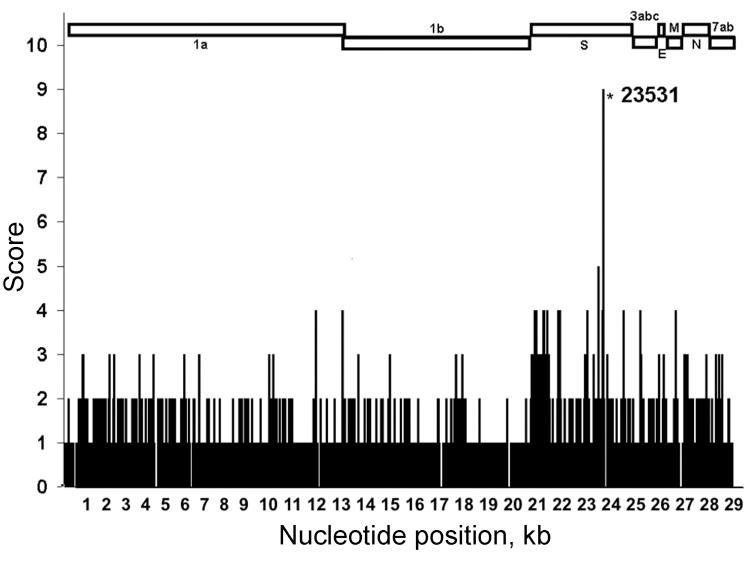
Coronaviruses are well known for their potential to change their host or tissue tropism, resulting in unpredictable new diseases and changes in pathogenicity; severe acute respiratory syndrome and feline coronaviruses, respectively, are the most recognized examples. Feline coronaviruses occur as 2 pathotypes: nonvirulent feline enteric coronaviruses (FECVs), which replicate in intestinal epithelium cells, and lethal feline infectious peritonitis viruses (FIPVs), which replicate in macrophages. Evidence indicates that FIPV originates from FECV by mutation, but consistent distinguishing differences have not been established. We sequenced the full genome of 11 viruses of each pathotype and then focused on the single most distinctive site by additionally sequencing hundreds of viruses in that region. As a result, we identified 2 alternative amino acid differences in the putative fusion peptide of the spike protein that together distinguish FIPV from FECV in >95% of cases. By these and perhaps other mutations, the virus apparently acquires its macrophage tropism and spreads systemically.
冠状病毒以其改变宿主或组织嗜性的能力而闻名,这可能导致新的不可预测疾病和致病性的变化;严重急性呼吸综合征和猫冠状病毒分别是最被认可的例子。猫冠状病毒有两种不同的病理类型:非毒性猫肠道冠状病毒(FECV),在肠道上皮细胞中复制,以及致命性猫传染性腹膜炎病毒(FIPV),在巨噬细胞中复制。有证据表明,FIPV 是由 FECV 突变而来的,但尚未建立一致的区别特征。我们对每种病理类型的 11 种病毒进行了全基因组测序,然后特别关注该区域的数百种病毒的单一最显著位点。结果,我们在刺突蛋白的假定融合肽中发现了 2 种替代的氨基酸差异,这 2 种差异在超过 95%的情况下可以将 FIPV 与 FECV 区分开来。通过这些差异和其他可能的突变,病毒显然获得了其对巨噬细胞的嗜性并在体内传播。

 Zotero 插件