
从 RNA-seq 数据中检测外显子的差异使用。
Detecting differential usage of exons from RNA-seq data.
机构信息
European Molecular Biology Laboratory, 69111 Heidelberg, Germany.
出版信息
Genome Res. 2012 Oct;22(10):2008-17. doi: 10.1101/gr.133744.111. Epub 2012 Jun 21.
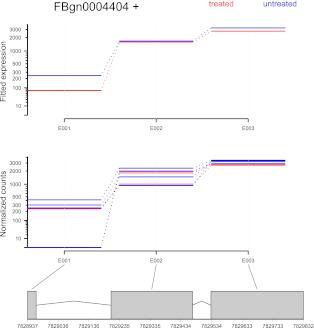
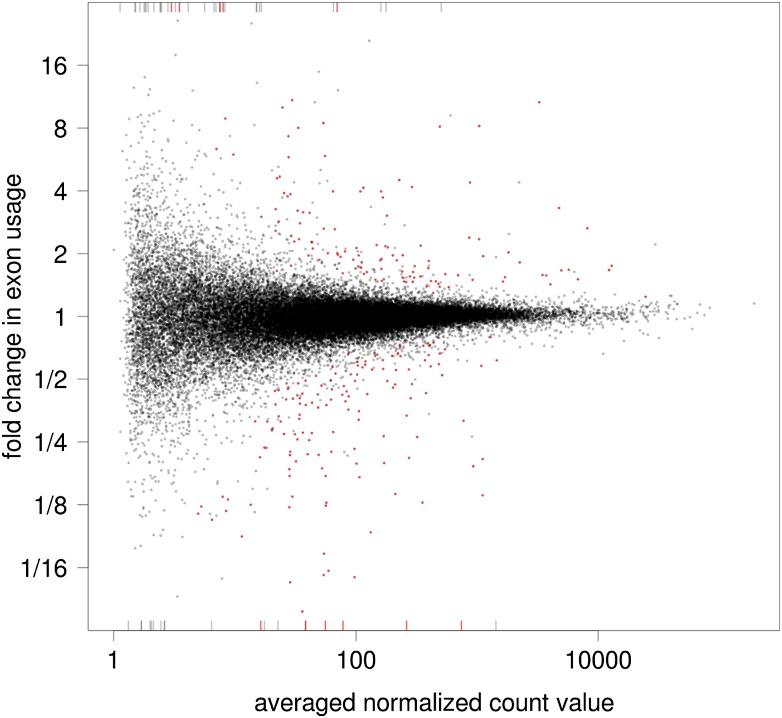
RNA-seq is a powerful tool for the study of alternative splicing and other forms of alternative isoform expression. Understanding the regulation of these processes requires sensitive and specific detection of differential isoform abundance in comparisons between conditions, cell types, or tissues. We present DEXSeq, a statistical method to test for differential exon usage in RNA-seq data. DEXSeq uses generalized linear models and offers reliable control of false discoveries by taking biological variation into account. DEXSeq detects with high sensitivity genes, and in many cases exons, that are subject to differential exon usage. We demonstrate the versatility of DEXSeq by applying it to several data sets. The method facilitates the study of regulation and function of alternative exon usage on a genome-wide scale. An implementation of DEXSeq is available as an R/Bioconductor package.
RNA-seq 是研究选择性剪接和其他形式的选择性异构体表达的有力工具。要了解这些过程的调控,就需要在条件、细胞类型或组织之间的比较中,灵敏而特异地检测出差异异构体的丰度。我们提出了 DEXSeq,这是一种用于 RNA-seq 数据中检测差异外显子使用的统计方法。DEXSeq 使用广义线性模型,并通过考虑生物学变异性来可靠地控制假发现率。DEXSeq 能够高灵敏度地检测到受差异外显子使用影响的基因,在许多情况下还能检测到外显子。我们通过将其应用于多个数据集来展示 DEXSeq 的多功能性。该方法有助于在全基因组范围内研究选择性外显子使用的调控和功能。DEXSeq 的实现作为 R/Bioconductor 包提供。


 Zotero 插件