
在鼠神经囊虫病期间室管膜屏障的转录组分析。
Transcriptome analysis of the ependymal barrier during murine neurocysticercosis.
机构信息
Department of Microbiology and Immunology, University of Texas Health Science Center, San Antonio, TX, USA.
出版信息
J Neuroinflammation. 2012 Jun 25;9:141. doi: 10.1186/1742-2094-9-141.
BACKGROUND
Central nervous system (CNS) barriers play a pivotal role in the protection and homeostasis of the CNS by enabling the exchange of metabolites while restricting the entry of xenobiotics, blood cells and blood-borne macromolecules. While the blood-brain barrier and blood-cerebrospinal fluid barrier (CSF) control the interface between the blood and CNS, the ependyma acts as a barrier between the CSF and parenchyma, and regulates hydrocephalic pressure and metabolic toxicity. Neurocysticercosis (NCC) is an infection of the CNS caused by the metacestode (larva) of Taenia solium and a major cause of acquired epilepsy worldwide. The common clinical manifestations of NCC are seizures, hydrocephalus and symptoms due to increased intracranial pressure. The majority of the associated pathogenesis is attributed to the immune response against the parasite. The properties of the CNS barriers, including the ependyma, are affected during infection, resulting in disrupted homeostasis and infiltration of leukocytes, which correlates with the pathology and disease symptoms of NCC patients.
RESULTS
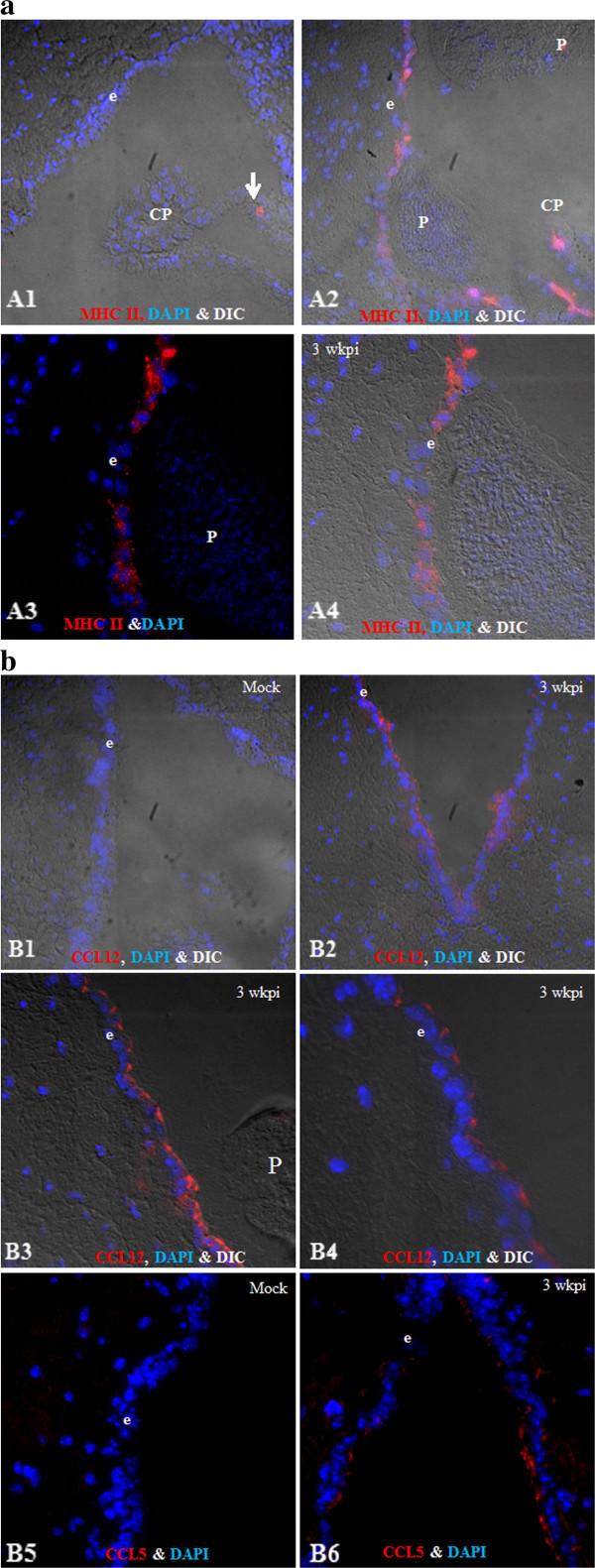
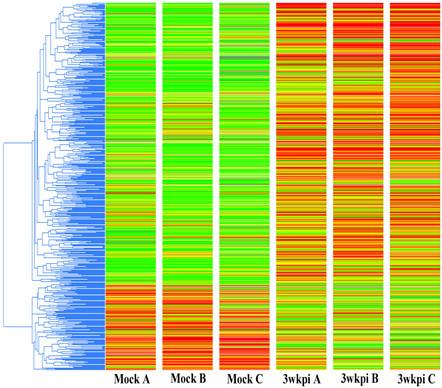
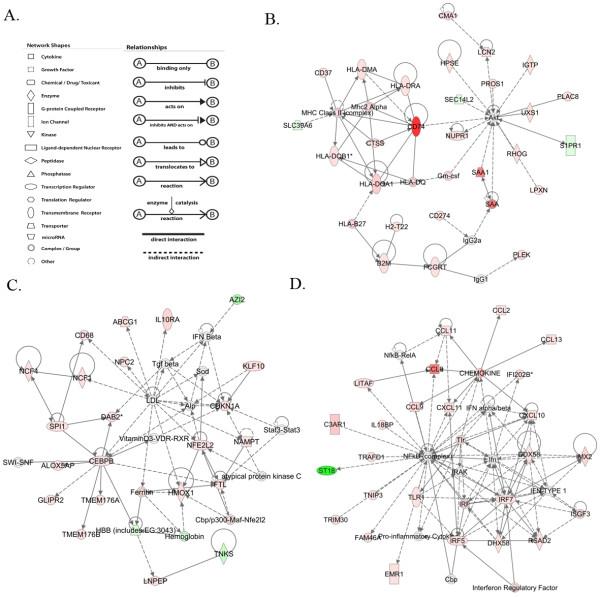
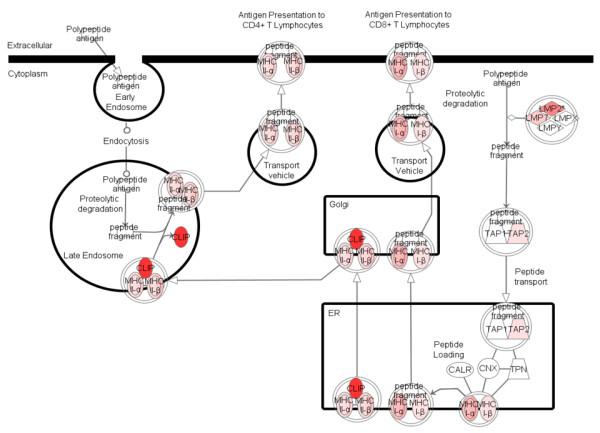
In order to characterize the role of the ependymal barrier in the immunopathogenesis of NCC, we isolated ependymal cells using laser capture microdissection from mice infected or mock-infected with the closely related parasite Mesocestoides corti, and analyzed the genes that were differentially expressed using microarray analysis. The expression of 382 genes was altered. Immune response-related genes were verified by real-time RT-PCR. Ingenuity Pathway Analysis (IPA) software was used to analyze the biological significance of the differentially expressed genes, and revealed that genes known to participate in innate immune responses, antigen presentation and leukocyte infiltration were affected along with the genes involved in carbohydrate, lipid and small molecule biochemistry. Further, MHC class II molecules and chemokines, including CCL12, were found to be upregulated at the protein level using immunofluorescence microscopy. This is important, because these molecules are members of the most significant pathways by IPA analyses.
CONCLUSION
Thus, our study indicates that ependymal cells actively express immune mediators and likely contribute to the observed immunopathogenesis during infection. Of particular interest is the major upregulation of antigen presentation pathway-related genes and chemokines/cytokines. This could explain how the ependyma is a prominent source of leukocyte infiltration into ventricles through the disrupted ependymal lining by way of pial vessels present in the internal leptomeninges in murine NCC.
背景
中枢神经系统(CNS)屏障通过允许代谢物交换,同时限制外源性物质、血细胞和血源性大分子进入,在保护和维持中枢神经系统内环境稳定方面发挥着关键作用。血脑屏障和血脑脊液屏障(CSF)控制着血液与中枢神经系统之间的界面,而室管膜则充当着 CSF 与实质之间的屏障,调节脑积水压力和代谢毒性。神经囊尾蚴病(NCC)是由猪带绦虫的囊尾蚴(幼虫)引起的中枢神经系统感染,也是全世界获得性癫痫的主要病因。NCC 的常见临床表现为癫痫发作、脑积水和颅内压升高引起的症状。大多数相关发病机制归因于对寄生虫的免疫反应。CNS 屏障的特性,包括室管膜,在感染过程中会受到影响,导致内环境稳态破坏和白细胞浸润,这与 NCC 患者的病理学和疾病症状相关。
结果
为了描述室管膜屏障在 NCC 免疫发病机制中的作用,我们使用激光捕获显微切割术从感染或模拟感染密切相关的寄生虫Mesocestoides corti 的小鼠中分离出室管膜细胞,并使用微阵列分析检测差异表达的基因。有 382 个基因的表达发生改变。通过实时 RT-PCR 验证了免疫反应相关基因。使用 IPA 软件分析差异表达基因的生物学意义,结果表明,参与固有免疫反应、抗原呈递和白细胞浸润的基因以及涉及碳水化合物、脂质和小分子生物化学的基因受到影响。此外,通过免疫荧光显微镜发现 MHC Ⅱ类分子和趋化因子,包括 CCL12,在蛋白质水平上上调。这很重要,因为这些分子是 IPA 分析中最重要途径的成员。
结论
因此,我们的研究表明,室管膜细胞积极表达免疫介质,可能有助于在感染过程中观察到的免疫发病机制。特别值得关注的是抗原呈递途径相关基因和趋化因子/细胞因子的大量上调。这可以解释为什么在 NCC 中,室管膜通过内部软脑膜中的软脑膜血管破坏室管膜衬里,成为白细胞通过血脑屏障进入脑室的主要来源。

 Zotero 插件