
印记基因在产前、围产期和产后人类组织中的差异甲基化区域。
Differentially methylated regions of imprinted genes in prenatal, perinatal and postnatal human tissues.
机构信息
Department of Obstetrics and Gynecology, Duke University Medical Center, Durham, North Carolina, United States of America.
出版信息
PLoS One. 2012;7(7):e40924. doi: 10.1371/journal.pone.0040924. Epub 2012 Jul 13.
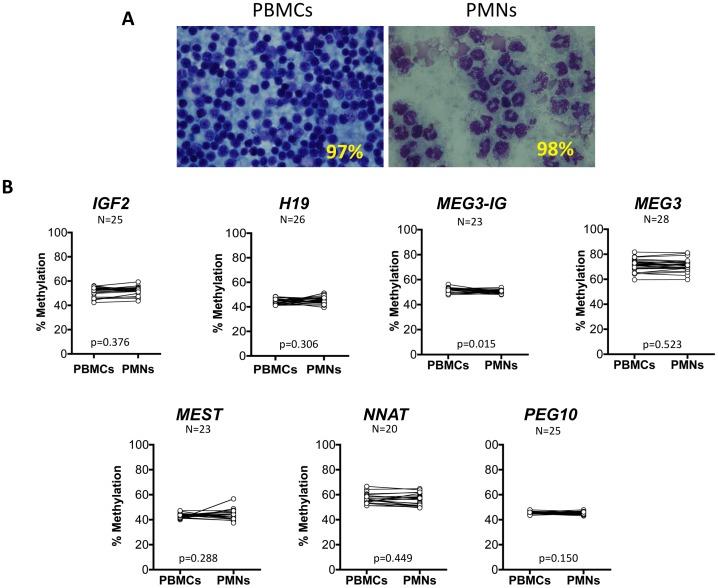
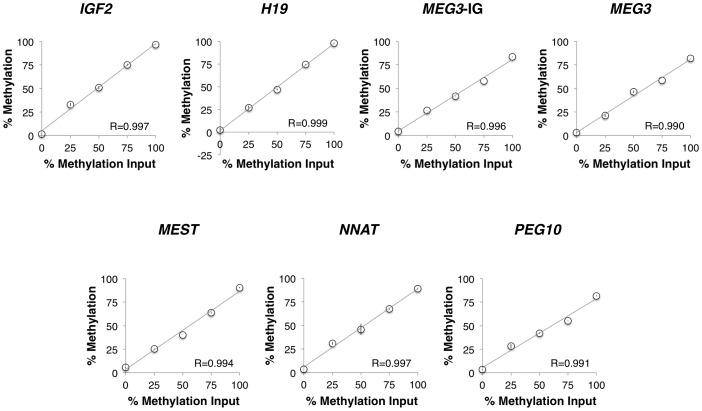
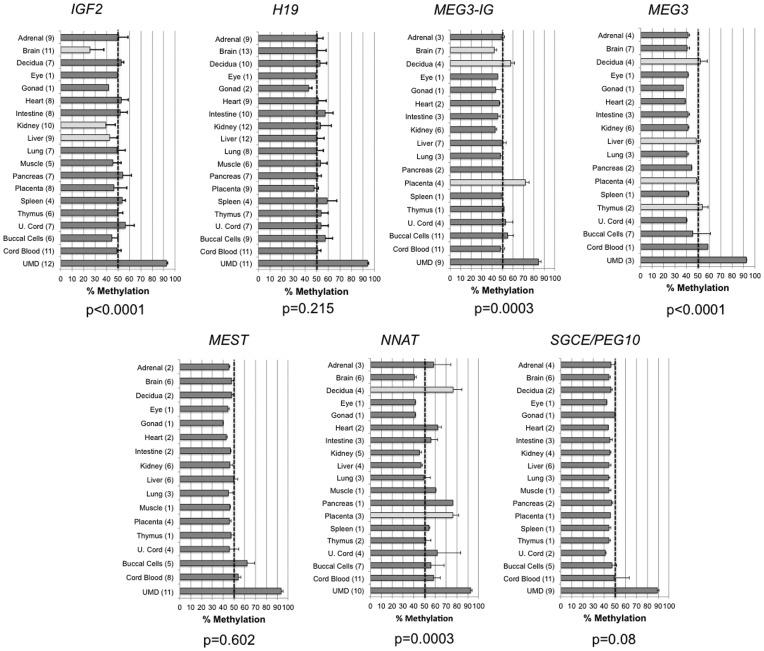
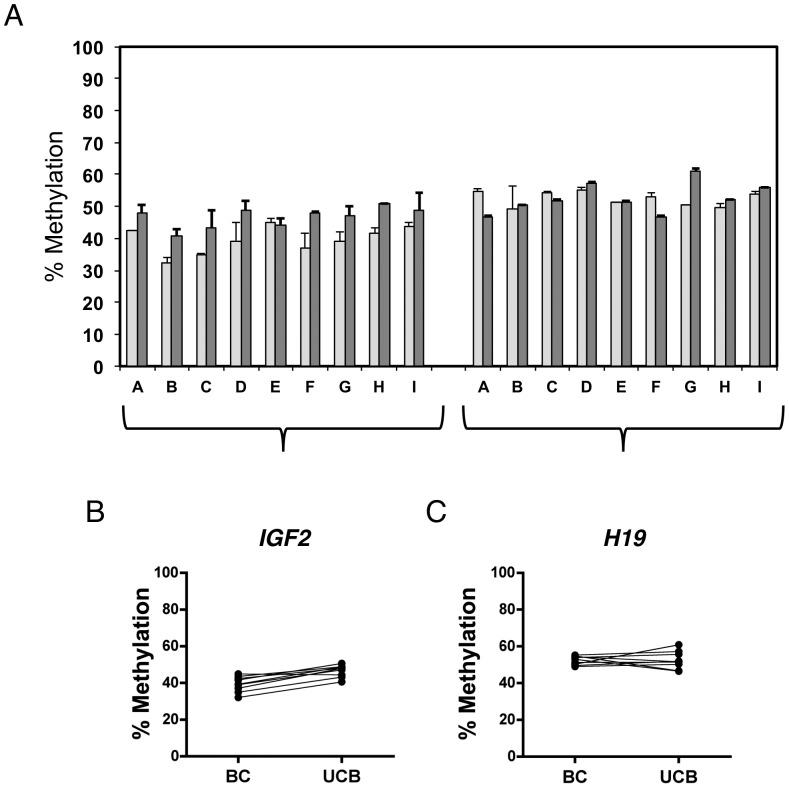
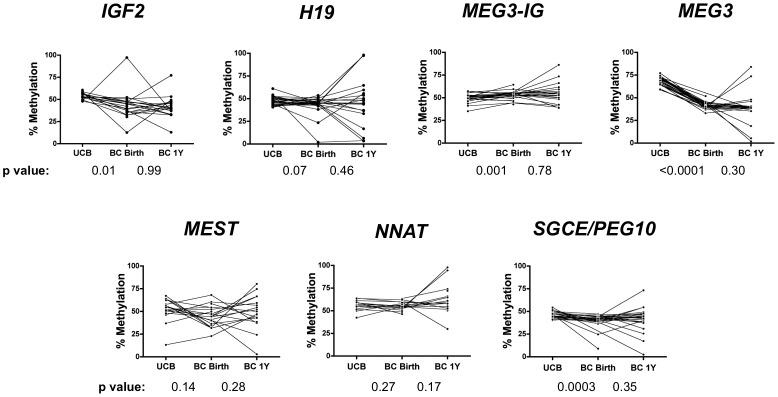
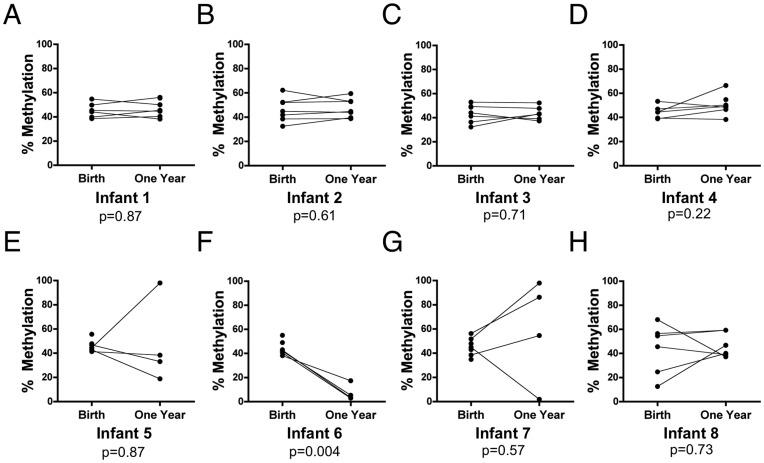
Epigenetic plasticity in relation to in utero exposures may mechanistically explain observed differences in the likelihood of developing common complex diseases including hypertension, diabetes and cardiovascular disease through the cumulative effects of subtle alterations in gene expression. Imprinted genes are essential mediators of growth and development and are characterized by differentially methylated regulatory regions (DMRs) that carry parental allele-specific methylation profiles. This theoretical 50% level of methylation provides a baseline from which endogenously- or exogenously-induced deviations in methylation can be detected. We quantified DNA methylation at imprinted gene DMRs in a large panel of human conceptal tissues, in matched buccal cell specimens collected at birth and at one year of age, and in the major cell fractions of umbilical cord blood to assess the stability of methylation at these regions. DNA methylation was measured using validated pyrosequencing assays at seven DMRs regulating the IGF2/H19, DLK1/MEG3, MEST, NNAT and SGCE/PEG10 imprinted domains. DMR methylation did not significantly differ for the H19, MEST and SGCE/PEG10 DMRs across all conceptal tissues analyzed (ANOVA p>0.10). Methylation differences at several DMRs were observed in tissues from brain (IGF2 and MEG3-IG DMRs), liver (IGF2 and MEG3 DMRs) and placenta (both DLK1/MEG3 DMRs and NNAT DMR). In most infants, methylation profiles in buccal cells at birth and at one year of age were comparable, as was methylation in the major cell fractions of umbilical cord blood. Several infants showed temporal deviations in methylation at multiple DMRs. Similarity of inter-individual and intra-individual methylation at some, but not all of the DMRs analyzed supports the possibility that methylation of these regions can serve as useful biosensors of exposure.
与宫内暴露相关的表观遗传可塑性可能通过基因表达的细微改变的累积效应,从机制上解释观察到的常见复杂疾病(包括高血压、糖尿病和心血管疾病)发生的可能性的差异。印迹基因是生长和发育的重要调节剂,其特征是差异甲基化的调节区域(DMR),携带亲本等位基因特异性甲基化谱。这种理论上的 50%甲基化水平提供了一个基线,从中可以检测到内源性或外源性诱导的甲基化偏差。我们在大量人类概念组织中定量测定了印迹基因 DMR 的 DNA 甲基化,在出生时和一岁时采集的匹配口腔细胞标本以及脐带血的主要细胞部分中进行了测定,以评估这些区域甲基化的稳定性。使用经过验证的焦磷酸测序测定法在七个调节 IGF2/H19、DLK1/MEG3、MEST、NNAT 和 SGCE/PEG10 印迹域的 DMR 上测量 DNA 甲基化。在分析的所有概念组织中,H19、MEST 和 SGCE/PEG10 DMR 的 DNA 甲基化没有显著差异(ANOVA p>0.10)。在来自大脑(IGF2 和 MEG3-IG DMR)、肝脏(IGF2 和 MEG3 DMR)和胎盘(DLK1/MEG3 DMR 和 NNAT DMR)的组织中观察到几个 DMR 的甲基化差异。在大多数婴儿中,出生时和一岁时口腔细胞的甲基化谱相似,脐带血主要细胞部分的甲基化也相似。一些婴儿在多个 DMR 中表现出时间上的甲基化偏差。一些(但不是所有)分析的 DMR 中个体间和个体内甲基化的相似性支持这些区域的甲基化可以作为暴露的有用生物传感器的可能性。


 Zotero 插件