
对 Menkes 病的 mosaic 小鼠(Atp7a mo-ms)模型进行产前治疗,使用二甲基二硫代氨基甲酸盐(DMDTC)结合铜。
Prenatal treatment of mosaic mice (Atp7a mo-ms) mouse model for Menkes disease, with copper combined by dimethyldithiocarbamate (DMDTC).
机构信息
Department of Genetics and Evolution, Institute of Zoology, Jagiellonian University, Krakow, Poland.
出版信息
PLoS One. 2012;7(7):e40400. doi: 10.1371/journal.pone.0040400. Epub 2012 Jul 18.
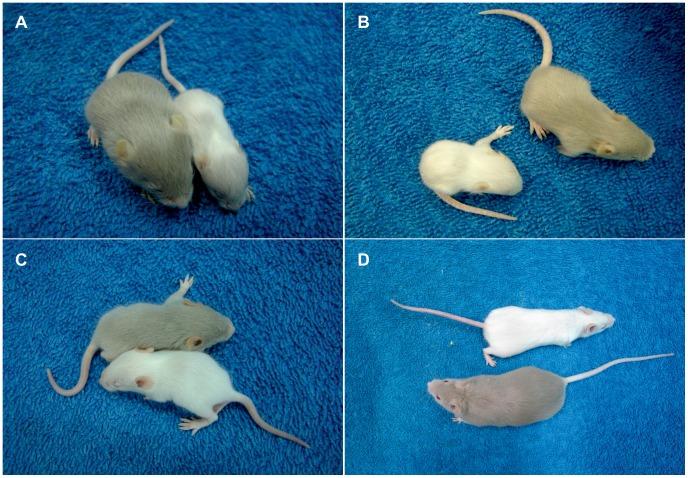
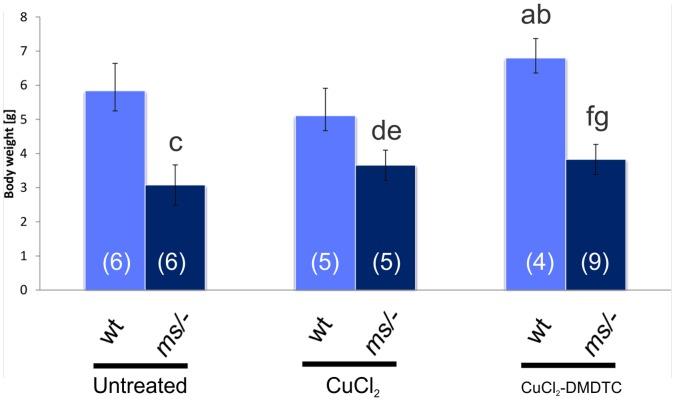
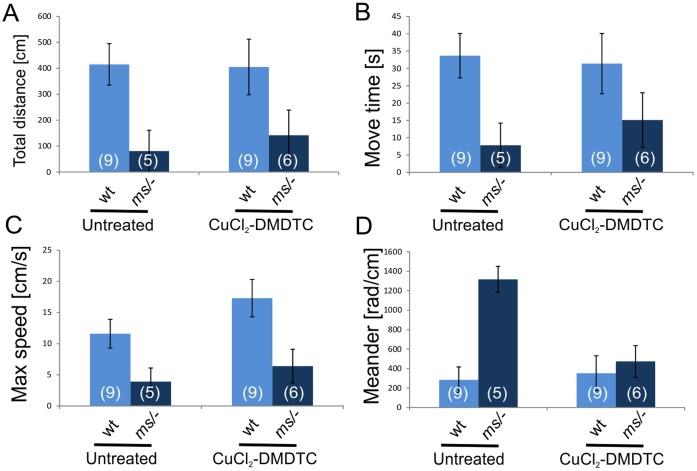
Menkes disease is a fatal neurodegenerative disorder in infants caused by mutations in the gene ATP7A which encodes a copper (Cu) transporter. Defects in ATP7A lead to accumulated copper in the small intestine and kidneys and to copper deficiencies in the brain and the liver. The copper level in the kidney in postnatal copper-treated Menkes patients may reach toxic levels. The mouse model, mosaic Atp7a (mo-ms) recapitulates the Menkes phenotype and die about 15.75±1.5 days of age. In the present study we found that prenatal treatment of mosaic murine fetuses throughout gestation days 7, 11, 15 and 18 with a combination of CuCl(2) (50 mg/kg) and dimethyldithiocarbamate (DMDTC) (280 mg/kg) leads to an increase in survival to about 76±25.3 days, whereas treatment with CuCl(2) alone (50 mg/kg) only leads to survival for about 21 days ±5 days. These copper-DMDTC treated mutants showed an improved locomotor activity performance and a gain in body mass. In contrast to treatment with CuCl(2) alone, a significant increase in the amount of copper was observed in the brain after prenatal copper-DMDTC treatment as well as a decrease in the amount of accumulated copper in the kidney, both leading towards a normalization of the copper level. Although copper-DMDTC prenatal treatment only leads to a small increase in the sub-normal copper concentration in the liver and to an increase of copper in the already overloaded small intestine, the combined results suggest that prenatal copper-DMDTC treatment also should be considered for humans.
Menkes 病是一种致命的婴儿神经退行性疾病,由编码铜(Cu)转运体的基因 ATP7A 的突变引起。ATP7A 的缺陷导致小肠和肾脏中铜的积累以及大脑和肝脏中铜的缺乏。产后接受铜治疗的 Menkes 患者的肾脏中的铜含量可能达到毒性水平。小鼠模型,镶嵌 Atp7a(mo-ms)重现了 Menkes 表型,并在大约 15.75±1.5 天的年龄死亡。在本研究中,我们发现通过在妊娠第 7、11、15 和 18 天用 CuCl2(50 mg/kg)和二甲基二硫代氨基甲酸盐(DMDTC)(280 mg/kg)的组合对镶嵌鼠胎儿进行产前治疗,可将存活率提高到大约 76±25.3 天,而单独用 CuCl2(50 mg/kg)治疗仅导致大约 21 天±5 天的存活率。这些铜-DMDTC 处理的突变体表现出运动活性提高和体重增加。与单独用 CuCl2 治疗相比,在产前铜-DMDTC 处理后观察到大脑中的铜含量显著增加,同时肾脏中积累的铜含量减少,两者均导致铜水平正常化。尽管产前铜-DMDTC 治疗仅导致肝脏中低于正常的铜浓度略有增加,并增加了已经过载的小肠中的铜含量,但综合结果表明,也应考虑对人类进行产前铜-DMDTC 治疗。

 Zotero 插件