
阿奇霉素治疗支气管扩张症的原住民儿童:一项多中心随机对照试验的研究方案。
Azithromycin for Indigenous children with bronchiectasis: study protocol for a multi-centre randomized controlled trial.
机构信息
Menzies School of Health Research, Charles Darwin University, Darwin, NT, Australia.
出版信息
BMC Pediatr. 2012 Aug 14;12:122. doi: 10.1186/1471-2431-12-122.
BACKGROUND
The prevalence of chronic suppurative lung disease (CSLD) and bronchiectasis unrelated to cystic fibrosis (CF) among Indigenous children in Australia, New Zealand and Alaska is very high. Antibiotics are a major component of treatment and are used both on a short or long-term basis. One aim of long-term or maintenance antibiotics is to reduce the frequency of acute pulmonary exacerbations and symptoms. However, there are few studies investigating the efficacy of long-term antibiotic use for CSLD and non-CF bronchiectasis among children. This study tests the hypothesis that azithromycin administered once a week as maintenance antibiotic treatment will reduce the rate of pulmonary exacerbations in Indigenous children with bronchiectasis.
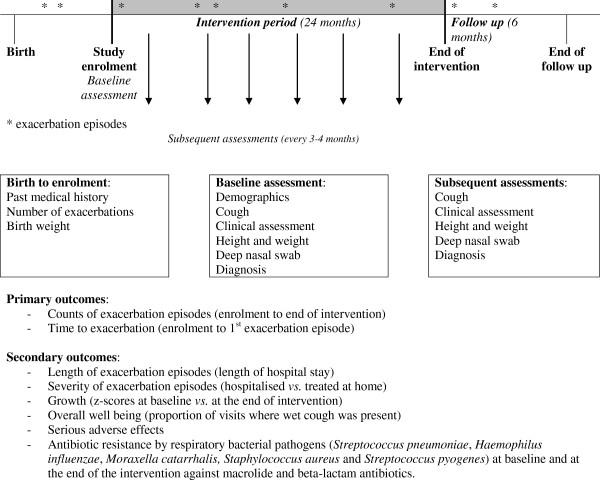
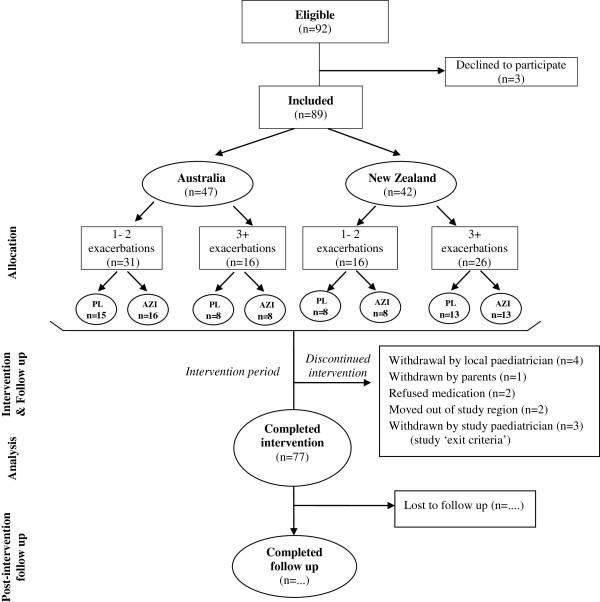
METHODS/DESIGN: We are conducting a multicentre, randomised, double-blind, placebo controlled clinical trial in Australia and New Zealand. Inclusion criteria are: Aboriginal, Torres Strait Islander, Maori or Pacific Island children aged 1 to 8 years, diagnosed with bronchiectasis (or probable bronchiectasis) with no underlying disease identified (such as CF or primary immunodeficiency), and having had at least one episode of pulmonary exacerbation in the last 12 months. After informed consent, children are randomised to receive either azithromycin (30 mg/kg once a week) or placebo (once a week) for 12-24 months from study entry. Primary outcomes are the rate of pulmonary exacerbations and time to pulmonary exacerbation determined by review of patient medical records. Secondary outcomes include length and severity of pulmonary exacerbation episodes, changes in growth, school loss, respiratory symptoms, forced expiratory volume in 1-second (FEV(1); for children ≥6 years), and sputum characteristics. Safety endpoints include serious adverse events. Antibiotic resistance in respiratory bacterial pathogens colonising the nasopharynx is monitored. Data derived from medical records and clinical assessments every 3 to 4 months for up to 24 months from study entry are recorded on standardised forms.
DISCUSSION
Should this trial demonstrate that azithromycin is efficacious in reducing the number of pulmonary exacerbations, it will provide a much-needed rationale for the use of long-term antibiotics in the medical management of bronchiectasis in Indigenous children.
TRIAL REGISTRATION
Australian New Zealand Clinical Trials Registry: ACTRN12610000383066.
背景
在澳大利亚、新西兰和阿拉斯加的土著儿童中,慢性化脓性肺部疾病(CSLD)和与囊性纤维化(CF)无关的支气管扩张症的患病率非常高。抗生素是治疗的主要组成部分,无论是短期还是长期使用。长期或维持抗生素的一个目的是减少急性肺部恶化和症状的发生频率。然而,很少有研究调查长期使用抗生素治疗儿童 CSLD 和非 CF 支气管扩张症的疗效。这项研究检验了以下假设:每周一次给予阿奇霉素作为维持抗生素治疗,将降低患有支气管扩张症的土著儿童肺部恶化的发生率。
方法/设计:我们正在澳大利亚和新西兰进行一项多中心、随机、双盲、安慰剂对照临床试验。纳入标准为:年龄在 1 至 8 岁之间的土著、托雷斯海峡岛民、毛利人或太平洋岛民儿童,被诊断为支气管扩张症(或可能的支气管扩张症),且无确定的潜在疾病(如 CF 或原发性免疫缺陷),并且在过去 12 个月中至少有一次肺部恶化发作。在获得知情同意后,儿童随机接受每周一次 30mg/kg 的阿奇霉素或安慰剂治疗 12-24 个月。主要结局是通过审查患者病历确定的肺部恶化发生率和时间。次要结局包括肺部恶化发作的长度和严重程度、生长变化、学业损失、呼吸道症状、用力呼气量 1 秒(FEV1;对于≥6 岁的儿童)和痰特征的变化。安全性终点包括严重不良事件。监测鼻咽部定植的呼吸道细菌病原体的抗生素耐药性。从研究入组开始,每 3 至 4 个月记录一次长达 24 个月的病历和临床评估数据,并记录在标准化表格上。
讨论
如果这项试验表明阿奇霉素能有效减少肺部恶化的次数,那么这将为土著儿童支气管扩张症的医学管理中长期使用抗生素提供一个急需的依据。
试验注册
澳大利亚新西兰临床试验注册:ACTRN12610000383066。
 Zotero 插件