
酵母线粒体动力蛋白 Dnm1 中的一个新基序对于衔接蛋白结合和膜募集是必需的。
A novel motif in the yeast mitochondrial dynamin Dnm1 is essential for adaptor binding and membrane recruitment.
机构信息
Department of Biochemistry, University of Utah School of Medicine, Salt Lake City, UT 84112, USA.
出版信息
J Cell Biol. 2012 Nov 12;199(4):613-22. doi: 10.1083/jcb.201207079.
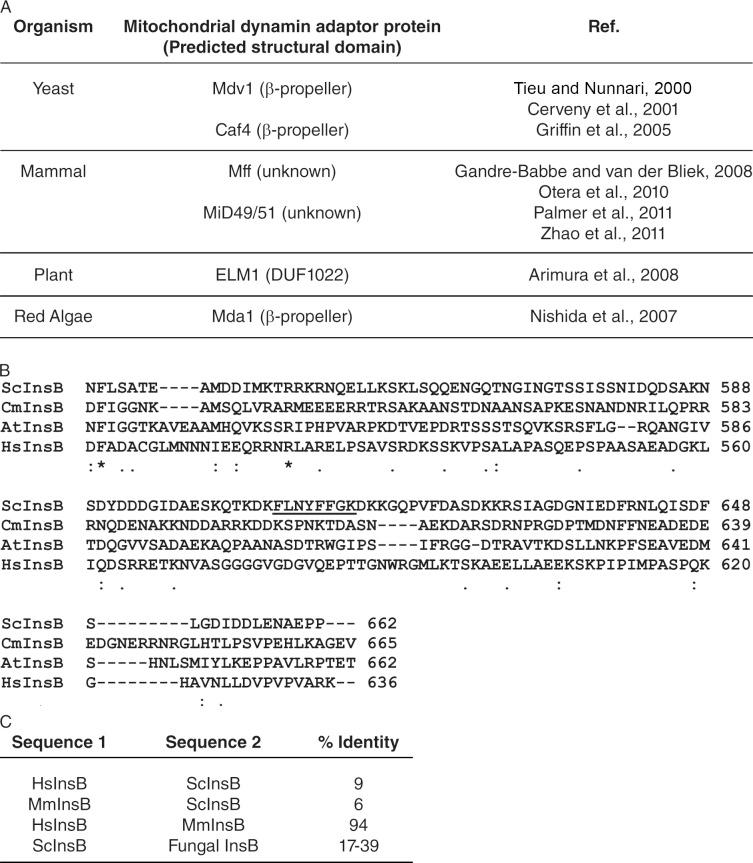
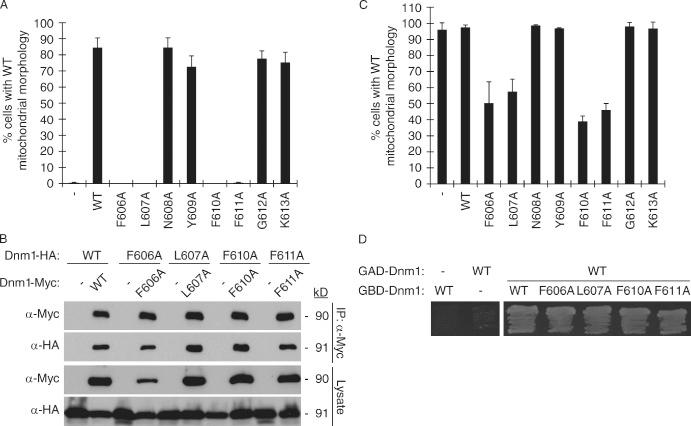
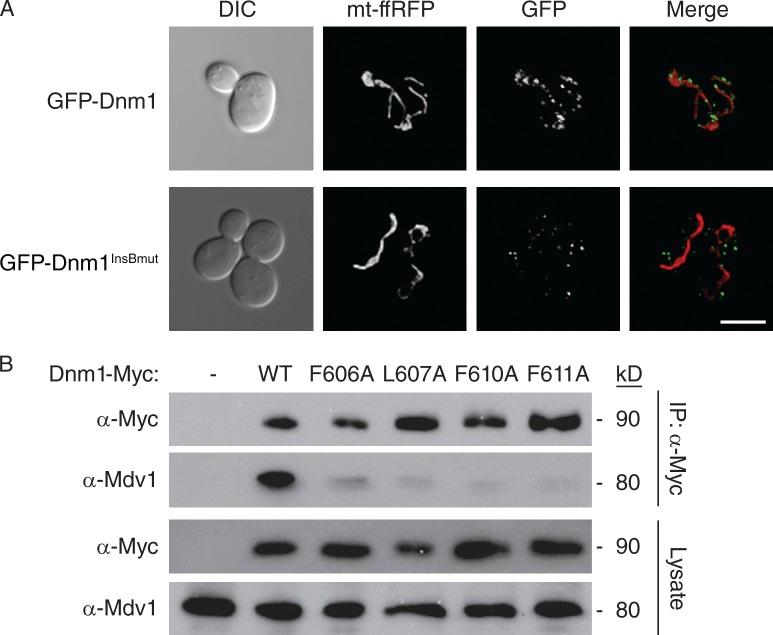
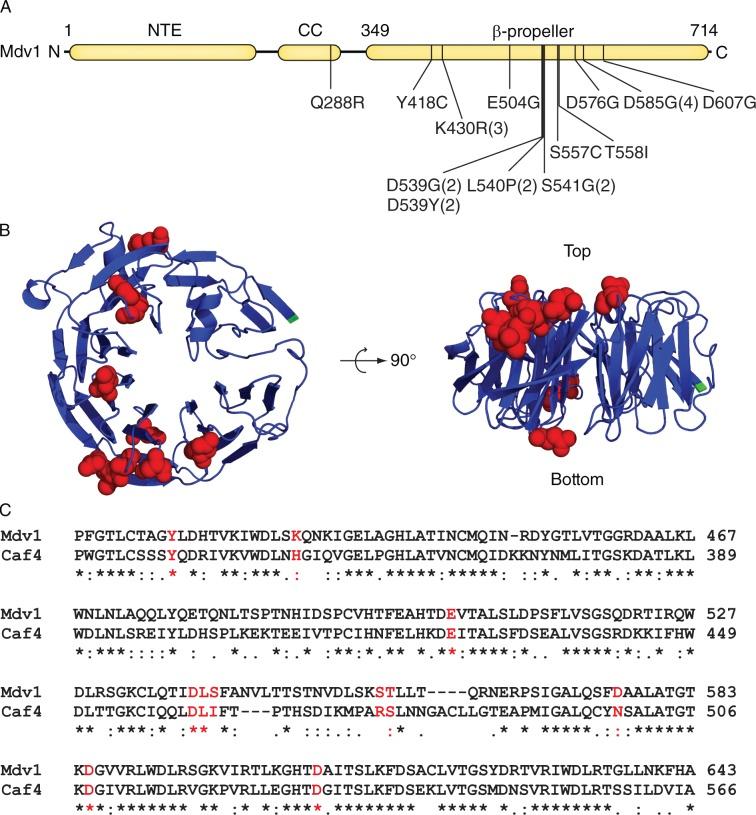
To initiate mitochondrial fission, dynamin-related proteins (DRPs) must bind specific adaptors on the outer mitochondrial membrane. The structural features underlying this interaction are poorly understood. Using yeast as a model, we show that the Insert B domain of the Dnm1 guanosine triphosphatase (a DRP) contains a novel motif required for association with the mitochondrial adaptor Mdv1. Mutation of this conserved motif specifically disrupted Dnm1-Mdv1 interactions, blocking Dnm1 recruitment and mitochondrial fission. Suppressor mutations in Mdv1 that restored Dnm1-Mdv1 interactions and fission identified potential protein-binding interfaces on the Mdv1 β-propeller domain. These results define the first known function for Insert B in DRP-adaptor interactions. Based on the variability of Insert B sequences and adaptor proteins, we propose that Insert B domains and mitochondrial adaptors have coevolved to meet the unique requirements for mitochondrial fission of different organisms.
为了启动线粒体裂变,与动力相关的蛋白(DRP)必须与外膜上的特定衔接蛋白结合。这种相互作用的结构特征还不太清楚。我们使用酵母作为模型,表明 Dnm1 鸟苷三磷酸酶的插入 B 结构域(DRP 的一部分)包含一个与线粒体衔接蛋白 Mdv1 结合所必需的新基序。该保守基序的突变特异性地破坏了 Dnm1-Mdv1 的相互作用,从而阻断了 Dnm1 的募集和线粒体裂变。在 Mdv1 中,恢复 Dnm1-Mdv1 相互作用和裂变的抑制突变鉴定了 Mdv1β-桨叶结构域上的潜在蛋白结合界面。这些结果定义了插入 B 在 DRP-衔接蛋白相互作用中的第一个已知功能。基于插入 B 序列和衔接蛋白的可变性,我们提出插入 B 结构域和线粒体衔接蛋白共同进化以满足不同生物的线粒体裂变的独特要求。


 Zotero 插件