
选择 tRNA 充质质量控制机制,增加遗传密码的错译。
Selection of tRNA charging quality control mechanisms that increase mistranslation of the genetic code.
机构信息
Department of Microbiology, Ohio State University, 484 West 12th Avenue, Columbus, OH 43210-1292, USA.
出版信息
Nucleic Acids Res. 2013 Jan;41(2):1104-12. doi: 10.1093/nar/gks1240. Epub 2012 Dec 6.
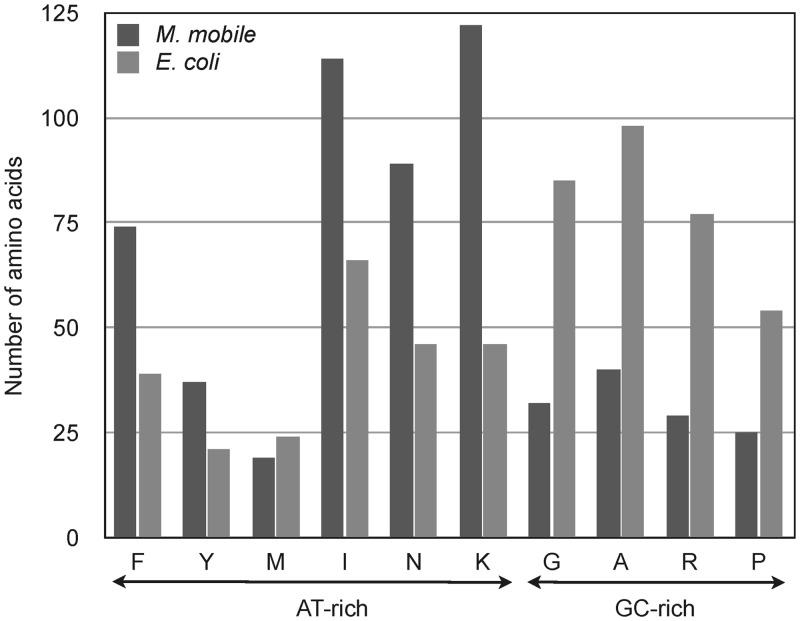
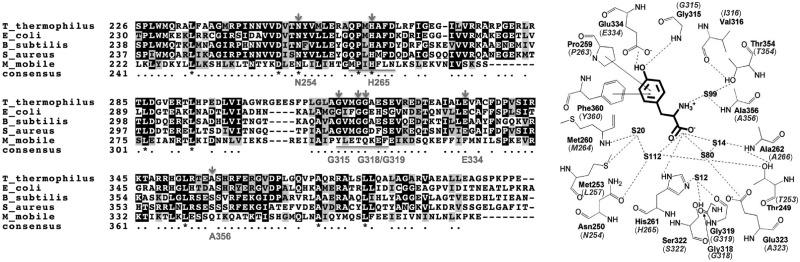
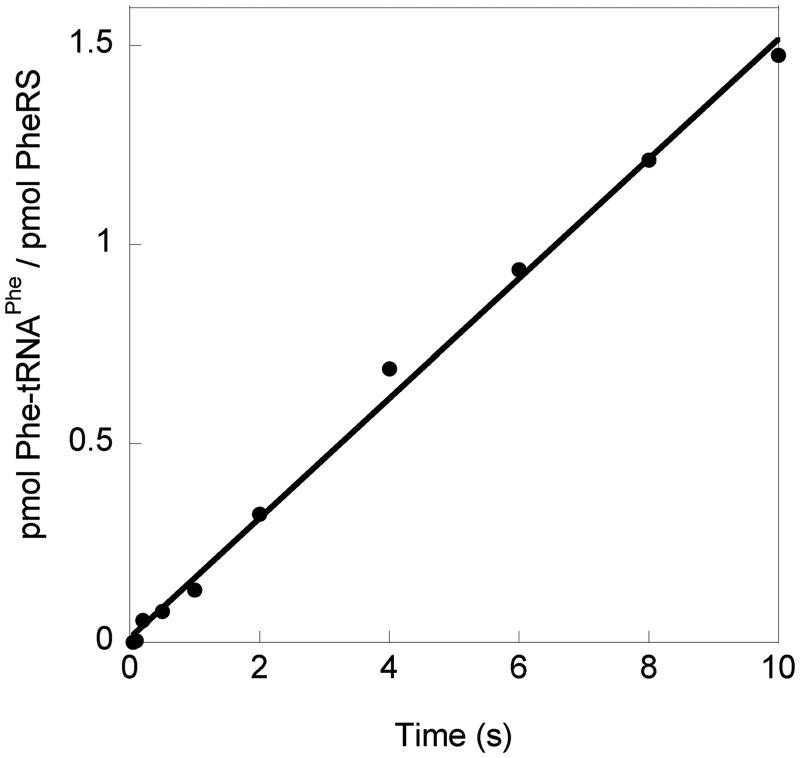
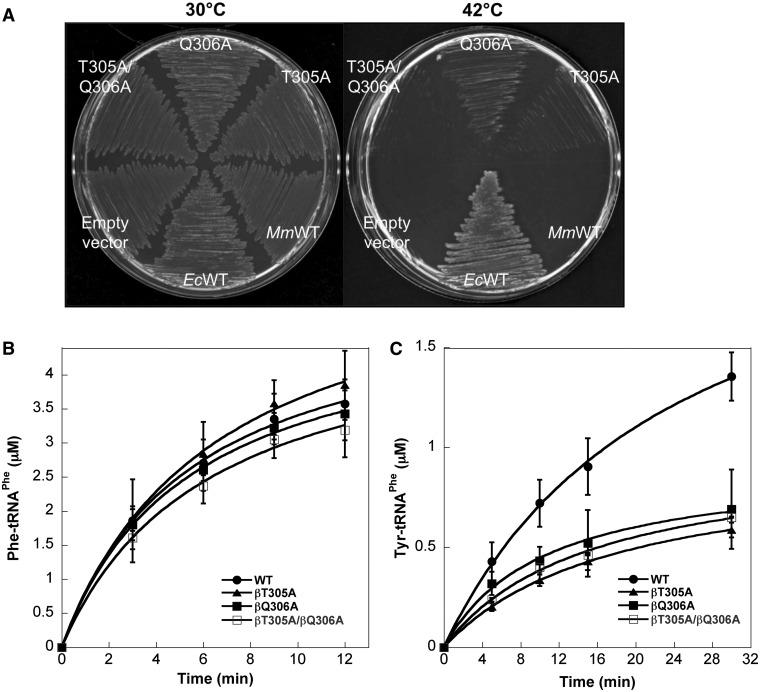
Mistranslation can follow two events during protein synthesis: production of non-cognate amino acid:transfer RNA (tRNA) pairs by aminoacyl-tRNA synthetases (aaRSs) and inaccurate selection of aminoacyl-tRNAs by the ribosome. Many aaRSs actively edit non-cognate amino acids, but editing mechanisms are not evolutionarily conserved, and their physiological significance remains unclear. To address the connection between aaRSs and mistranslation, the evolutionary divergence of tyrosine editing by phenylalanyl-tRNA synthetase (PheRS) was used as a model. Certain PheRSs are naturally error prone, most notably a Mycoplasma example that displayed a low level of specificity consistent with elevated mistranslation of the proteome. Mycoplasma PheRS was found to lack canonical editing activity, relying instead on discrimination against the non-cognate amino acid by kinetic proofreading. This mechanism of discrimination is inadequate for organisms where translation is more accurate, as Mycoplasma PheRS failed to support Escherichia coli growth. However, minor changes in the defunct editing domain of the Mycoplasma enzyme were sufficient to restore E. coli growth, indicating that translational accuracy is an evolutionarily selectable trait.
误译可能发生在蛋白质合成的两个阶段
氨酰-tRNA 合成酶(aaRS)产生非对应氨基酸:tRNA(tRNA)对,以及核糖体对氨酰-tRNA 的选择不准确。许多 aaRS 积极编辑非对应氨基酸,但编辑机制在进化上没有保守,其生理意义仍不清楚。为了解决 aaRSs 与误译之间的联系,使用苯丙氨酰-tRNA 合成酶(PheRS)的酪氨酸编辑的进化分歧作为模型。某些 PheRSs 天生容易出错,最明显的是一个 Mycoplasma 例子,其特异性水平较低,与蛋白质组的翻译错误率升高一致。发现 Mycoplasma PheRS 缺乏典型的编辑活性,而是依赖于通过动力学校对来区分非对应氨基酸。这种歧视机制对于翻译更准确的生物体来说是不够的,因为 Mycoplasma PheRS 无法支持大肠杆菌的生长。然而,对 Mycoplasma 酶失活编辑结构域的微小改变足以恢复大肠杆菌的生长,表明翻译准确性是一个进化上可选择的特征。


 Zotero 插件