
肿瘤细胞侵袭性与多倍体化之间的关系。
Relationship between tumor cell invasiveness and polyploidization.
机构信息
Cancer Research Center, Roseman University of Health Sciences, Las Vegas, Nevada, United States of America.
出版信息
PLoS One. 2012;7(12):e53364. doi: 10.1371/journal.pone.0053364. Epub 2012 Dec 31.
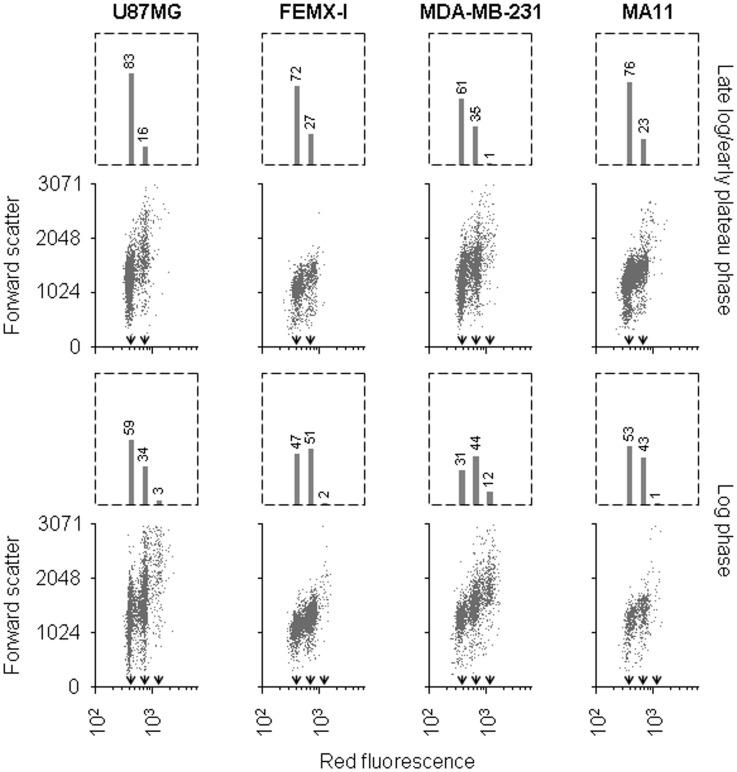
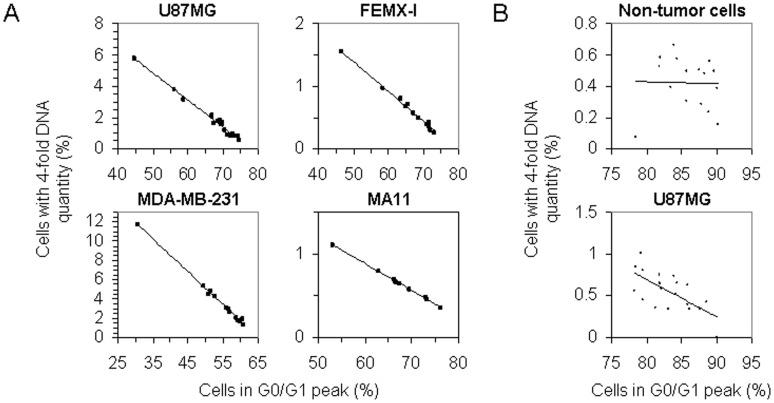
A number of studies have shown that tumor cells fuse with other tumor and non-tumor cells. In the present study on tumor cell lines derived from glioblastoma, breast cancer, and melanoma, we estimated the frequency of fusion between tumor cells by establishing the fraction of cells with whole tumor-genome duplication in each cell line. Together with this, the capacity of the tumor cell lines to spread through a basement membrane scaffold was assessed, in order to test the hypothesis that pericellular proteolysis by enzymatic release in the spaces of intercellular contact could account for differences in the fusogenicity of tumor cells. The difference in invasiveness between the cell lines accounted for their specific amount of cells with tumor-genome duplication, which, depending on the cell line analyzed, ranged from 2% to 25% of the total cells. These results support the hypothesis that cell-to-cell invasion eliciting membrane fusion causes polyploidization in tumor cells.
已有多项研究表明肿瘤细胞会与其他肿瘤细胞和非肿瘤细胞融合。在这项针对源自神经胶质瘤、乳腺癌和黑色素瘤的肿瘤细胞系的研究中,我们通过建立每条细胞系中具有全肿瘤基因组复制的细胞分数,来估计肿瘤细胞融合的频率。与此同时,还评估了肿瘤细胞系穿透基底膜支架的能力,以验证这样一种假设,即细胞间接触空间中酶促释放的细胞周蛋白水解可以解释肿瘤细胞融合性的差异。细胞系之间的侵袭性差异解释了它们具有肿瘤基因组复制的特定细胞数量,根据分析的细胞系不同,总细胞的 2%到 25%不等。这些结果支持这样一种假设,即引发膜融合的细胞间侵袭会导致肿瘤细胞的多倍体化。

 Zotero 插件