
高通量转录组谱分析锂刺激的人骨髓间充质干细胞显示向成骨细胞谱系的启动。
High throughput transcriptome profiling of lithium stimulated human mesenchymal stem cells reveals priming towards osteoblastic lineage.
机构信息
Stem Cell & Gene Therapy Research Group, Institute of Nuclear Medicine & Allied Sciences, Brig. S K Mazumdar Marg, Timarpur, Delhi, India.
出版信息
PLoS One. 2013;8(1):e55769. doi: 10.1371/journal.pone.0055769. Epub 2013 Jan 30.
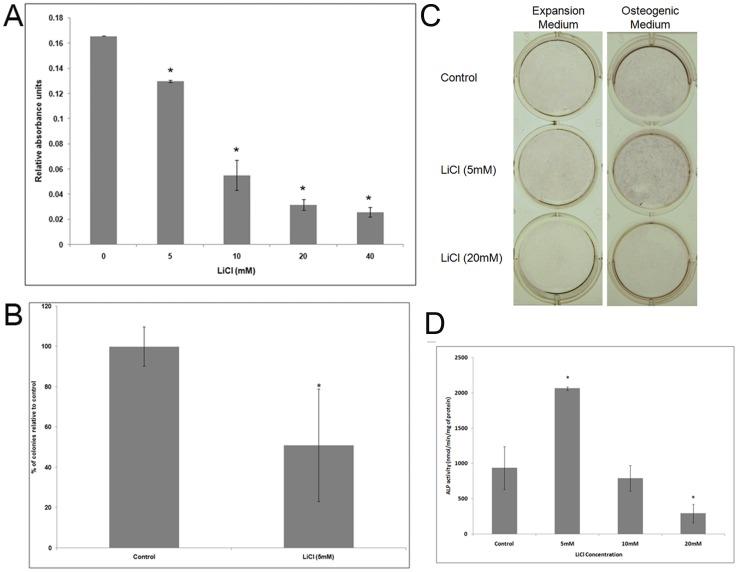
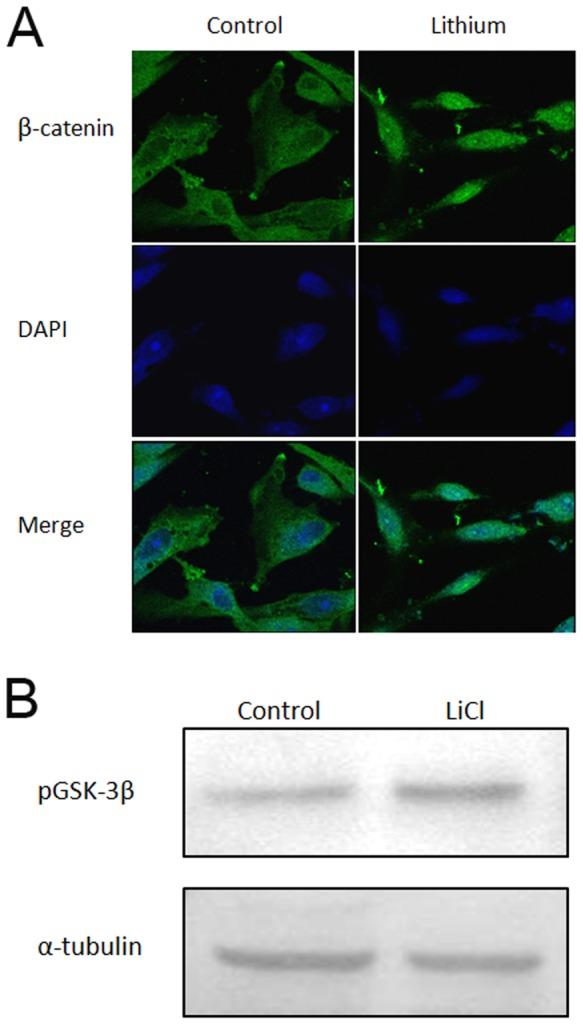
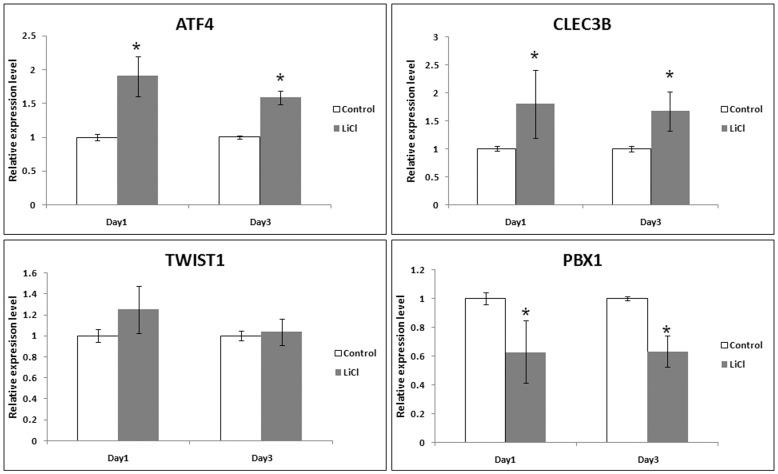
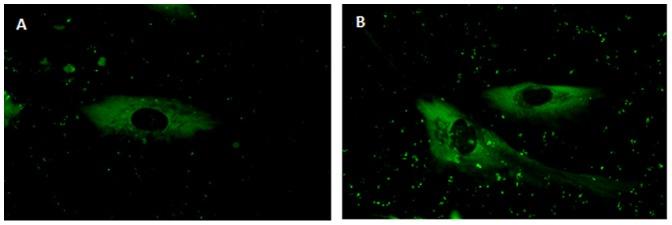
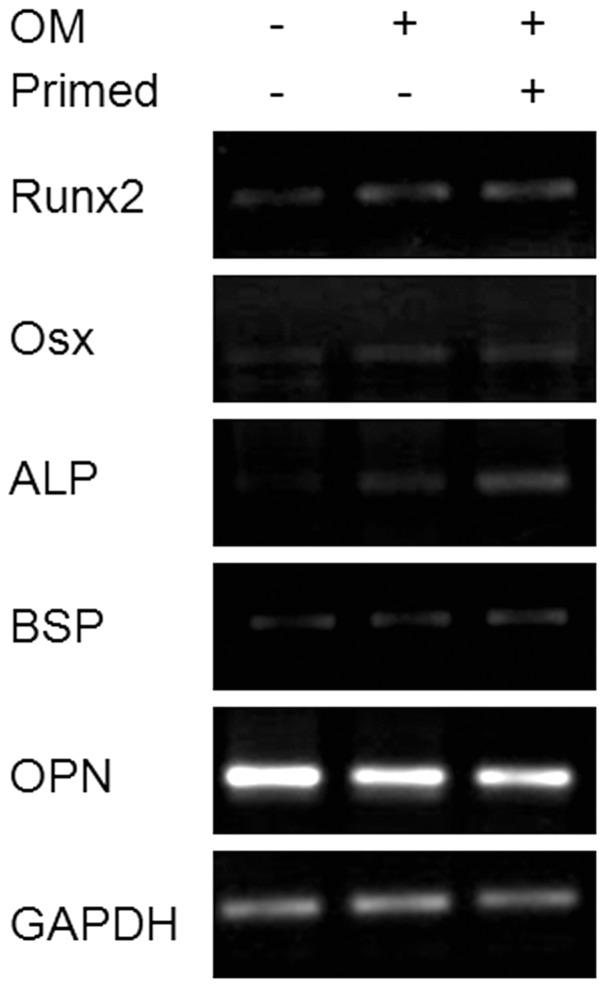
Human mesenchymal stem cells (hMSCs) present in the bone marrow are the precursors of osteoblasts, chondrocytes and adipocytes, and hold tremendous potential for osteoregenerative therapy. However, achieving directed differentiation into osteoblasts has been a major concern. The use of lithium for enhancing osteogenic differentiation has been documented in animal models but its effect in humans is not clear. We, therefore, performed high throughput transcriptome analysis of lithium-treated hMSCs to identify altered gene expression and its relevance to osteogenic differentiation. Our results show suppression of proliferation and enhancement of alkaline phosphatase (ALP) activity upon lithium treatment of hMSCs under non-osteogenic conditions. Microarray profiling of lithium-stimulated hMSC revealed decreased expression of adipogenic genes (CEBPA, CMKLR1, HSD11B1) and genes involved in lipid biosynthesis. Interestingly, osteoclastogenic factors and immune responsive genes (IL7, IL8, CXCL1, CXCL12, CCL20) were also downregulated. Negative transcriptional regulators of the osteogenic program (TWIST1 and PBX1) were suppressed while genes involved in mineralization like CLEC3B and ATF4 were induced. Gene ontology analysis revealed enrichment of upregulated genes related to mesenchymal cell differentiation and signal transduction. Lithium priming led to enhanced collagen 1 synthesis and osteogenic induction of lithium pretreated MSCs resulted in enhanced expression of Runx2, ALP and bone sialoprotein. However, siRNA-mediated knockdown of RRAD, CLEC3B and ATF4 attenuated lithium-induced osteogenic priming, identifying a role for RRAD, a member of small GTP binding protein family, in osteoblast differentiation. In conclusion, our data highlight the transcriptome reprogramming potential of lithium resulting in higher propensity of lithium "primed" MSCs for osteoblastic differentiation.
人骨髓间充质干细胞(hMSCs)是成骨细胞、软骨细胞和脂肪细胞的前体细胞,具有巨大的成骨再生治疗潜力。然而,实现向成骨细胞的定向分化一直是一个主要关注点。在动物模型中已经有研究证明锂可以增强成骨分化,但其在人类中的作用尚不清楚。因此,我们对锂处理的 hMSCs 进行高通量转录组分析,以鉴定改变的基因表达及其与成骨分化的相关性。我们的结果表明,在非成骨条件下,锂处理 hMSCs 会抑制增殖并增强碱性磷酸酶(ALP)活性。锂刺激的 hMSC 的微阵列分析显示,脂肪生成基因(CEBPA、CMKLR1、HSD11B1)和参与脂质生物合成的基因表达下调。有趣的是,破骨细胞生成因子和免疫反应基因(IL7、IL8、CXCL1、CXCL12、CCL20)也下调。成骨基因表达的负转录调节因子(TWIST1 和 PBX1)受到抑制,而与矿化相关的基因如 CLEC3B 和 ATF4 则被诱导。基因本体分析显示,上调基因富集与间充质细胞分化和信号转导相关。锂引发可增强胶原蛋白 1 的合成,锂预处理的 MSC 的成骨诱导导致 Runx2、ALP 和骨涎蛋白的表达增强。然而,RRAD、CLEC3B 和 ATF4 的 siRNA 介导敲低减弱了锂诱导的成骨引发,表明 RRAD(一种小 GTP 结合蛋白家族成员)在成骨细胞分化中起作用。总之,我们的数据强调了锂的转录组重编程潜力,导致锂“引发”的 MSC 更倾向于成骨分化。


 Zotero 插件