
SGLT2 抑制对人近端肾小管细胞的影响——在糖尿病肾病中的肾脏保护作用?
Effects of SGLT2 inhibition in human kidney proximal tubular cells--renoprotection in diabetic nephropathy?
机构信息
Department of Medicine, The University of Sydney, Renal Research Group, Kolling Institute of Medical Research, Royal North Shore Hospital, St. Leonards, New South Wales, Australia.
出版信息
PLoS One. 2013;8(2):e54442. doi: 10.1371/journal.pone.0054442. Epub 2013 Feb 4.
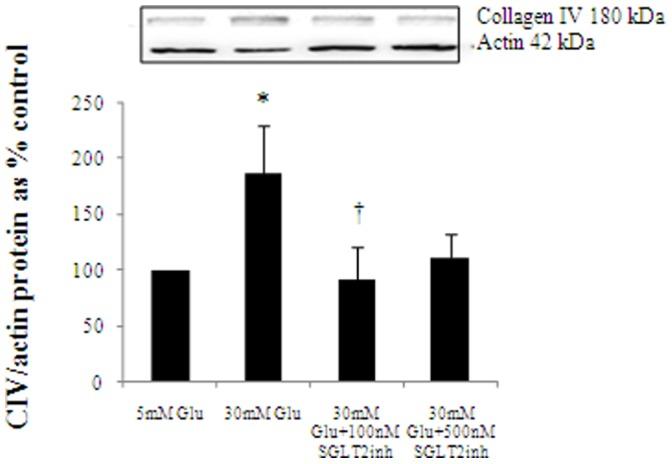
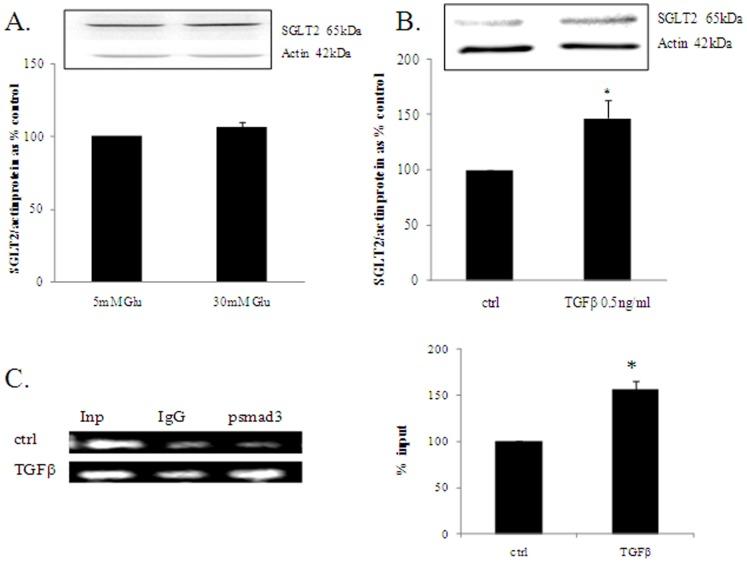
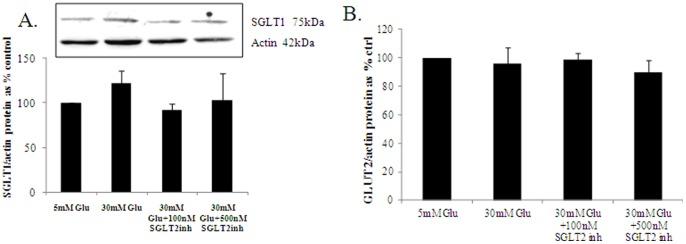
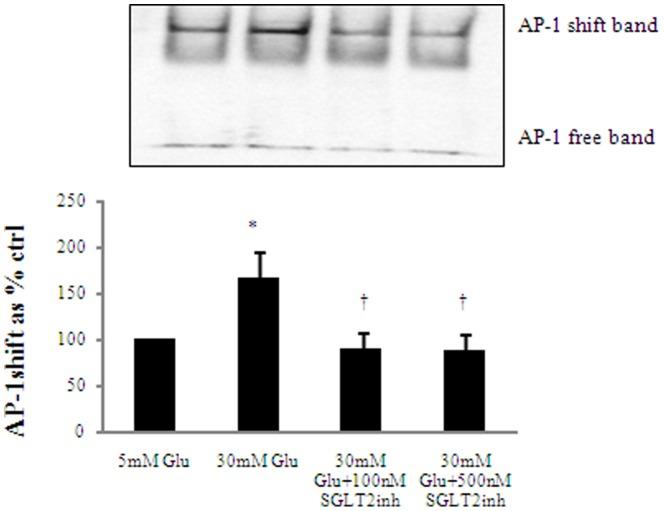
Sodium/glucose cotransporter 2 (SGLT2) inhibitors are oral hypoglycemic agents used to treat patients with diabetes mellitus. SGLT2 inhibitors block reabsorption of filtered glucose by inhibiting SGLT2, the primary glucose transporter in the proximal tubular cell (PTC), leading to glycosuria and lowering of serum glucose. We examined the renoprotective effects of the SGLT2 inhibitor empagliflozin to determine whether blocking glucose entry into the kidney PTCs reduced the inflammatory and fibrotic responses of the cell to high glucose. We used an in vitro model of human PTCs. HK2 cells (human kidney PTC line) were exposed to control 5 mM, high glucose (HG) 30 mM or the profibrotic cytokine transforming growth factor beta (TGFβ1; 0.5 ng/ml) in the presence and absence of empagliflozin for up to 72 h. SGLT1 and 2 expression and various inflammatory/fibrotic markers were assessed. A chromatin immunoprecipitation assay was used to determine the binding of phosphorylated smad3 to the promoter region of the SGLT2 gene. Our data showed that TGFβ1 but not HG increased SGLT2 expression and this occurred via phosphorylated smad3. HG induced expression of Toll-like receptor-4, increased nuclear deoxyribonucleic acid binding for nuclear factor kappa B (NF-κB) and activator protein 1, induced collagen IV expression as well as interleukin-6 secretion all of which were attenuated with empagliflozin. Empagliflozin did not reduce high mobility group box protein 1 induced NF-κB suggesting that its effect is specifically related to a reduction in glycotoxicity. SGLT1 and GLUT2 expression was not significantly altered with HG or empagliflozin. In conclusion, empagliflozin reduces HG induced inflammatory and fibrotic markers by blocking glucose transport and did not induce a compensatory increase in SGLT1/GLUT2 expression. Although HG itself does not regulate SGLT2 expression in our model, TGFβ increases SGLT2 expression through phosphorylated smad3.
钠-葡萄糖共转运蛋白 2(SGLT2)抑制剂是用于治疗糖尿病患者的口服降糖药。SGLT2 抑制剂通过抑制 SGLT2 阻止过滤的葡萄糖重吸收,SGLT2 是近端肾小管细胞(PTC)中的主要葡萄糖转运体,导致糖尿和血清葡萄糖降低。我们研究了 SGLT2 抑制剂恩格列净的肾保护作用,以确定阻止葡萄糖进入肾脏 PTC 是否会减少细胞对高葡萄糖的炎症和纤维化反应。我们使用了体外人 PTC 模型。将 HK2 细胞(人肾 PTC 系)暴露于对照 5 mM、高葡萄糖(HG)30 mM 或促纤维化细胞因子转化生长因子-β(TGFβ1;0.5 ng/ml)中,同时或不使用恩格列净达 72 小时。评估 SGLT1 和 2 的表达和各种炎症/纤维化标志物。使用染色质免疫沉淀测定法确定磷酸化 smad3 与 SGLT2 基因启动子区域的结合。我们的数据表明,TGFβ1 但不是 HG 增加了 SGLT2 的表达,这是通过磷酸化 smad3 发生的。HG 诱导 Toll 样受体-4 的表达,增加核因子 kappa B(NF-κB)和激活蛋白 1 的核 DNA 结合,诱导胶原 IV 的表达以及白细胞介素-6 的分泌,所有这些都被恩格列净减弱。恩格列净不会降低高迁移率族蛋白框蛋白 1 诱导的 NF-κB,表明其作用专门与减少糖毒性有关。HG 或恩格列净对 SGLT1 和 GLUT2 的表达没有显著改变。总之,恩格列净通过阻断葡萄糖转运来减少 HG 诱导的炎症和纤维化标志物,并且不会诱导 SGLT1/GLUT2 表达的代偿性增加。虽然在我们的模型中 HG 本身不会调节 SGLT2 的表达,但 TGFβ 通过磷酸化 smad3 增加 SGLT2 的表达。

 Zotero 插件