
日本 6 岁以下儿童轮状病毒胃肠炎和医院获得性轮状病毒胃肠炎的负担:一项回顾性、多中心的流行病学调查。
The burden of rotavirus gastroenteritis and hospital-acquired rotavirus gastroenteritis among children aged less than 6 years in Japan: a retrospective, multicenter epidemiological survey.
机构信息
Osaka General Medical Center, 3-1-56, Mandai-Higashi, Sumiyoshi, Osaka 558-8558, Japan.
出版信息
BMC Pediatr. 2013 May 22;13:83. doi: 10.1186/1471-2431-13-83.
BACKGROUND
Rotavirus is a leading worldwide cause of acute gastroenteritis in young children. This retrospective hospital-based study assessed the burden of rotavirus gastroenteritis in children younger than 6 years in Japan.
METHODS
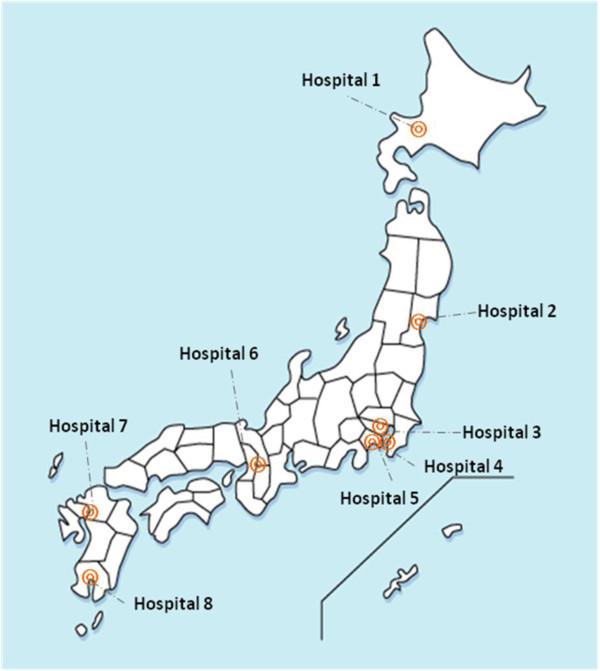
Children admitted to eight hospitals for acute gastroenteritis between 2008 and 2009 were identified from hospital admission databases. Diagnosis of acute gastroenteritis/rotavirus gastroenteritis and hospital-acquired rotavirus gastroenteritis was confirmed based on either the International Classification of Diseases and Related Health Problems 10th revision (ICD10) codes (intestinal infectious diseases [AA00-AA09] and rotavirus gastroenteritis [A08.0]) or from rapid rotavirus diagnostic test results.
RESULTS
Of 13,767 hospitalized children, 11.9% (1,644), 4.8% (665) and 0.6% (81) were diagnosed with acute gastroenteritis, rotavirus gastroenteritis and hospital-acquired rotavirus gastroenteritis, respectively. Among acute gastroenteritis hospitalizations, 40.5% (665/1,644; ICD10 and rapid test) and 57.7% (645/1,118; rapid test only) were confirmed as rotavirus positive. Of 1,563 children with community-acquired acute gastroenteritis, 584 (37.4%) cases were confirmed as rotavirus positive. The median durations of hospitalization for all and community-acquired rotavirus gastroenteritis were 5.0 days (range: 2.0-133.0 days) and 5.0 days (range: 2.0-34.0 days), respectively. Among rotavirus gastroenteritis hospitalizations, 12.2% (81/665) of cases were hospital-acquired and the median duration of hospitalization was 10.0 days (range: 2.0-133.0 days). The median duration of additional hospitalization due to hospital-acquired rotavirus gastroenteritis was 3.0 days (range: 0-14 days). The overall incidence rate of hospital-acquired rotavirus gastroenteritis was 1.0 per 1,000 children hospital-days. The number of rotavirus gastroenteritis cases peaked between February and May in both 2008 and 2009, and the highest number of cases was reported in March 2008 (21.8%; 145/665). The highest number of rotavirus gastroenteritis hospitalizations (24.1%; 160/665) was observed in children aged 12-18 months. The proportion of hospital-acquired rotavirus gastroenteritis was higher in children aged below 18 months as compared to children at least 18 months of age (0.94 [95% CI: 0.71-1.21] vs. 0.39 [95% CI: 0.25-0.58]) and for children hospitalized for at least 5 days compared to those hospitalized for less than 5 days (0.91 [95% CI: 0.72-1.14] vs. 0.15 [95% CI: 0.05-0.32]).
CONCLUSIONS
Both community- and hospital-acquired rotavirus gastroenteritis are significant public health problems in Japan. Data from this study justify the need for the introduction and implementation of rotavirus vaccination in the Japanese national immunization program.
TRIAL REGISTRATION
ClinicalTrials.gov, NCT01202201.
背景
轮状病毒是导致全球儿童急性肠胃炎的主要原因。本回顾性基于医院的研究评估了日本 6 岁以下儿童的轮状病毒肠胃炎负担。
方法
从 2008 年至 2009 年 8 家医院的住院患者数据库中确定患有急性肠胃炎的儿童。急性肠胃炎/轮状病毒肠胃炎和医院获得性轮状病毒肠胃炎的诊断是基于国际疾病分类和相关健康问题第 10 次修订版(ICD10 代码(肠道传染病[AA00-AA09]和轮状病毒肠胃炎[A08.0])或快速轮状病毒诊断检测结果。
结果
在 13767 名住院儿童中,分别有 11.9%(1644 人)、4.8%(665 人)和 0.6%(81 人)被诊断为急性肠胃炎、轮状病毒肠胃炎和医院获得性轮状病毒肠胃炎。在急性肠胃炎住院患者中,40.5%(665/1644;ICD10 和快速检测)和 57.7%(645/1118;仅快速检测)被确认为轮状病毒阳性。在 1563 名患有社区获得性急性肠胃炎的儿童中,584 例(37.4%)病例被确认为轮状病毒阳性。所有和社区获得性轮状病毒肠胃炎的住院中位时间分别为 5.0 天(范围:2.0-133.0 天)和 5.0 天(范围:2.0-34.0 天)。在轮状病毒肠胃炎住院患者中,12.2%(81/665)为医院获得性,住院中位时间为 10.0 天(范围:2.0-133.0 天)。因医院获得性轮状病毒肠胃炎而额外住院的中位时间为 3.0 天(范围:0-14 天)。医院获得性轮状病毒肠胃炎的总发病率为每 1000 个儿童住院日 1.0 例。2008 年和 2009 年轮状病毒肠胃炎的发病高峰期均在 2 月至 5 月,2008 年 3 月报告的病例数最多(21.8%;145/665)。轮状病毒肠胃炎住院人数最多(24.1%;160/665)的是 12-18 个月的儿童。与至少 18 个月的儿童相比,18 个月以下儿童的医院获得性轮状病毒肠胃炎比例更高(0.94[95%CI:0.71-1.21]比 0.39[95%CI:0.25-0.58]),与住院时间少于 5 天的儿童相比,住院时间至少 5 天的儿童比例更高(0.91[95%CI:0.72-1.14]比 0.15[95%CI:0.05-0.32])。
结论
社区和医院获得性轮状病毒肠胃炎都是日本的重大公共卫生问题。本研究的数据证明,有必要在日本国家免疫计划中引入和实施轮状病毒疫苗接种。
试验注册
ClinicalTrials.gov,NCT01202201。

 Zotero 插件