
美国田纳西州阿巴拉契亚山脉和内陆高原的洞穴生物多样性和特有模式。
Patterns of cave biodiversity and endemism in the Appalachians and Interior Plateau of Tennessee, USA.
机构信息
Department of Ecology and Evolutionary Biology, Yale University, New Haven, Connecticut, United States of America.
出版信息
PLoS One. 2013 May 22;8(5):e64177. doi: 10.1371/journal.pone.0064177. Print 2013.
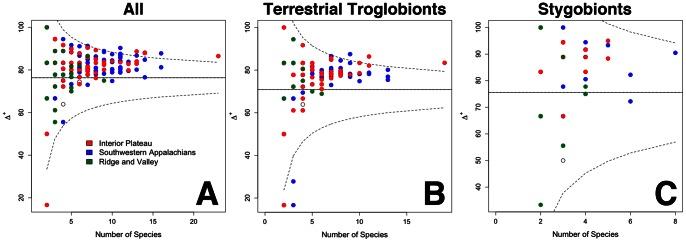
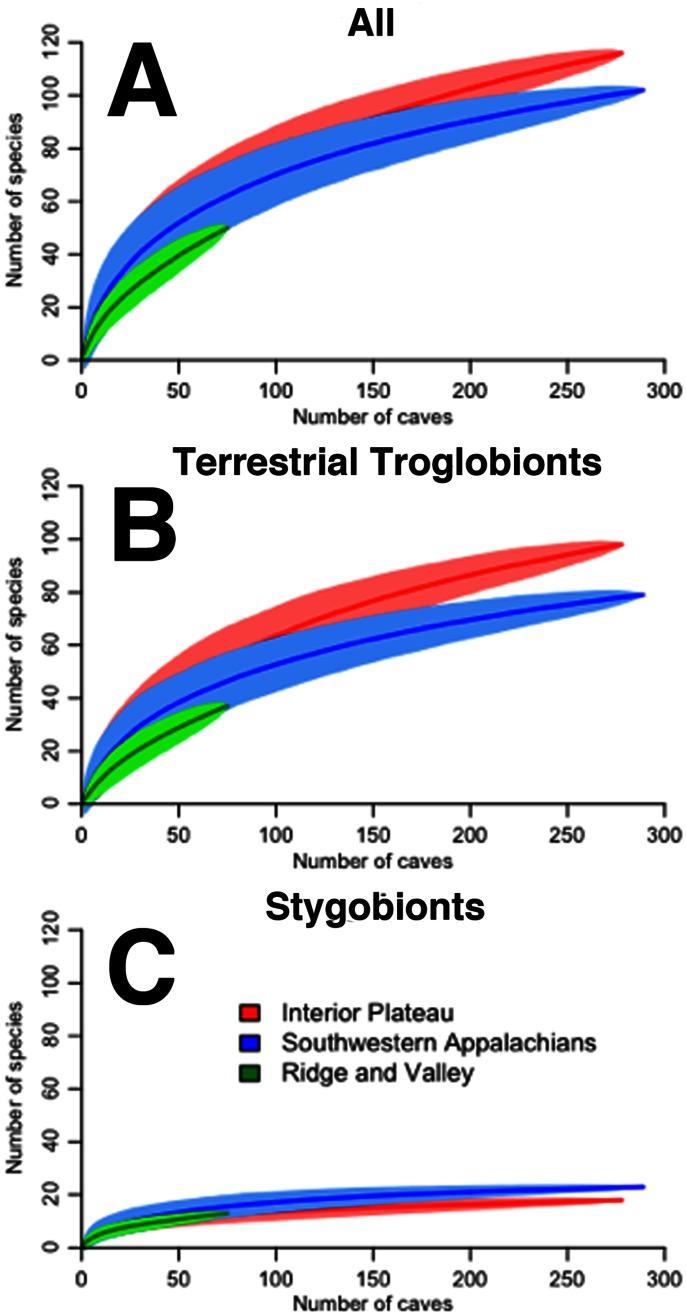
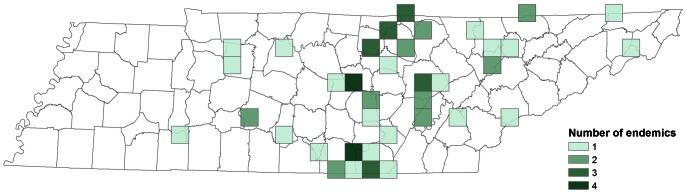
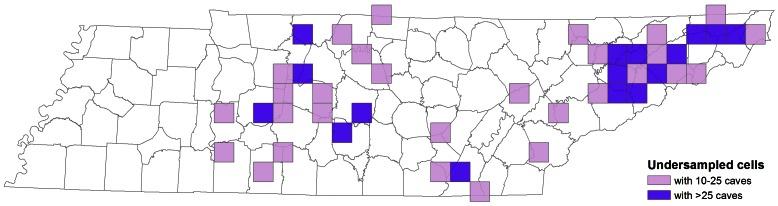
Using species distribution data, we developed a georeferenced database of troglobionts (cave-obligate species) in Tennessee to examine spatial patterns of species richness and endemism, including >2000 records for 200 described species. Forty aquatic troglobionts (stygobionts) and 160 terrestrial troglobionts are known from caves in Tennessee, the latter having the greatest diversity of any state in the United States. Endemism was high, with 25% of terrestrial troglobionts (40 species) and 20% of stygobionts (eight species) known from just a single cave and nearly two-thirds of all troglobionts (130 species) known from five or fewer caves. Species richness and endemism were greatest in the Interior Plateau (IP) and Southwestern Appalachians (SWA) ecoregions, which were twice as diverse as the Ridge and Valley (RV). Troglobiont species assemblages were most similar between the IP and SWA, which shared 59 species, whereas the RV cave fauna was largely distinct. We identified a hotspot of cave biodiversity with a center along the escarpment of the Cumberland Plateau in south-central Tennessee defined by both species richness and endemism that is contiguous with a previously defined hotspot in northeastern Alabama. Nearly half (91 species) of Tennessee's troglobiont diversity occurs in this region where several cave systems contain ten or more troglobionts, including one with 23 species. In addition, we identified distinct troglobiont communities across the state. These communities corresponded to hydrological boundaries and likely reflect past or current connectivity between subterranean habitats within and barriers between hydrological basins. Although diverse, Tennessee's subterranean fauna remains poorly studied and many additional species await discovery and description. We identified several undersampled regions and outlined conservation and management priorities to improve our knowledge and aid in protection of the subterranean biodiversity in Tennessee.
利用物种分布数据,我们开发了田纳西州洞穴专性生物(洞穴特有物种)的地理参考数据库,以研究物种丰富度和特有性的空间模式,其中包括 2000 多个记录的 200 种描述物种。田纳西州洞穴中有 40 种水生洞穴生物(洞穴生物)和 160 种陆生洞穴生物,是美国所有州中多样性最高的。特有性很高,25%的陆生洞穴生物(40 种)和 20%的水生洞穴生物(8 种)仅来自单个洞穴,近三分之二(130 种)的洞穴生物仅来自 5 个或更少的洞穴。物种丰富度和特有性在内部高原(IP)和西南阿巴拉契亚(SWA)生态区最高,这两个生态区的多样性是脊谷(RV)的两倍。洞穴生物物种组合在 IP 和 SWA 之间最为相似,它们共有 59 种物种,而 RV 的洞穴动物群则大不相同。我们确定了一个洞穴生物多样性热点,其中心位于田纳西州中南部坎伯兰高原的悬崖上,该热点的定义既包括物种丰富度又包括特有性,与阿拉巴马州东北部以前定义的热点相连。田纳西州近一半(91 种)的洞穴生物多样性发生在这个地区,这里有几个洞穴系统包含 10 种或更多的洞穴生物,其中一个系统有 23 种。此外,我们还在全州范围内确定了不同的洞穴生物群落。这些群落与水文边界相对应,可能反映了地下栖息地之间过去或当前的连通性以及水文盆地之间的障碍。尽管田纳西州的地下动物群多样,但仍未得到充分研究,还有许多其他物种有待发现和描述。我们确定了几个未充分采样的地区,并概述了保护和管理重点,以提高我们的知识,并有助于保护田纳西州的地下生物多样性。




 Zotero 插件