
视黄酸激活的 Ndrg1a 抑制 Wnt/β-连环蛋白信号通路,以允许非洲爪蟾胰腺、食管、胃和十二指肠的特化。
Retinoic acid-activated Ndrg1a represses Wnt/β-catenin signaling to allow Xenopus pancreas, oesophagus, stomach, and duodenum specification.
机构信息
Key Laboratory of Regenerative Biology, Guangzhou Institutes of Biomedicine and Health, Chinese Academy of Sciences, Guangzhou, China.
出版信息
PLoS One. 2013 May 31;8(5):e65058. doi: 10.1371/journal.pone.0065058. Print 2013.
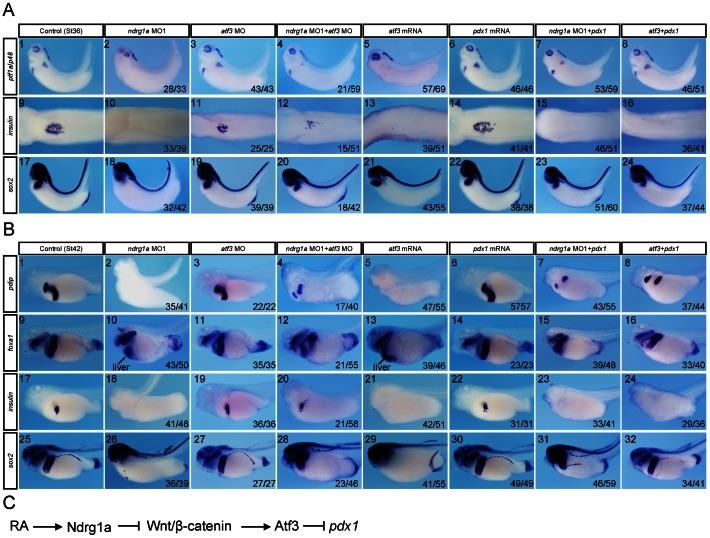
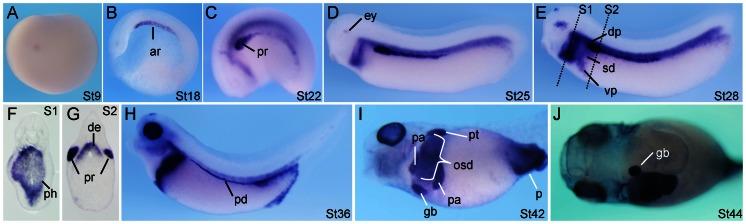
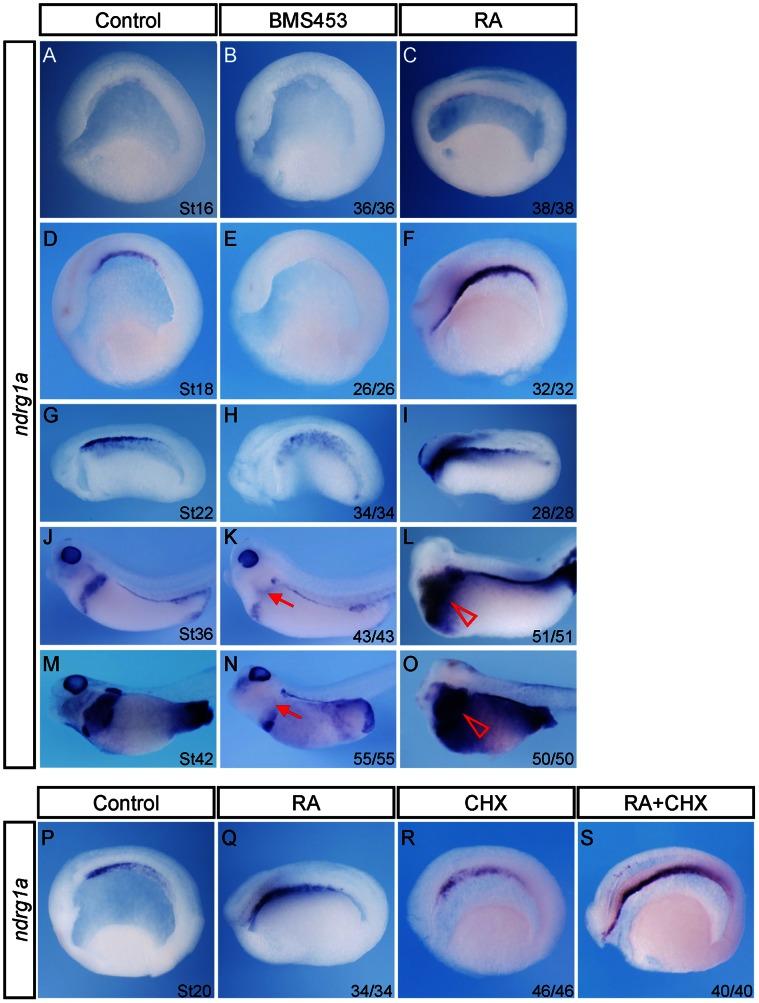
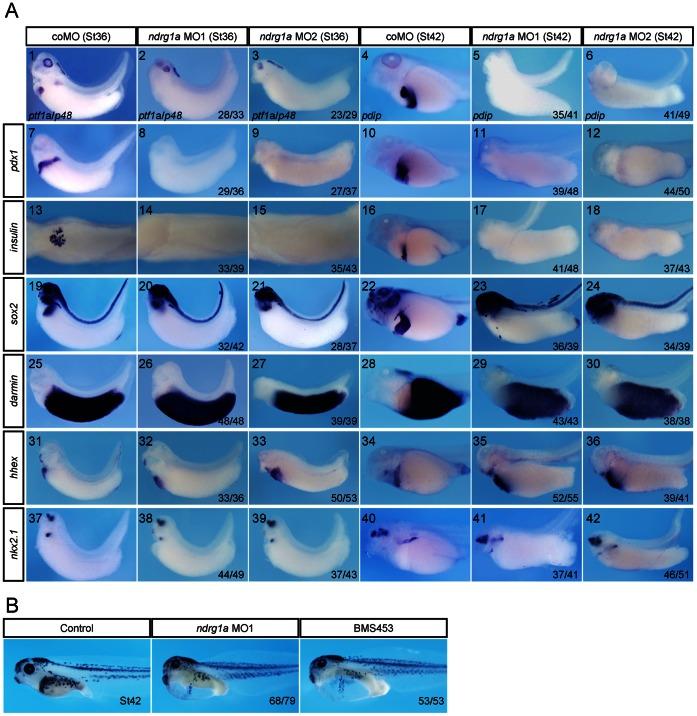
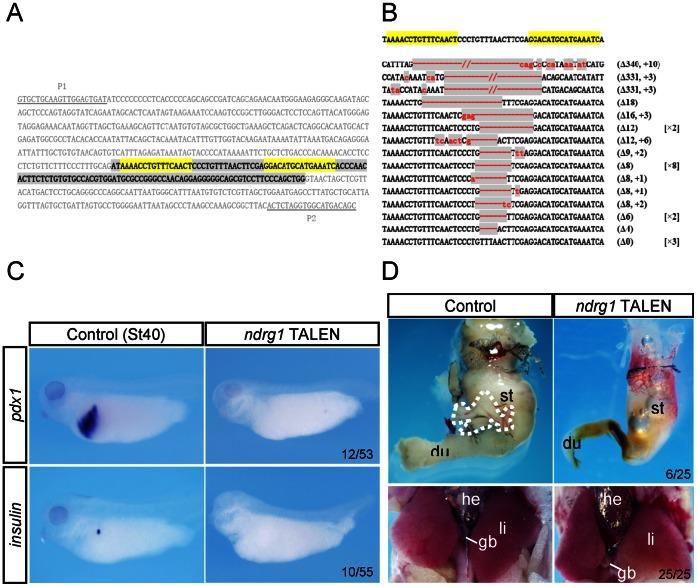
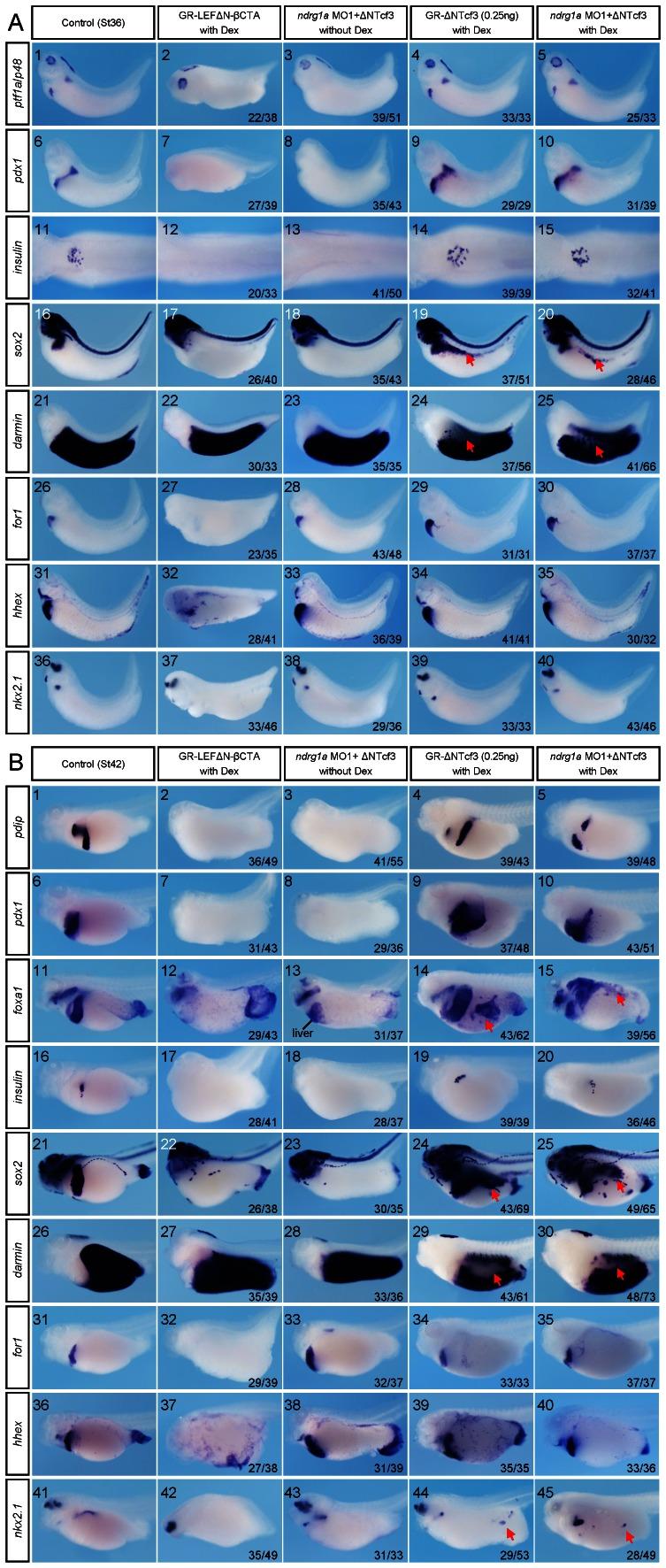
How cells integrate multiple patterning signals to achieve early endoderm regionalization remains largely unknown. Between gastrulation and neurulation, retinoic acid (RA) signaling is required, while Wnt/β-catenin signaling has to be repressed for the specification of the pancreas, oesophagus, stomach, and duodenum primordia in Xenopus embryos. In attempt to screen for RA regulated genes in Xenopus endoderm, we identified a direct RA target gene, N-myc downstream regulated gene 1a (ndrg1a) that showed expression early in the archenteron roof endoderm and late in the developing pancreas, oesophagus, stomach, and duodenum. Both antisense morpholino oligonucleotide mediated knockdown of ndrg1a in Xenopus laevis and the transcription activator-like effector nucleases (TALEN) mediated disruption of ndrg1 in Xenopus tropicalis demonstrate that like RA signaling, Ndrg1a is specifically required for the specification of Xenopus pancreas, oesophagus, stomach, and duodenum primordia. Immunofluorescence data suggest that RA-activated Ndrg1a suppresses Wnt/β-catenin signaling in Xenopus archenteron roof endoderm cells. Blocking Wnt/β-catenin signaling rescued Ndrg1a knockdown phenotype. Furthermore, overexpression of the putative Wnt/β-catenin target gene Atf3 phenocopied knockdown of Ndrg1a or inhibition of RA signaling, while Atf3 knockdown can rescue Ndrg1a knockdown phenotype. Lastly, the pancreas/stomach/duodenum transcription factor Pdx1 was able to rescue Atf3 overexpression or Ndrg1a knockdown phenotype. Together, we conclude that RA activated Ndrg1a represses Wnt/β-catenin signaling to allow the specification of pancreas, oesophagus, stomach, and duodenum progenitor cells in Xenopus embryos.
细胞如何整合多种模式信号以实现早期内胚层区域化在很大程度上仍是未知的。在原肠胚形成和神经胚形成之间,需要视黄酸 (RA) 信号,而在爪蟾胚胎中,胰腺、食管、胃和十二指肠原基的特化需要抑制 Wnt/β-catenin 信号。为了筛选爪蟾内胚层中受 RA 调节的基因,我们鉴定了一个直接的 RA 靶基因,N-myc 下游调节基因 1a (ndrg1a),它在内胚层穹顶的早期表达,并在发育中的胰腺、食管、胃和十二指肠中晚期表达。在非洲爪蟾中,ndrg1a 的反义 morpholino 寡核苷酸介导的敲低和转录激活因子样效应物核酸酶 (TALEN) 介导的 ndrg1 破坏都证明,与 RA 信号一样,Ndrg1a 特异性地用于特化非洲爪蟾胰腺、食管、胃和十二指肠原基。免疫荧光数据表明,RA 激活的 Ndrg1a 抑制非洲爪蟾内胚层穹顶细胞中的 Wnt/β-catenin 信号。阻断 Wnt/β-catenin 信号挽救了 Ndrg1a 敲低表型。此外,假定的 Wnt/β-catenin 靶基因 Atf3 的过表达模拟了 Ndrg1a 的敲低或 RA 信号的抑制,而 Atf3 的敲低可以挽救 Ndrg1a 的敲低表型。最后,胰腺/胃/十二指肠转录因子 Pdx1 能够挽救 Atf3 过表达或 Ndrg1a 敲低表型。总之,我们得出结论,RA 激活的 Ndrg1a 抑制 Wnt/β-catenin 信号,允许在爪蟾胚胎中特化胰腺、食管、胃和十二指肠祖细胞。



 Zotero 插件