
两个哺乳动物 MAGOH 基因有助于外显子连接复合物的组成和无意义介导的衰变。
Two mammalian MAGOH genes contribute to exon junction complex composition and nonsense-mediated decay.
机构信息
University of Cologne; Institute for Genetics; Cologne, Germany.
出版信息
RNA Biol. 2013 Aug;10(8):1291-8. doi: 10.4161/rna.25827. Epub 2013 Jul 23.
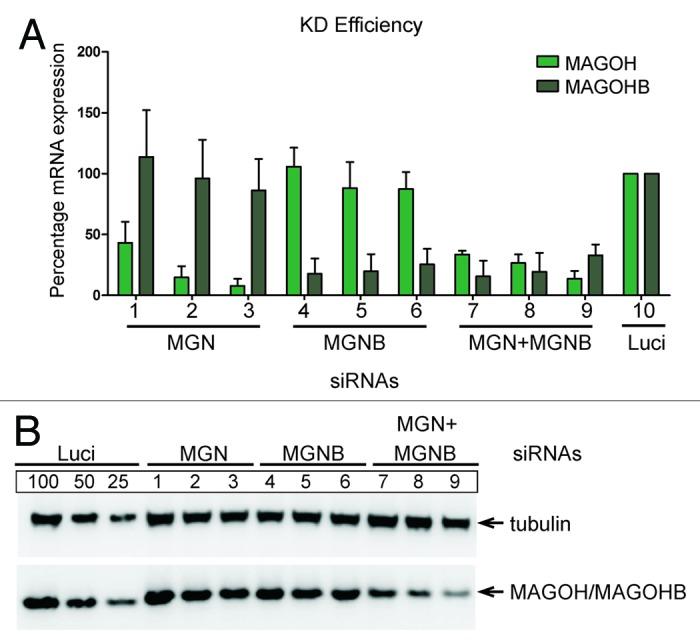
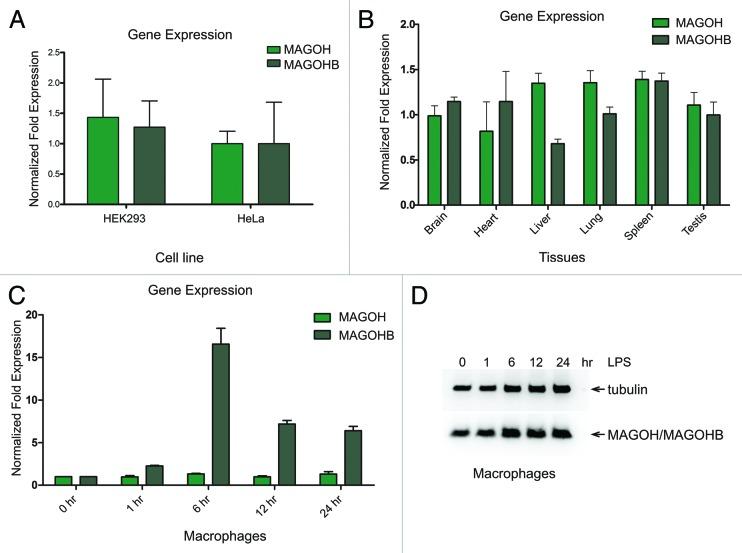
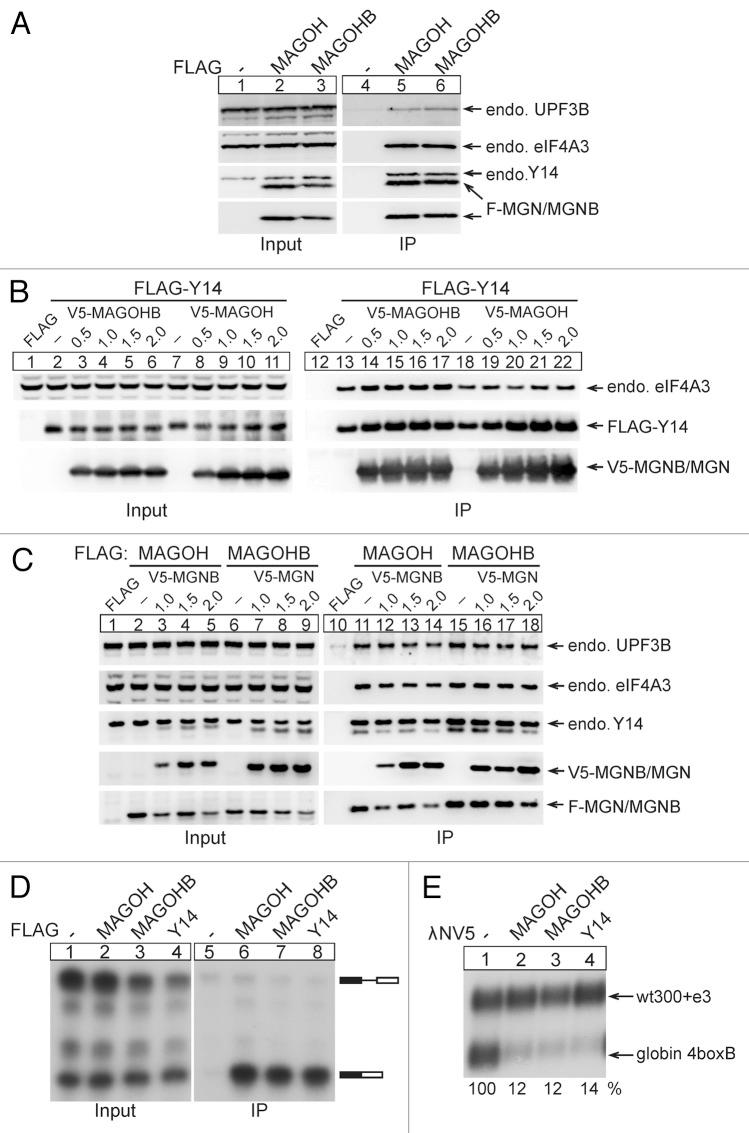
The exon junction complex (EJC) participates in the regulation of many post-transcriptional steps of gene expression. EJCs are deposited on messenger RNAs (mRNAs) during splicing and their core consists of eIF4A3, MLN51, Y14, and MAGOH. Here, we show that two genes encoding MAGOH paralogs (referred to as MAGOH and MAGOHB) are expressed in mammals. In macrophages, the expression of MAGOHB, but not MAGOH mRNA, increases rapidly after LPS stimulation. Both MAGOH proteins interact with other EJC components, incorporate into mRNA-bound EJCs, and activate nonsense-mediated decay. Furthermore, the simultaneous depletion of MAGOH and MAGOHB, but not individual depletions, impair nonsense-mediated decay in human cells. Hence, our results establish that the core composition of mammalian EJCs is more complex than previously recognized.
外显子结合复合体(EJC)参与了许多基因表达的转录后调控步骤。EJCs 在剪接过程中被沉积在信使 RNA(mRNA)上,其核心由 eIF4A3、MLN51、Y14 和 MAGOH 组成。在这里,我们表明编码 MAGOH 同源物(称为 MAGOH 和 MAGOHB)的两个基因在哺乳动物中表达。在巨噬细胞中,MAGOHB 的表达,而不是 MAGOH mRNA,在 LPS 刺激后迅速增加。两种 MAGOH 蛋白都与其他 EJC 成分相互作用,结合到 mRNA 结合的 EJC 中,并激活无意义介导的衰变。此外,MAGOH 和 MAGOHB 的同时耗尽,而不是单独的耗尽,会损害人类细胞中的无意义介导的衰变。因此,我们的结果表明,哺乳动物 EJCs 的核心组成比以前认为的更为复杂。


 Zotero 插件