
教育干预增加了莫桑比克三个艾滋病毒高流行农村地区传统治疗师向对抗疗法的转诊。
Educational intervention increased referrals to allopathic care by traditional healers in three high HIV-prevalence rural districts in Mozambique.
机构信息
Institute for Global Health Vanderbilt University School of Medicine, Nashville, Tennessee, USA.
出版信息
PLoS One. 2013 Aug 1;8(8):e70326. doi: 10.1371/journal.pone.0070326. Print 2013.
INTRODUCTION
Delayed uptake of clinical services impedes favorable clinical outcomes in Mozambique. Care is delayed among patients who initiate care with traditional healers; patients with conditions like human immunodeficiency virus (HIV) or tuberculosis are rarely referred to the health system in a timely fashion.
METHODS
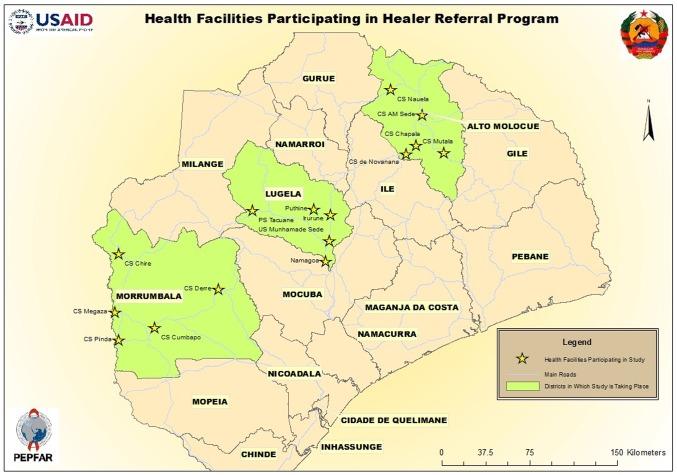
We conducted a pre-post educational intervention with traditional healers, assessing healer referral rates and HIV knowledge in three rural districts in Zambézia Province.
RESULTS
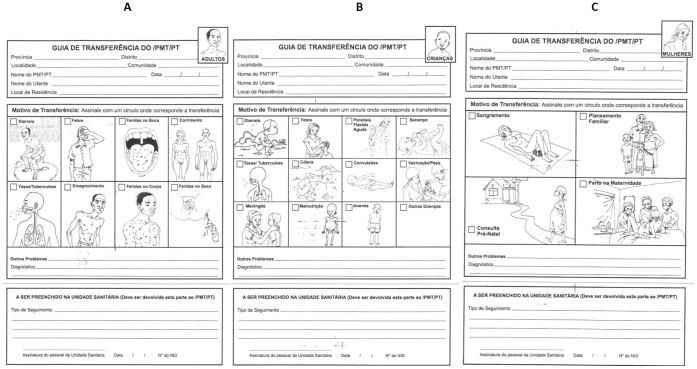
The median monthly referral rate prior to the intervention was 0.25 patients (interquartile range [IQR]: 0-0.54) compared with a post-intervention rate of 0.34 patients (IQR: 0-0.71), a 35% increase (p=0.046). A median HIV knowledge score of 67% (IQR: 59-78) was noted 4-months pre-intervention and a median score of 81% (IQR: 74-89) was recorded 2½ months post-intervention (p<0.001). One hundred and eleven healers referred 127 adults, 36 pregnant women, and 188 children to health facilities. Referred patients were most likely to be diagnosed with bronchopneumonia (20% adults; 13% children) and/or malaria (15% adults; 37% children). Of 315 non-pregnant persons referred, 3.5% were tested for HIV and 2.5% were tested for tuberculosis.
DISCUSSION
We engaged traditional healers with some success; referral rates were low, but increased post-intervention. Once seen in the clinics, patients were rarely tested for HIV or tuberculosis, though symptoms suggested screening was indicated. We found increased referral rates through an inexpensive intervention with traditional healers, a viable, cost-effective method of directing patients to health facilities. However, quality improvement within the clinics is necessary before a substantial impact can be expected.
简介
在莫桑比克,临床服务的延迟获取阻碍了良好的临床结果。那些最初向传统治疗师寻求治疗的患者会延迟治疗;患有艾滋病病毒(HIV)或结核病等疾病的患者很少能及时被转介到卫生系统。
方法
我们在赞比西亚省的三个农村地区对传统治疗师进行了一项干预前后的教育,评估了治疗师的转介率和 HIV 知识。
结果
干预前,每月的中位数转介率为 0.25 名患者(四分位距[IQR]:0-0.54),而干预后为 0.34 名患者(IQR:0-0.71),增加了 35%(p=0.046)。在干预前 4 个月,HIV 知识得分中位数为 67%(IQR:59-78),而在干预后 2 个半月,得分中位数为 81%(IQR:74-89)(p<0.001)。111 名治疗师共转介了 127 名成人、36 名孕妇和 188 名儿童到医疗机构。转介的患者最有可能被诊断为支气管肺炎(20%的成人;13%的儿童)和/或疟疾(15%的成人;37%的儿童)。在转介的 315 名非孕妇中,有 3.5%接受了 HIV 检测,2.5%接受了结核病检测。
讨论
我们成功地与传统治疗师接触;转介率较低,但干预后有所增加。一旦在诊所就诊,很少有患者接受 HIV 或结核病检测,尽管症状表明需要进行筛查。我们发现,通过与传统治疗师进行廉价的干预,可以提高转介率,这是一种将患者转介到医疗机构的可行、具有成本效益的方法。然而,在预期产生实质性影响之前,有必要改善诊所内的服务质量。
 Zotero 插件