
脓毒症中不断变化的免疫系统:个体化免疫调节治疗是答案吗?
The changing immune system in sepsis: is individualized immuno-modulatory therapy the answer?
机构信息
Department of Internal Medicine; Washington University School of Medicine; St. Louis, MO USA.
Department of Anesthesiology, Medicine, and Surgery; Washington University School of Medicine; St. Louis, MO USA.
出版信息
Virulence. 2014 Jan 1;5(1):45-56. doi: 10.4161/viru.26516. Epub 2013 Sep 25.
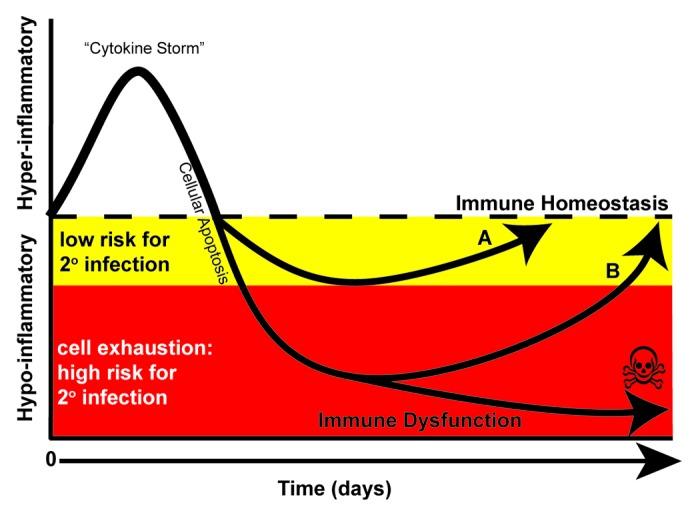
Sepsis remains the leading cause of death in most intensive care units. Advances in understanding the immune response to sepsis provide the opportunity to develop more effective therapies. The immune response in sepsis can be characterized by a cytokine-mediated hyper-inflammatory phase, which most patients survive, and a subsequent immune-suppressive phase. Patients fail to eradicate invading pathogens and are susceptible to opportunistic organisms in the hypo-inflammatory phase. Many mechanisms are responsible for sepsis-induced immuno-suppression, including apoptotic depletion of immune cells, increased T regulatory and myeloid-derived suppressor cells, and cellular exhaustion. Currently in clinical trial for sepsis are granulocyte macrophage colony stimulating factor and interferon gamma, immune-therapeutic agents that boost patient immunity. Immuno-adjuvants with promise in clinically relevant animal models of sepsis include anti-programmed cell death-1 and interleukin-7. The future of immune therapy in sepsis will necessitate identification of the immunologic phase using clinical and laboratory parameters as well as biomarkers of innate and adaptive immunity.
脓毒症仍然是大多数重症监护病房死亡的主要原因。对脓毒症免疫反应的深入了解为开发更有效的治疗方法提供了机会。脓毒症的免疫反应可以通过细胞因子介导的过度炎症期来描述,大多数患者在这个阶段幸存下来,然后是免疫抑制期。在低炎症期,患者无法消灭入侵的病原体,容易受到机会性生物体的感染。许多机制导致脓毒症引起的免疫抑制,包括免疫细胞的凋亡消耗、调节性 T 细胞和髓源抑制细胞的增加,以及细胞衰竭。目前正在临床试验中用于脓毒症的药物有粒细胞巨噬细胞集落刺激因子和干扰素 γ,它们是增强患者免疫力的免疫治疗药物。在脓毒症的临床相关动物模型中具有前景的免疫佐剂包括抗程序性细胞死亡蛋白 1 和白细胞介素 7。脓毒症免疫治疗的未来将需要使用临床和实验室参数以及先天和适应性免疫的生物标志物来确定免疫阶段。

 Zotero 插件