
评估磷酸托昔替尼在低于最大耐受剂量的情况下用于治疗实体瘤犬的不良事件谱和药效学。
Evaluation of the adverse event profile and pharmacodynamics of toceranib phosphate administered to dogs with solid tumors at doses below the maximum tolerated dose.
机构信息
Department of Veterinary Biosciences, College of Veterinary Medicine, The Ohio State University, Columbus, OH 43210, USA.
出版信息
BMC Vet Res. 2013 Sep 30;9:190. doi: 10.1186/1746-6148-9-190.
BACKGROUND
The receptor kinase inhibitor toceranib phosphate (Palladia) was approved for use in dogs in 2009 using a dose of 3.25 mg/kg administered every other day. Preliminary data suggests that lower doses of toeceranib may be associated with a reduced adverse event profile while maintaining sufficient drug exposure to provide biologic activity. The purpose of this study was to determine the Cmax of toceranib in dogs with solid tumors receiving 2.5-2.75 mg/kg every other day and to document the adverse events associated with this dose rate. Secondary objectives included determination of plasma VEGF concentrations in treated dogs and response to therapy.
RESULTS
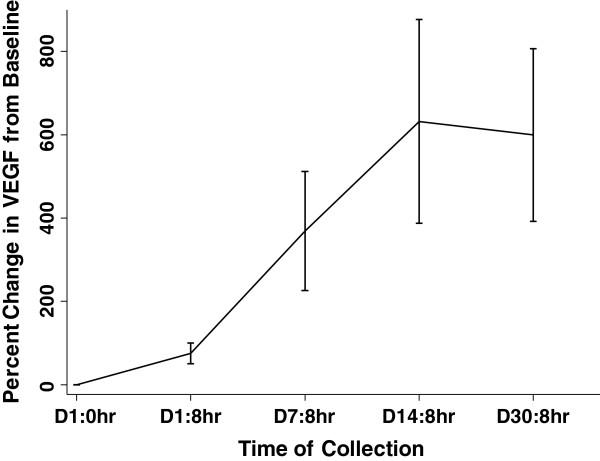
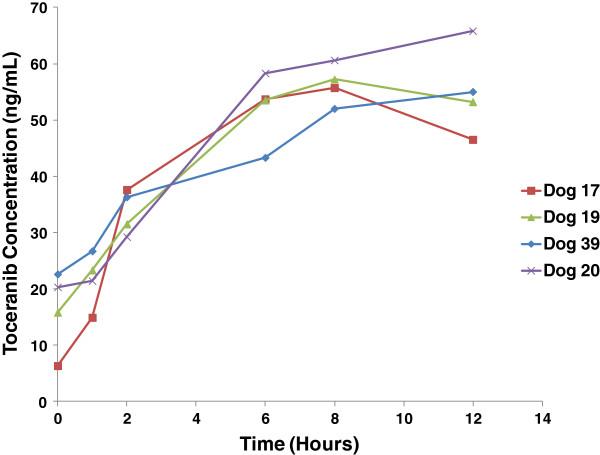
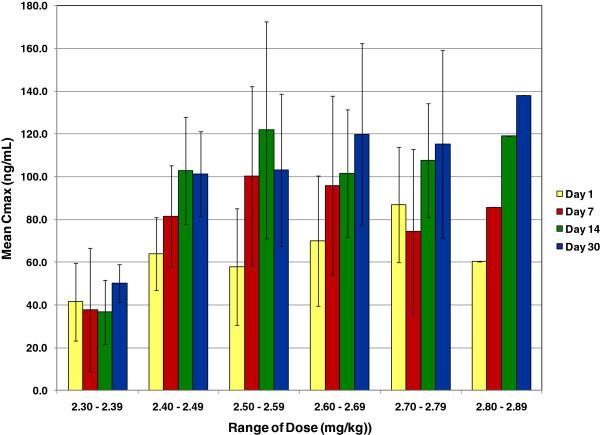
Dogs with solid tumors were administered toceranib at an intended target dose ranging from 2.5-2.75 mg/kg every other day and plasma samples were obtained for analysis of toceranib and VEGF plasma concentrations on days 0, 7, 14 and 30 of the study at 6 and 8 hours post drug administration. Additionally, plasma samples were obtained at 0, 1, 2, 6, 8, and 12 hours from dogs on day 30 for confirmation of Cmax. Response to therapy was assessed using standard RECIST criteria and adverse events were characterized using the VCOG-CTCAE. Toceranib administered at doses between 2.4-2.9 mg/kg every other day resulted in an average 6-8 hr plasma concentration ranging from 100-120 ng/ml, well above the 40 ng/ml concentration associated with target inhibition. Plasma VEGF concentrations increased significantly over the 30 day treatment period indicating that VEGFR2 inhibition was likely achieved in the majority of dogs. The lower doses of toceranib used in this study were associated with a substantially reduced adverse event profile compared to the established label dose of 3.25 mg/kg EOD.
CONCLUSIONS
Doses of toceranib ranging from 2.4-2.9 mg/kg every other day provide drug exposure considered sufficient for target inhibition while resulting in an adverse event profile substantially reduced from that associated with the label dose of toceranib. This lower dose range of toceranib should be considered for future use in dogs with cancer.
背景
受体激酶抑制剂托昔单抗磷酸(Palladia)于 2009 年获准用于犬,剂量为 3.25 毫克/千克,每两天一次。初步数据表明,托昔单抗的较低剂量可能与减少不良事件谱相关,同时保持足够的药物暴露以提供生物活性。本研究的目的是确定接受每两天一次 2.5-2.75 毫克/千克剂量的患有实体瘤的犬的托昔单抗 Cmax,并记录与该剂量相关的不良事件。次要目标包括确定治疗犬的血浆 VEGF 浓度和对治疗的反应。
结果
患有实体瘤的犬接受了每两天一次的目标剂量为 2.5-2.75 毫克/千克的托昔单抗治疗,并在研究的第 0、7、14 和 30 天,在药物给药后 6 和 8 小时,获得了用于分析托昔单抗和 VEGF 血浆浓度的血浆样本。此外,在第 30 天,从犬获得了 0、1、2、6、8 和 12 小时的血浆样本,以确认 Cmax。使用标准 RECIST 标准评估治疗反应,并使用 VCOG-CTCAE 描述不良事件。每两天一次给予 2.4-2.9 毫克/千克的托昔单抗导致平均 6-8 小时的血浆浓度范围为 100-120 纳克/毫升,远高于与目标抑制相关的 40 纳克/毫升浓度。血浆 VEGF 浓度在 30 天的治疗期间显著增加,表明大多数犬可能实现了 VEGFR2 抑制。与已建立的 3.25 毫克/千克每两天一次的标签剂量相比,本研究中使用的较低托昔单抗剂量与显著减少的不良事件谱相关。托昔单抗的这个较低剂量范围应考虑用于未来患有癌症的犬。
 Zotero 插件