
组蛋白去乙酰化酶 8(HDAC8)抑制的结构基础,HDAC8 是曼氏血吸虫中的一个关键表观遗传因子。
Structural basis for the inhibition of histone deacetylase 8 (HDAC8), a key epigenetic player in the blood fluke Schistosoma mansoni.
机构信息
Département de Biologie Structurale Intégrative, Institut de Génétique et Biologie Moléculaire et Cellulaire (IGBMC), Université de Strasbourg (UDS), CNRS, INSERM, Illkirch, France.
出版信息
PLoS Pathog. 2013;9(9):e1003645. doi: 10.1371/journal.ppat.1003645. Epub 2013 Sep 26.
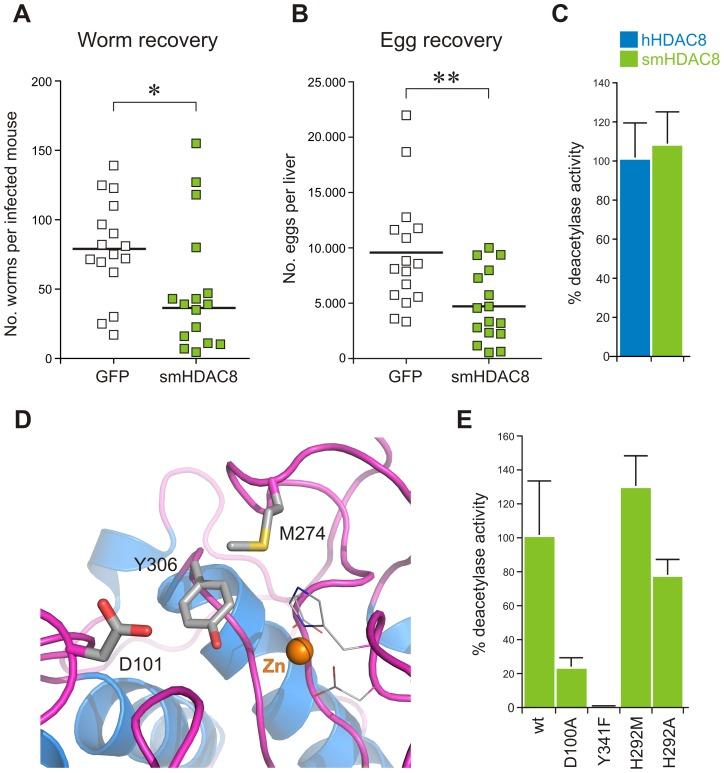
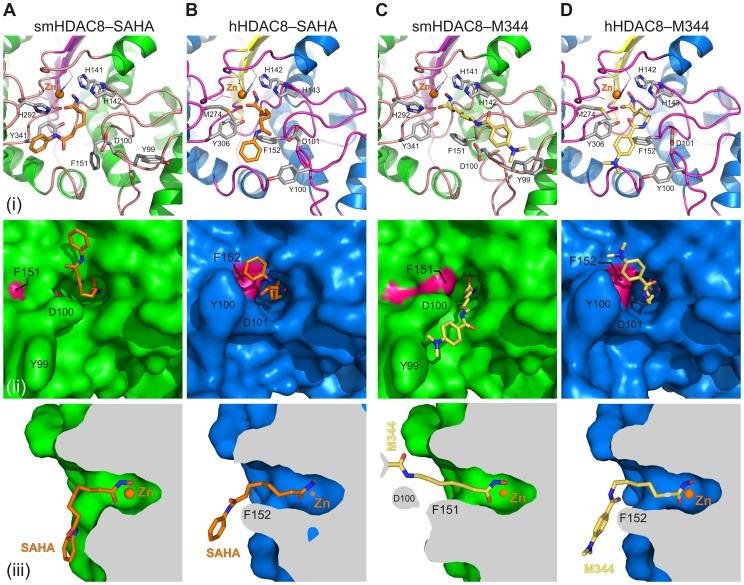
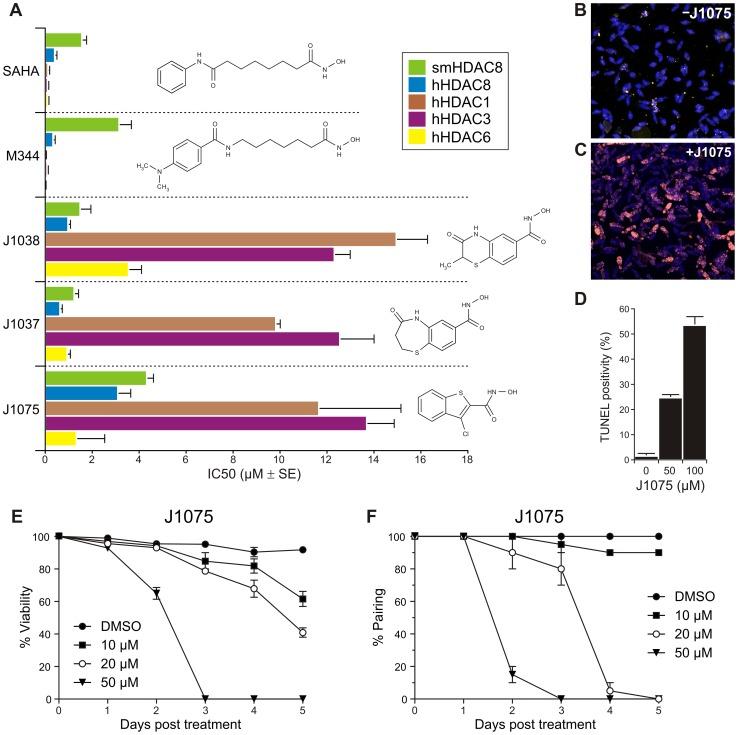
The treatment of schistosomiasis, a disease caused by blood flukes parasites of the Schistosoma genus, depends on the intensive use of a single drug, praziquantel, which increases the likelihood of the development of drug-resistant parasite strains and renders the search for new drugs a strategic priority. Currently, inhibitors of human epigenetic enzymes are actively investigated as novel anti-cancer drugs and have the potential to be used as new anti-parasitic agents. Here, we report that Schistosoma mansoni histone deacetylase 8 (smHDAC8), the most expressed class I HDAC isotype in this organism, is a functional acetyl-L-lysine deacetylase that plays an important role in parasite infectivity. The crystal structure of smHDAC8 shows that this enzyme adopts a canonical α/β HDAC fold, with specific solvent exposed loops corresponding to insertions in the schistosome HDAC8 sequence. Importantly, structures of smHDAC8 in complex with generic HDAC inhibitors revealed specific structural changes in the smHDAC8 active site that cannot be accommodated by human HDACs. Using a structure-based approach, we identified several small-molecule inhibitors that build on these specificities. These molecules exhibit an inhibitory effect on smHDAC8 but show reduced affinity for human HDACs. Crucially, we show that a newly identified smHDAC8 inhibitor has the capacity to induce apoptosis and mortality in schistosomes. Taken together, our biological and structural findings define the framework for the rational design of small-molecule inhibitors specifically interfering with schistosome epigenetic mechanisms, and further support an anti-parasitic epigenome targeting strategy to treat neglected diseases caused by eukaryotic pathogens.
血吸虫病是一种由血吸虫属的血液吸虫寄生虫引起的疾病,其治疗方法依赖于吡喹酮这种单一药物的大量使用。吡喹酮的使用增加了寄生虫产生耐药性的可能性,因此寻找新的药物成为了一项战略重点。目前,人类表观遗传酶抑制剂作为新型抗癌药物正在被积极研究,并有潜力被用作新的抗寄生虫药物。在这里,我们报告说,曼氏血吸虫组蛋白去乙酰化酶 8(smHDAC8)是该生物中表达量最高的 I 类 HDAC 同工型,是一种具有功能的乙酰-L-赖氨酸去乙酰化酶,在寄生虫感染力中发挥着重要作用。smHDAC8 的晶体结构表明,该酶采用典型的α/β HDAC 折叠,具有与在血吸虫 HDAC8 序列中的插入相对应的特定溶剂暴露环。重要的是,与通用 HDAC 抑制剂复合物的 smHDAC8 结构揭示了 smHDAC8 活性位点的特定结构变化,这些变化不能被人类 HDAC 容纳。我们使用基于结构的方法,鉴定了几种基于这些特异性的小分子抑制剂。这些分子对 smHDAC8 具有抑制作用,但对人类 HDAC 的亲和力降低。至关重要的是,我们表明,一种新鉴定的 smHDAC8 抑制剂具有诱导血吸虫凋亡和死亡的能力。总之,我们的生物学和结构研究结果为专门干扰血吸虫表观遗传机制的小分子抑制剂的合理设计定义了框架,并进一步支持了针对真核病原体引起的被忽视疾病的抗寄生虫表观基因组靶向策略。




 Zotero 插件