
性腺功能减退男性的睾酮治疗可带来持续且具有临床意义的体重减轻。
Testosterone therapy in hypogonadal men results in sustained and clinically meaningful weight loss.
作者信息
Yassin Aa, Doros G
机构信息
Institute of Urology and Andrology, Segeberger Kliniken, Norderstedt Germany.
出版信息
Clin Obes. 2013 Jun;3(3-4):73-83. doi: 10.1111/cob.12022. Epub 2013 Jun 19.
WHAT IS ALREADY KNOWN ABOUT THIS SUBJECT
Hypogonadism is associated with increased fat mass and reduced muscle mass, which contributes to obesity and health risks, such as cardiovascular disease.Testosterone treatment of hypogonadal men improves muscle mass and reduces fat mass; however, many of these studies are of short duration.Thus, the long-term effects of testosterone on body anthropometry are not known.
WHAT THIS STUDY ADDS
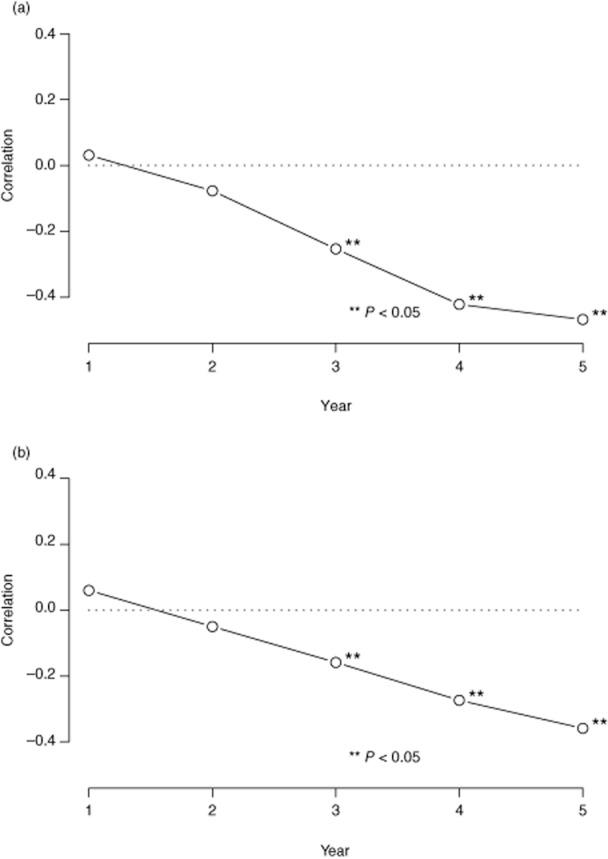
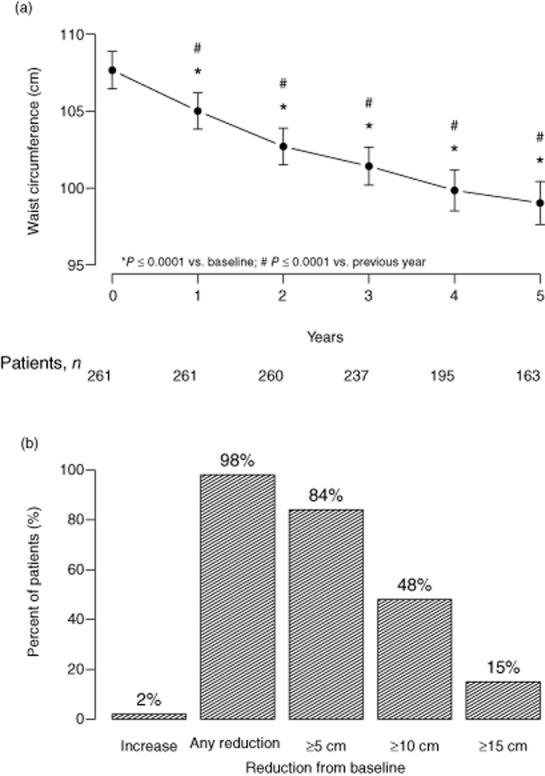
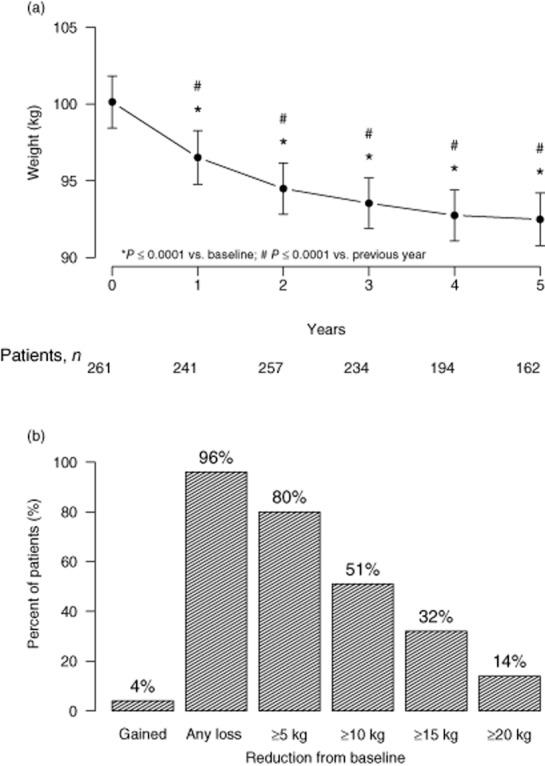
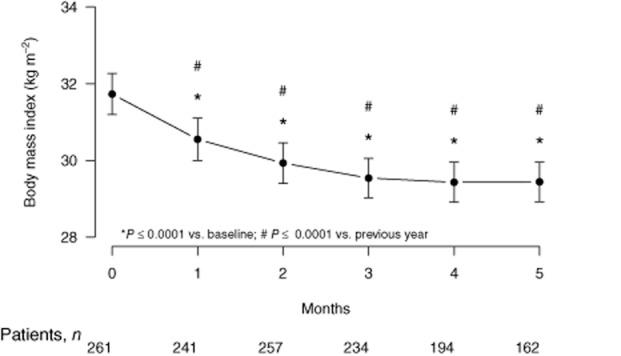
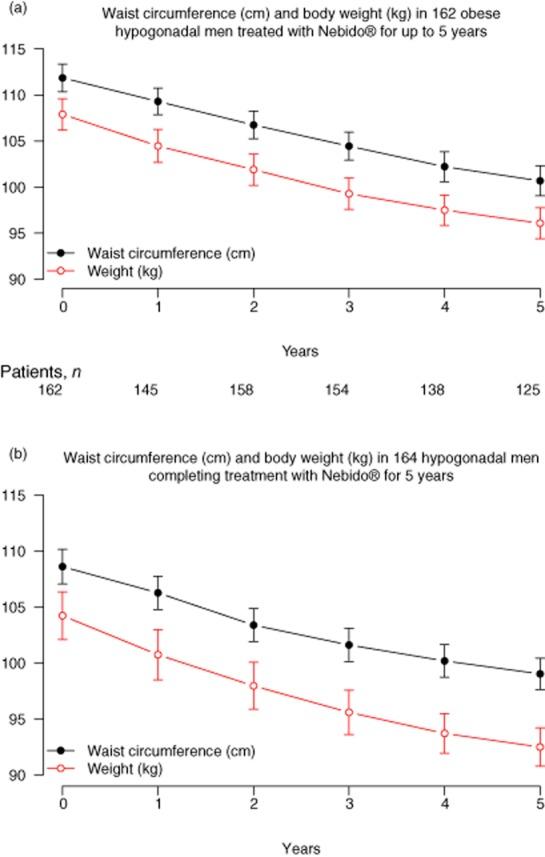
Long-term testosterone treatment of hypogonadal men, up to 5 years duration, produced marked and significant decrease in body weight, waist circumference and body mass index. Hypogonadism contributes to reduced muscle mass and increased adiposity. Testosterone treatment ameliorates loss of muscle mass and reduces fat accumulation associated with hypogonadism. In this study, we evaluated the long-term effects of normalizing testosterone (T) levels in hypogonadal men on anthropometric parameters. Open-label, single-center, cumulative, prospective registry study of 261 men (32-84 years, mean 59.5 ± 8.4 years, with T levels ≤12 nmol L [mean: 7.7 ± 2.1]). Among the 261 men on T treatment, we followed up on 260 men for at least 2 years, 237 for 3 years, 195 for 4 years and 163 for at least 5 years. Subjects received parenteral T undecanoate 1000 mg every 12 weeks after an initial interval of 6 weeks. Body weight (BW), waist circumference (WC) and body mass index (BMI) were measured at baseline and yearly after treatment with T. BW decreased from 100.1 ± 14.0 kg to 92.5 ± 11.2 kg and WC was reduced from 107.7 ± 10.0 cm to 99.0 ± 9.1 cm. BMI declined from 31.7 ± 4.4 m kg to 29.4 ± 3.4 m kg. All parameters examined were statistically significant vs. baseline and vs. the previous year over 5 years, indicating a continuous weight loss (WL) over the full observation period. The mean per cent WL was 3.2 ± 0.3% after 1 year, 5.6 ± 0.3%, after 2 years, 7.5 ± 0.3% after 3 years, 9.1 ± 0.3% after 4 years and 10.5 ± 0.4% after 5 years. The data obtained from this uncontrolled, observational, registry study suggest that raising serum T to normal physiological levels in hypogonadal men produces consistent loss in BW, WC and BMI. These marked improvements were progressive over the 5 years of the study.
关于该主题的已知信息
性腺功能减退与脂肪量增加和肌肉量减少有关,这会导致肥胖和健康风险,如心血管疾病。对性腺功能减退男性进行睾酮治疗可增加肌肉量并减少脂肪量;然而,这些研究大多持续时间较短。因此,睾酮对身体人体测量学的长期影响尚不清楚。
本研究的新增内容
对性腺功能减退男性进行长达5年的长期睾酮治疗,可使体重、腰围和体重指数显著下降。性腺功能减退会导致肌肉量减少和肥胖增加。睾酮治疗可改善肌肉量的损失,并减少与性腺功能减退相关的脂肪堆积。在本研究中,我们评估了使性腺功能减退男性的睾酮(T)水平正常化对人体测量参数的长期影响。对261名男性(年龄32 - 84岁,平均59.5±8.4岁,T水平≤12 nmol/L[平均:7.7±2.1])进行开放标签、单中心、累积性、前瞻性登记研究。在接受T治疗的261名男性中,我们对260名男性进行了至少2年的随访,237名进行了3年随访,195名进行了4年随访,163名进行了至少5年随访。受试者在最初6周的间隔后,每12周接受1000 mg的十一酸睾酮注射。在基线时以及T治疗后每年测量体重(BW)、腰围(WC)和体重指数(BMI)。BW从100.1±14.0 kg降至92.5±11.2 kg,WC从107.7±10.0 cm降至99.0±9.1 cm。BMI从31.7±4.4 m²/kg降至29.4±3.4 m²/kg。在5年期间,所有检测参数与基线以及上一年相比均具有统计学意义,表明在整个观察期内体重持续下降(WL)。1年后平均体重下降百分比为3.2±0.3%,2年后为5.6±0.3%,3年后为7.5±0.3%,4年后为9.1±0.3%,5年后为10.5±0.4%。从这项非对照、观察性登记研究中获得的数据表明,使性腺功能减退男性的血清T水平恢复到正常生理水平会导致BW(体重)、WC(腰围)和BMI持续下降。在5年的研究过程中,这些显著改善是渐进性的。


 Zotero 插件