
TERT 启动子突变在皮肤基底细胞癌和鳞状细胞癌中很常见。
TERT promoter mutations are frequent in cutaneous basal cell carcinoma and squamous cell carcinoma.
机构信息
Department of Dermatology, University Hospital, University Duisburg-Essen, Essen, Germany.
出版信息
PLoS One. 2013 Nov 18;8(11):e80354. doi: 10.1371/journal.pone.0080354. eCollection 2013.
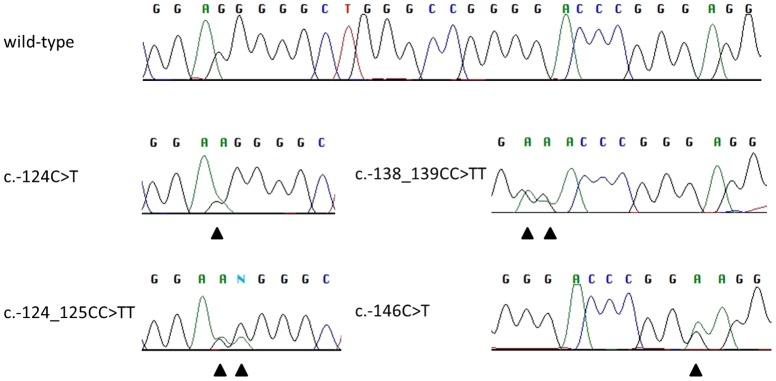
Activating mutations in the TERT promoter were recently identified in up to 71% of cutaneous melanoma. Subsequent studies found TERT promoter mutations in a wide array of other major human cancers. TERT promoter mutations lead to increased expression of telomerase, which maintains telomere length and genomic stability, thereby allowing cancer cells to continuously divide, avoiding senescence or apoptosis. TERT promoter mutations in cutaneous melanoma often show UV-signatures. Non-melanoma skin cancer, including basal cell carcinoma and squamous cell carcinoma, are very frequent malignancies in individuals of European descent. We investigated the presence of TERT promoter mutations in 32 basal cell carcinomas and 34 cutaneous squamous cell carcinomas using conventional Sanger sequencing. TERT promoter mutations were identified in 18 (56%) basal cell carcinomas and in 17 (50%) cutaneous squamous cell carcinomas. The recurrent mutations identified in our cohort were identical to those previously described in cutaneous melanoma, and showed a UV-signature (C>T or CC>TT) in line with a causative role for UV exposure in these common cutaneous malignancies. Our study shows that TERT promoter mutations with UV-signatures are frequent in non-melanoma skin cancer, being present in around 50% of basal and squamous cell carcinomas and suggests that increased expression of telomerase plays an important role in the pathogenesis of these tumors.
TERT 启动子的激活突变最近在高达 71%的皮肤黑色素瘤中被发现。随后的研究在广泛的其他主要人类癌症中发现了 TERT 启动子突变。TERT 启动子突变导致端粒酶表达增加,端粒酶维持端粒长度和基因组稳定性,从而使癌细胞能够持续分裂,避免衰老或凋亡。皮肤黑色素瘤中的 TERT 启动子突变通常显示 UV 特征。非黑色素瘤皮肤癌,包括基底细胞癌和鳞状细胞癌,在欧洲血统的个体中是非常常见的恶性肿瘤。我们使用常规的 Sanger 测序法研究了 32 例基底细胞癌和 34 例皮肤鳞状细胞癌中 TERT 启动子突变的存在。在 18 例(56%)基底细胞癌和 17 例(50%)皮肤鳞状细胞癌中发现了 TERT 启动子突变。我们的研究队列中鉴定出的反复突变与先前在皮肤黑色素瘤中描述的突变相同,并且表现出与 UV 暴露在这些常见皮肤恶性肿瘤中具有因果关系的一致的 UV 特征(C>T 或 CC>TT)。我们的研究表明,具有 UV 特征的 TERT 启动子突变在非黑色素瘤皮肤癌中很常见,约 50%的基底细胞癌和鳞状细胞癌中存在这些突变,并表明端粒酶表达增加在这些肿瘤的发病机制中起着重要作用。
 Zotero 插件