
低甲基化剂治疗可增强骨髓增生异常综合征中 PD-L1、PD-L2、PD-1 和 CTLA4 的表达。
Expression of PD-L1, PD-L2, PD-1 and CTLA4 in myelodysplastic syndromes is enhanced by treatment with hypomethylating agents.
机构信息
Department of Leukemia, University of Texas MD Cancer Center, Houston, TX, USA.
Department of Hematopathology, University of Texas MD Cancer Center, Houston, TX, USA.
出版信息
Leukemia. 2014 Jun;28(6):1280-8. doi: 10.1038/leu.2013.355. Epub 2013 Nov 25.
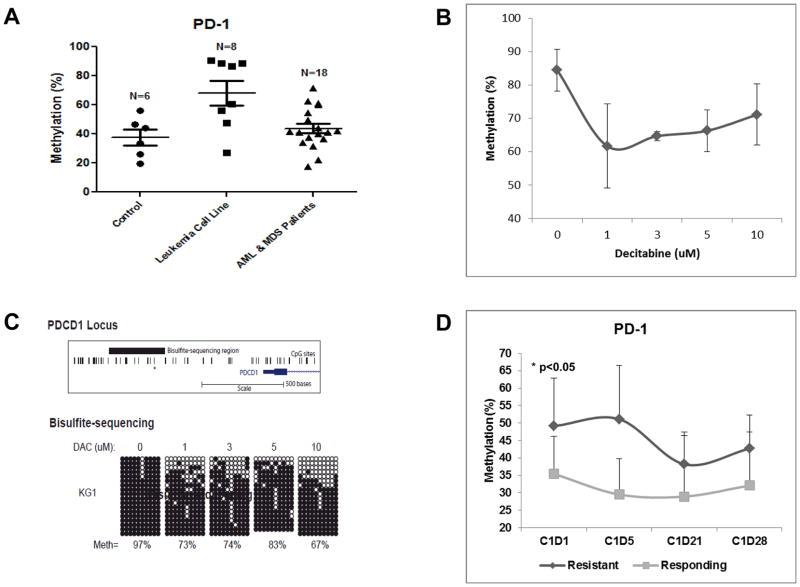
Blockade of immune checkpoints is emerging as a new form of anticancer therapy. We studied the expression of programmed death ligand 1 (PD-L1), PD-L2, programmed death 1 (PD-1) and cytotoxic T lymphocyte-associated antigen 4 (CTLA4) mRNA in CD34+ cells from myelodysplastic syndrome (MDS), chronic myelomonocytic leukemia (CMML) and acute myeloid leukemia (AML) patients (N=124). Aberrant upregulation (⩾2-fold) was observed in 34, 14, 15 and 8% of the patients. Increased expression of these four genes was also observed in peripheral blood mononuclear cells (PBMNCs) (N=61). The relative expression of PD-L1 from PBMNC was significantly higher in MDS (P=0.018) and CMML (P=0.0128) compared with AML. By immunohistochemical analysis, PD-L1 protein expression was observed in MDS CD34+ cells, whereas stroma/non-blast cellular compartment was positive for PD-1. In a cohort of patients treated with epigenetic therapy, PD-L1, PD-L2, PD-1 and CTLA4 expression was upregulated. Patients resistant to therapy had relative higher increments in gene expression compared with patients who achieved response. Treatment of leukemia cells with decitabine resulted in a dose-dependent upregulation of above genes. Exposure to decitabine resulted in partial demethylation of PD-1 in leukemia cell lines and human samples. This study suggests that PD-1 signaling may be involved in MDS pathogenesis and resistance mechanisms to hypomethylating agents. Blockade of this pathway can be a potential therapy in MDS and AML.
免疫检查点阻断作为一种新的抗癌治疗方法正在出现。我们研究了骨髓增生异常综合征(MDS)、慢性粒单核细胞白血病(CMML)和急性髓系白血病(AML)患者的 CD34+细胞中程序性死亡配体 1(PD-L1)、PD-L2、程序性死亡 1(PD-1)和细胞毒性 T 淋巴细胞相关抗原 4(CTLA4)mRNA 的表达(N=124)。在 34%、14%、15%和 8%的患者中观察到异常上调(≥2 倍)。在 61 例外周血单个核细胞(PBMNC)中也观察到这四个基因的表达增加。MDS(P=0.018)和 CMML(P=0.0128)的 PBMNC 中 PD-L1 的相对表达明显高于 AML。通过免疫组化分析,在 MDS CD34+细胞中观察到 PD-L1 蛋白表达,而基质/非母细胞区室对 PD-1 呈阳性。在接受表观遗传治疗的患者队列中,PD-L1、PD-L2、PD-1 和 CTLA4 的表达上调。与获得缓解的患者相比,对治疗有抗性的患者的基因表达增加相对更高。用地西他滨处理白血病细胞导致上述基因的剂量依赖性上调。地西他滨的暴露导致白血病细胞系和人类样本中 PD-1 的部分去甲基化。本研究表明,PD-1 信号可能参与 MDS 发病机制和对低甲基化剂的耐药机制。阻断该途径可能是 MDS 和 AML 的潜在治疗方法。


 Zotero 插件