
用于预防导管相关血流感染的牛磺罗定封管溶液:一项随机对照试验的系统评价和荟萃分析
Taurolidine lock solutions for the prevention of catheter-related bloodstream infections: a systematic review and meta-analysis of randomized controlled trials.
作者信息
Liu Yong, Zhang An-Qiang, Cao Lin, Xia Hong-Tao, Ma Jun-Jie
机构信息
Intensive care unit, Suining Central Hospital, Chuanshan District, Suining, Sichuan, China.
出版信息
PLoS One. 2013 Nov 21;8(11):e79417. doi: 10.1371/journal.pone.0079417. eCollection 2013.
BACKGROUND
Catheter-related bloodstream infections (CRBSIs) are a significant cause of morbidity and mortality in critically ill patients, contributing to prolonged hospital stays and increased costs. Whether taurolidine lock solutions (TLS) are beneficial for the prevention of CRBSIs remains controversial. In this meta-analysis, we aim to assess the efficacy of TLS for preventing CRBSIs.
METHODS
We conducted a systematic search of PubMed, EMBASE, and the Cochrane Central Register of Controlled Trials. Eligible studies included randomized controlled trials that reported on the effects of TLS for preventing CRBSIs. The primary outcome in these studies was catheter-related bloodstream infections, with microbial distribution of CRBSI and catheter-associated thrombosis as secondary outcomes. Data were combined using random-effects models owing to significant clinical heterogeneity.
RESULTS
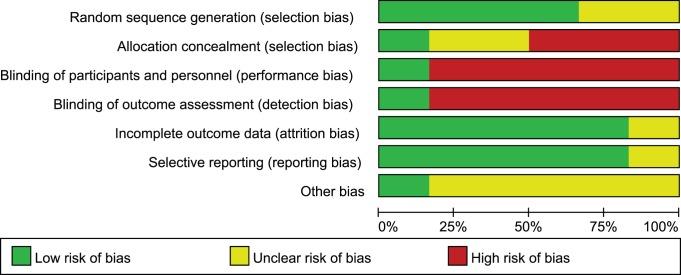
Six randomized controlled trials (RCTs) conducted from 2004 through 2013 involving 431 patients and 86,078 catheter-days were included in the review. TLS were significantly associated with a lower incidence of CRBSIs when compared to heparin lock solutions (Risk Ratio [RR], 0.34; 95% Confidence Interval [CI], 0.21-0.55). Use of TLS significantly decreased the incidence of CRBSIs from gram-negative (G-) bacteria (P = 0.004; RR, 0.27; CI, 0.11-0.65), and was associated with a non-significant decrease in gram-positive (G+) bacterial infections (P = 0.07; RR, 0.41; CI, 0.15-1.09). No significant association was observed with TLS and catheter-associated thrombosis (RR, 1.99; CI, 0.75-5.28).
CONCLUSIONS
The use of TLS reduced the incidence of CRBSIs without obvious adverse effects or bacterial resistance. However, the susceptibility of G+ and G- bacteria to taurolidine and the risk for catheter-associated thrombosis of TLS are indeterminate due to limited data. The results should be treated with caution due to the limited sample sizes and methodological deficiencies of included studies. Therefore, additional well-designed and adequately powered RCTs are needed to confirm these findings.
背景
导管相关血流感染(CRBSIs)是危重症患者发病和死亡的重要原因,会导致住院时间延长和费用增加。牛磺罗定封管溶液(TLS)对预防CRBSIs是否有益仍存在争议。在这项荟萃分析中,我们旨在评估TLS预防CRBSIs的疗效。
方法
我们对PubMed、EMBASE和Cochrane对照试验中央注册库进行了系统检索。符合条件的研究包括报告TLS预防CRBSIs效果的随机对照试验。这些研究的主要结局是导管相关血流感染,CRBSI的微生物分布和导管相关血栓形成作为次要结局。由于存在显著的临床异质性,数据采用随机效应模型合并。
结果
本综述纳入了2004年至2013年进行的6项随机对照试验(RCT),涉及431例患者和86078个导管日。与肝素封管溶液相比,TLS与CRBSIs发生率显著降低相关(风险比[RR],0.34;95%置信区间[CI],0.21 - 0.55)。使用TLS显著降低了革兰氏阴性(G -)菌引起的CRBSIs发生率(P = 0.004;RR,0.27;CI,0.11 - 0.65),并且与革兰氏阳性(G +)菌感染的非显著降低相关(P = 0.07;RR,0.41;CI,0.15 - 1.09)。未观察到TLS与导管相关血栓形成有显著关联(RR,1.99;CI,0.75 - 5.28)。
结论
使用TLS可降低CRBSIs的发生率,且无明显不良反应或细菌耐药性。然而,由于数据有限,G +菌和G -菌对牛磺罗定的敏感性以及TLS的导管相关血栓形成风险尚不确定。由于纳入研究的样本量有限和方法学缺陷,这些结果应谨慎对待。因此,需要更多设计良好且样本量充足的RCT来证实这些发现。




 Zotero 插件