
肠道病原体与反应性关节炎:弯曲杆菌、沙门氏菌和志贺氏菌相关反应性关节炎的系统评价
Enteric pathogens and reactive arthritis: a systematic review of Campylobacter, salmonella and Shigella-associated reactive arthritis.
作者信息
Ajene Anuli N, Fischer Walker Christa L, Black Robert E
机构信息
Department of International Health Johns Hopkins Bloomberg School of Public Health 615 North Wolfe St., Room E5608 Baltimore, MD 21205 USA.
出版信息
J Health Popul Nutr. 2013 Sep;31(3):299-307. doi: 10.3329/jhpn.v31i3.16515.
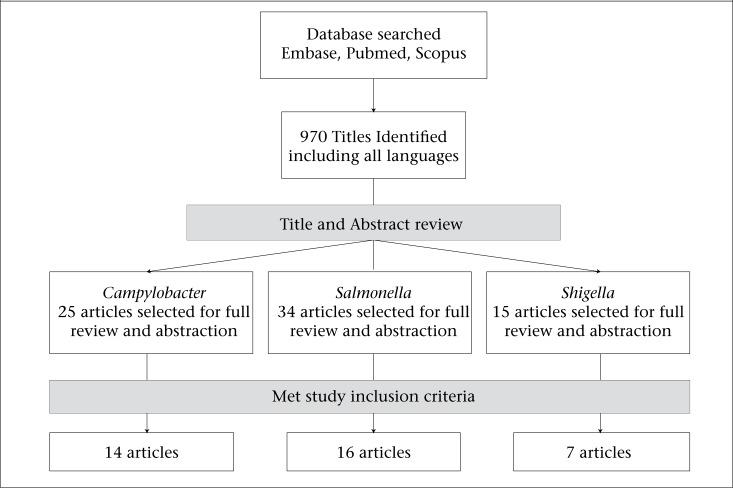
Reactive arthritis (ReA) is a spondyloarthropathic disorder characterized by inflammation of the joints and tissues occurring after gastrointestinal or genitourinary infections. Diagnostic criteria for ReA do not exist and, therefore, it is subject to clinical opinion resulting in cases with a wide range of symptoms and definitions. Using standardized diagnostic criteria, we conducted a systematic literature review to establish the global incidence of ReA for each of the three most commonly-associated enteric pathogens: Campylobacter, Salmonella, and Shigella. The weighted mean incidence of reactive arthritis was 9, 12, and 12 cases per 1,000 cases of Campylobacter, Salmonella and Shigella infections respectively. To our knowledge, this is the first systematic review of worldwide data that use well-defined criteria to characterize diarrhoea-associated ReA. This information will aid in determining the burden of disease and act as a planning tool for public-health programmes.
反应性关节炎(ReA)是一种脊柱关节病,其特征为在胃肠道或泌尿生殖系统感染后出现关节和组织炎症。目前尚无ReA的诊断标准,因此,其诊断取决于临床判断,这导致病例的症状和定义范围广泛。我们使用标准化诊断标准进行了一项系统文献综述,以确定三种最常见的肠道病原体(弯曲杆菌、沙门氏菌和志贺氏菌)各自导致的ReA全球发病率。弯曲杆菌、沙门氏菌和志贺氏菌感染每1000例中反应性关节炎的加权平均发病率分别为9例、12例和12例。据我们所知,这是首次对全球数据进行的系统综述,该综述使用明确的标准来描述与腹泻相关的ReA。这些信息将有助于确定疾病负担,并作为公共卫生项目的规划工具。
 Zotero 插件