
果蝇中高度特异性且高效的CRISPR/Cas9催化的同源定向修复
Highly specific and efficient CRISPR/Cas9-catalyzed homology-directed repair in Drosophila.
作者信息
Gratz Scott J, Ukken Fiona P, Rubinstein C Dustin, Thiede Gene, Donohue Laura K, Cummings Alexander M, O'Connor-Giles Kate M
机构信息
Genetics Training Program, University of Wisconsin, Madison, Wisconsin 53706.
出版信息
Genetics. 2014 Apr;196(4):961-71. doi: 10.1534/genetics.113.160713. Epub 2014 Jan 29.
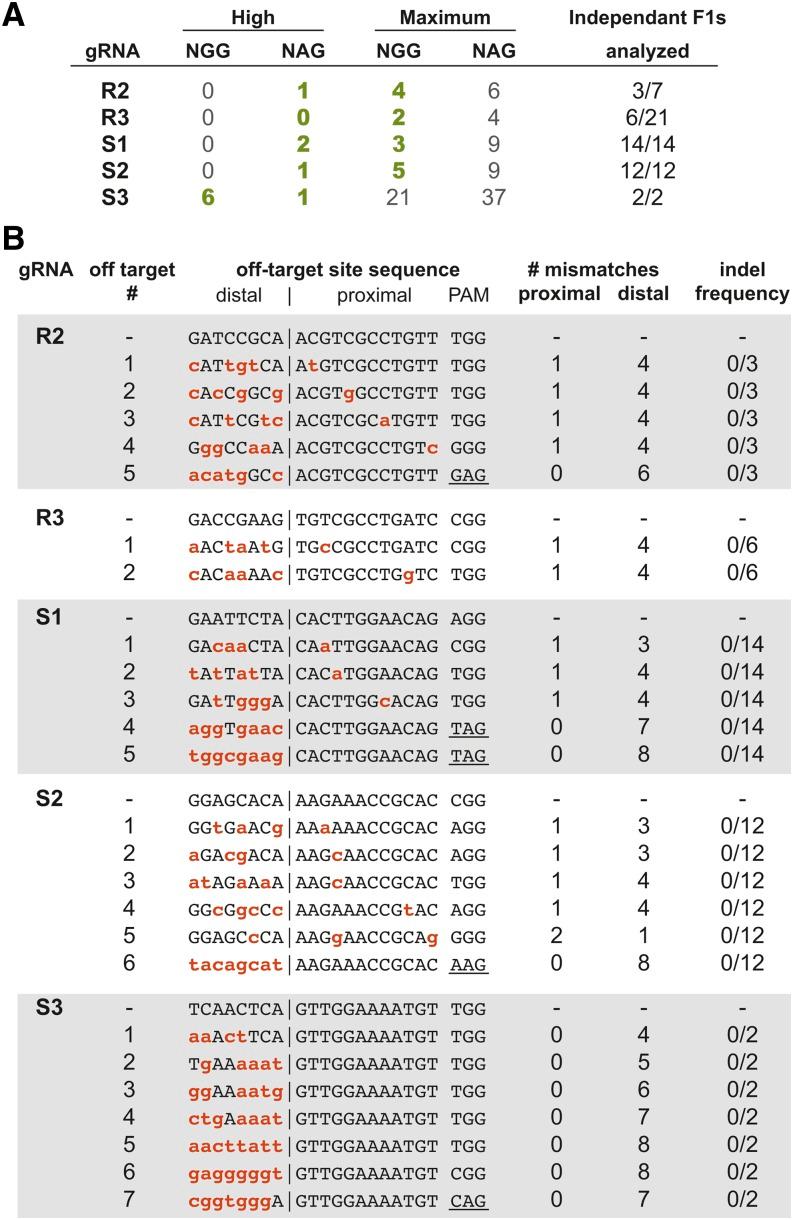
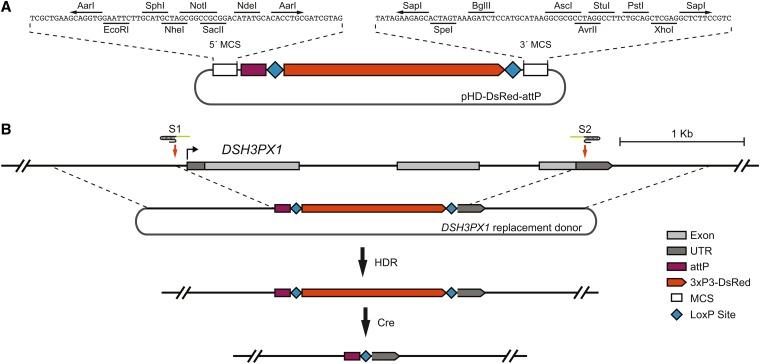
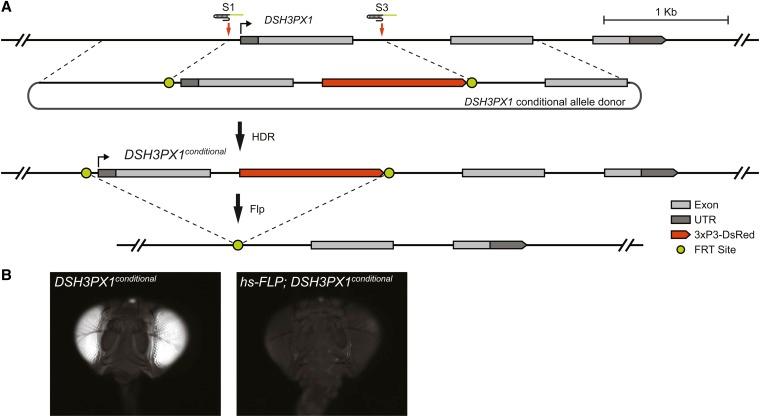
We and others recently demonstrated that the readily programmable CRISPR/Cas9 system can be used to edit the Drosophila genome. However, most applications to date have relied on aberrant DNA repair to stochastically generate frameshifting indels and adoption has been limited by a lack of tools for efficient identification of targeted events. Here we report optimized tools and techniques for expanded application of the CRISPR/Cas9 system in Drosophila through homology-directed repair (HDR) with double-stranded DNA (dsDNA) donor templates that facilitate complex genome engineering through the precise incorporation of large DNA sequences, including screenable markers. Using these donors, we demonstrate the replacement of a gene with exogenous sequences and the generation of a conditional allele. To optimize efficiency and specificity, we generated transgenic flies that express Cas9 in the germline and directly compared HDR and off-target cleavage rates of different approaches for delivering CRISPR components. We also investigated HDR efficiency in a mutant background previously demonstrated to bias DNA repair toward HDR. Finally, we developed a web-based tool that identifies CRISPR target sites and evaluates their potential for off-target cleavage using empirically rooted rules. Overall, we have found that injection of a dsDNA donor and guide RNA-encoding plasmids into vasa-Cas9 flies yields the highest efficiency HDR and that target sites can be selected to avoid off-target mutations. Efficient and specific CRISPR/Cas9-mediated HDR opens the door to a broad array of complex genome modifications and greatly expands the utility of CRISPR technology for Drosophila research.
我们和其他研究团队最近证明,易于编程的CRISPR/Cas9系统可用于编辑果蝇基因组。然而,迄今为止,大多数应用都依赖异常的DNA修复来随机产生移码插入缺失,并且由于缺乏有效鉴定靶向事件的工具,其应用受到了限制。在此,我们报告了优化的工具和技术,通过使用双链DNA(dsDNA)供体模板进行同源定向修复(HDR),来扩展CRISPR/Cas9系统在果蝇中的应用,该模板通过精确整合包括可筛选标记在内的大DNA序列来促进复杂的基因组工程。使用这些供体,我们展示了用外源序列替换基因以及产生条件等位基因。为了优化效率和特异性,我们构建了在生殖系中表达Cas9的转基因果蝇,并直接比较了不同CRISPR组分递送方法的HDR和脱靶切割率。我们还在先前已证明会使DNA修复偏向HDR的突变背景下研究了HDR效率。最后,我们开发了一个基于网络的工具,该工具可使用基于经验的规则识别CRISPR靶位点并评估其脱靶切割的可能性。总体而言,我们发现将dsDNA供体和编码引导RNA的质粒注射到vasa-Cas9果蝇中可产生最高效率的HDR,并且可以选择靶位点以避免脱靶突变。高效且特异的CRISPR/Cas9介导的HDR为广泛多样的复杂基因组修饰打开了大门,并极大地扩展了CRISPR技术在果蝇研究中的效用。


 Zotero 插件