
细胞因子信号转导抑制因子3(SOCS3),感染与炎症的主要调节因子
SOCS3, a Major Regulator of Infection and Inflammation.
作者信息
Carow Berit, Rottenberg Martin E
机构信息
Department of Microbiology, Tumor and Cell Biology, Karolinska Institutet , Stockholm , Sweden.
出版信息
Front Immunol. 2014 Feb 19;5:58. doi: 10.3389/fimmu.2014.00058. eCollection 2014.
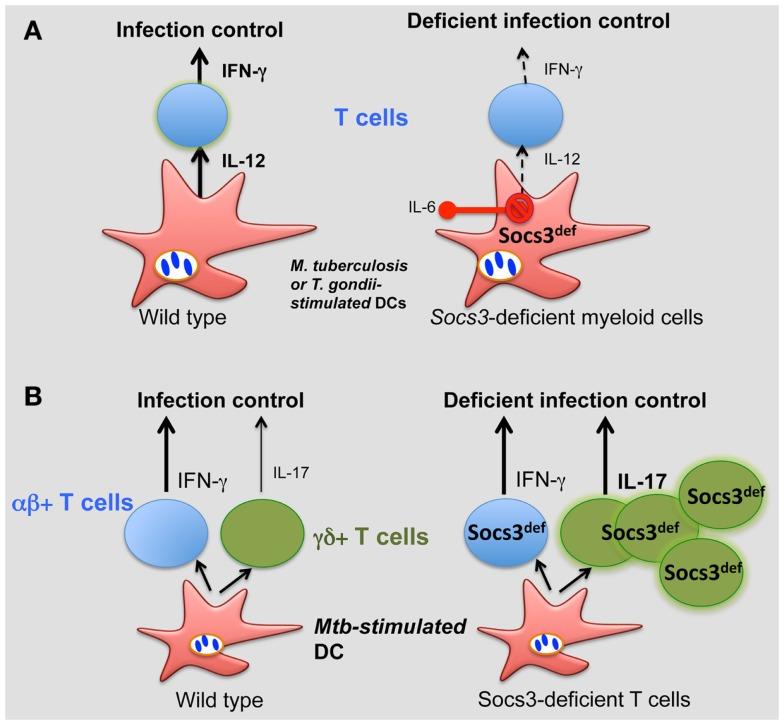
In this review, we describe the role of suppressor of cytokine signaling-3 (SOCS3) in modulating the outcome of infections and autoimmune diseases as well as the underlying mechanisms. SOCS3 regulates cytokine or hormone signaling usually preventing, but in some cases aggravating, a variety of diseases. A main role of SOCS3 results from its binding to both the JAK kinase and the cytokine receptor, which results in the inhibition of STAT3 activation. Available data also indicate that SOCS3 can regulate signaling via other STATs than STAT3 and also controls cellular pathways unrelated to STAT activation. SOCS3 might either act directly by hampering JAK activation or by mediating the ubiquitination and subsequent proteasome degradation of the cytokine/growth factor/hormone receptor. Inflammation and infection stimulate SOCS3 expression in different myeloid and lymphoid cell populations as well as in diverse non-hematopoietic cells. The accumulated data suggest a relevant program coordinated by SOCS3 in different cell populations, devoted to the control of immune homeostasis in physiological and pathological conditions such as infection and autoimmunity.
在本综述中,我们描述了细胞因子信号转导抑制因子3(SOCS3)在调节感染和自身免疫性疾病的结局及其潜在机制中的作用。SOCS3调节细胞因子或激素信号转导,通常可预防但在某些情况下会加重多种疾病。SOCS3的主要作用源于其与JAK激酶和细胞因子受体的结合,这会导致STAT3激活受到抑制。现有数据还表明,SOCS3可通过STAT3以外的其他STATs调节信号转导,并且还控制与STAT激活无关的细胞途径。SOCS3可能通过阻碍JAK激活直接发挥作用,或者通过介导细胞因子/生长因子/激素受体的泛素化及随后的蛋白酶体降解发挥作用。炎症和感染会刺激不同髓系和淋巴细胞群体以及多种非造血细胞中SOCS3的表达。积累的数据表明,SOCS3在不同细胞群体中协调了一个相关程序,致力于在感染和自身免疫等生理和病理条件下控制免疫稳态。

 Zotero 插件