
核糖体 RNA 基因重复序列、它们的稳定性和细胞衰老。
Ribosomal RNA gene repeats, their stability and cellular senescence.
机构信息
National Institute of Genetics, Division of Cytogenetics/Dept. of Genetics, The Graduate University for Advanced Studies, SOKENDAI.
出版信息
Proc Jpn Acad Ser B Phys Biol Sci. 2014;90(4):119-29. doi: 10.2183/pjab.90.119.
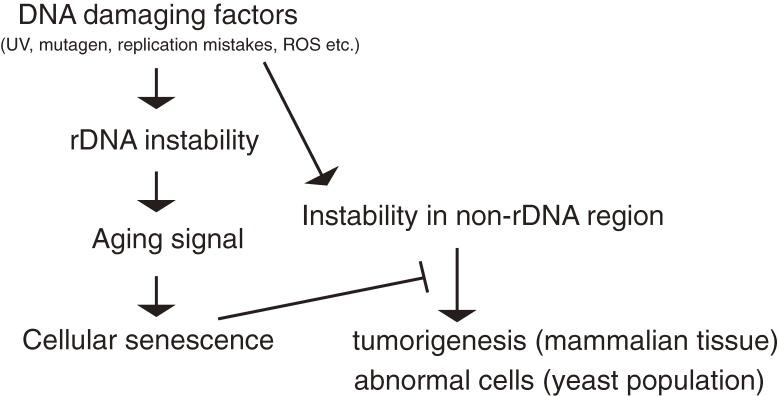
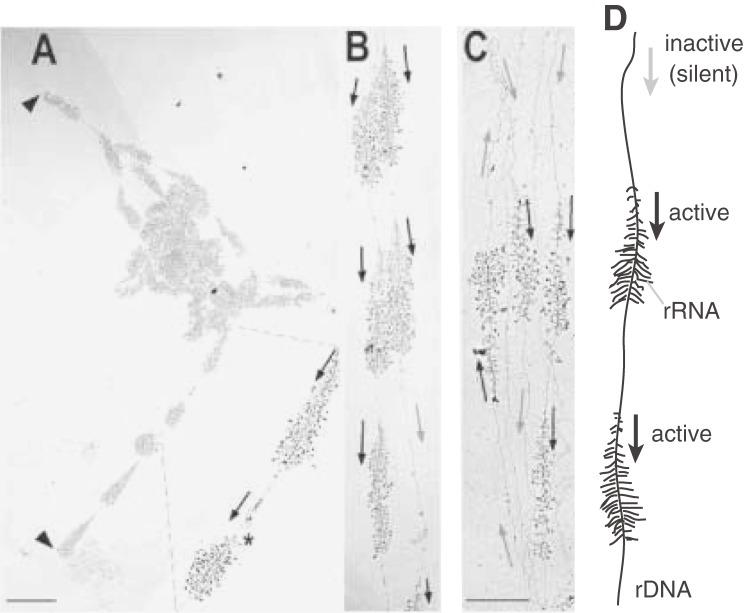
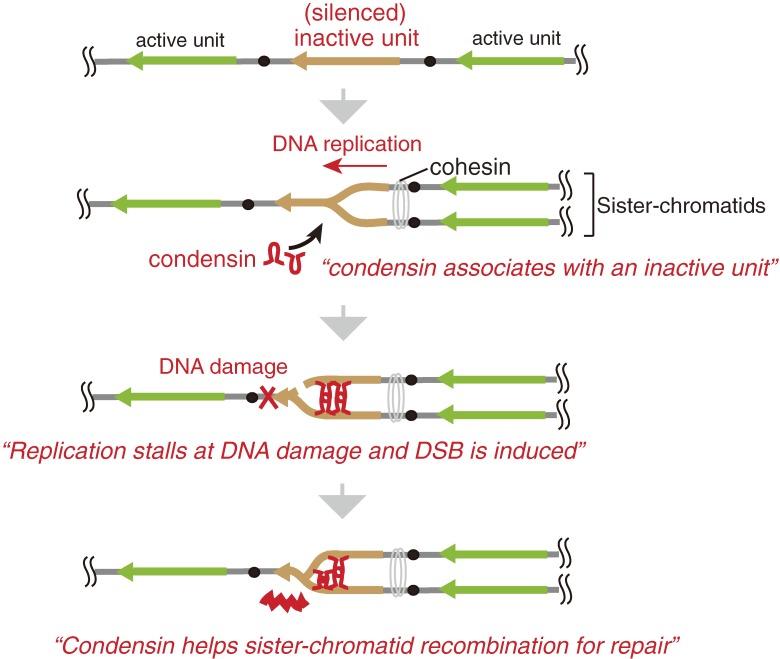
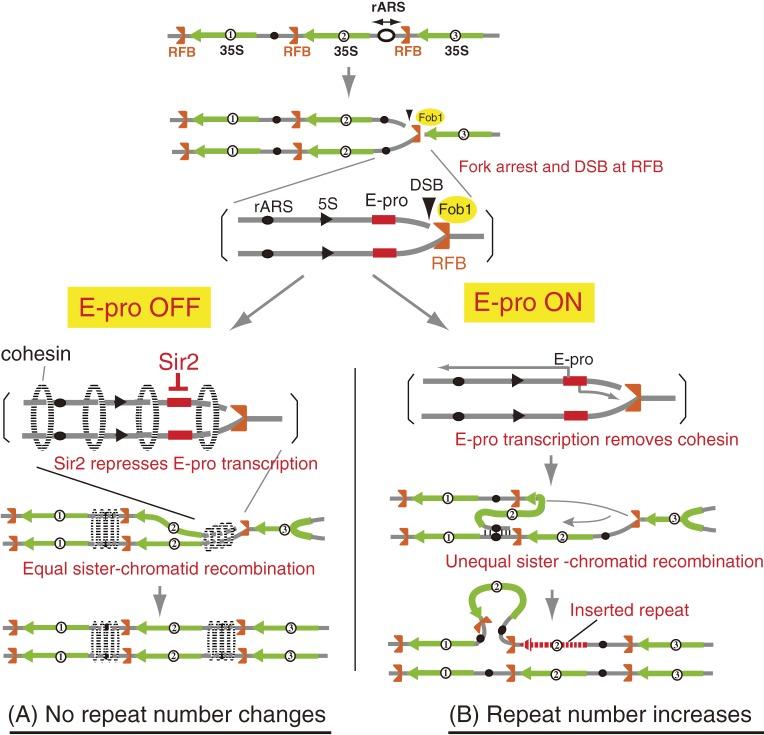
The ribosomal RNA gene (rDNA) repeats form a historically well-researched region in the chromosome. Their highly repetitive structure can be identified easily which has enabled studies on DNA replication, recombination, and transcription. The region is one of the most unstable regions in the genome because of deleterious recombination among the repeats. The ribosomal RNA gene repeats use a unique gene amplification system to restore the copy number after this has been reduced due to recombination. It has been shown that unstable features in the genome can accelerate cellular senescence that restricts the lifespan of a cell. Here, I will introduce a study by our group that shows how the stability of rDNA is maintained and affects lifespan. I propose that the ribosomal RNA gene repeats constitute a center from which the stability of the whole genome is regulated and the lifespan of the cell is controlled.
核糖体 RNA 基因 (rDNA) 重复序列形成了染色体中一个历史悠久的研究良好的区域。它们高度重复的结构很容易识别,这使得 DNA 复制、重组和转录的研究成为可能。由于重复序列之间的有害重组,该区域是基因组中最不稳定的区域之一。核糖体 RNA 基因重复序列使用独特的基因扩增系统来恢复因重组而减少的拷贝数。已经表明,基因组中的不稳定特征可以加速细胞衰老,从而限制细胞的寿命。在这里,我将介绍我们小组的一项研究,该研究表明 rDNA 的稳定性如何维持以及如何影响寿命。我提出,核糖体 RNA 基因重复序列构成了一个中心,从这个中心可以调节整个基因组的稳定性和细胞的寿命。



 Zotero 插件