
使用带有纳米纤维介质的外科口罩进行呼吸道源头控制。
Respiratory source control using surgical masks with nanofiber media.
作者信息
Skaria Shaji D, Smaldone Gerald C
机构信息
Division of Pulmonary, Critical Care & Sleep Medicine, Stony Brook University Medical Center, 100 Nicolls Road, HSC T-17-040, Stony Brook, NY 11794-8172, USA.
Division of Pulmonary, Critical Care & Sleep Medicine, Stony Brook University Medical Center, 100 Nicolls Road, HSC T-17-040, Stony Brook, NY 11794-8172, USA
出版信息
Ann Occup Hyg. 2014 Jul;58(6):771-81. doi: 10.1093/annhyg/meu023. Epub 2014 Apr 15.
BACKGROUND
Potentially infected individuals ('source') are sometimes encouraged to use face masks to reduce exposure of their infectious aerosols to others ('receiver'). To improve compliance with Respiratory Source Control via face mask and therefore reduce receiver exposure, a mask should be comfortable and effective. We tested a novel face mask designed to improve breathability and filtration using nanofiber filtration.
METHODS
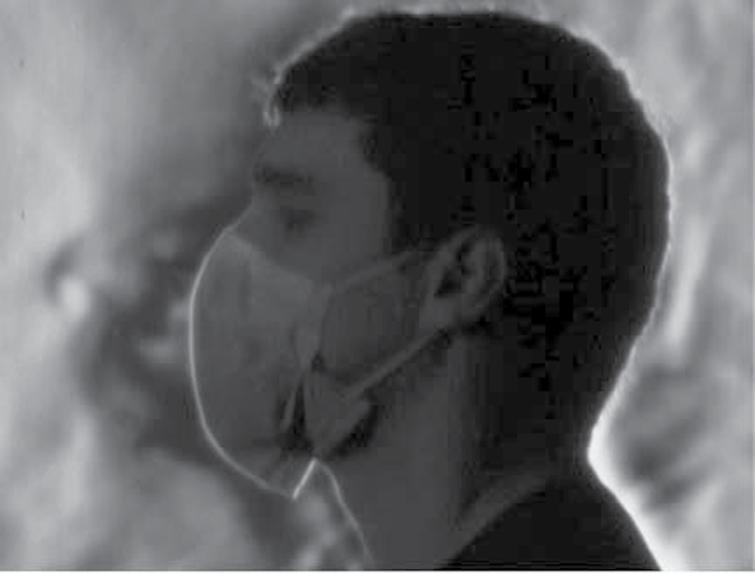
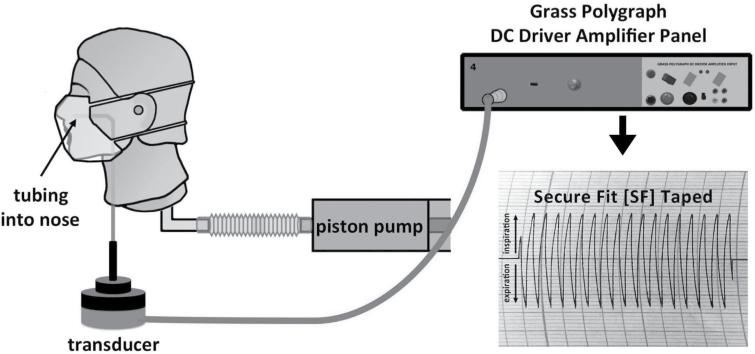
Using radiolabeled test aerosols and a calibrated exposure chamber simulating source to receiver interaction, facepiece function was measured with a life-like ventilated manikin model. Measurements included mask airflow resistance (pressure difference during breathing), filtration, (mask capture of exhaled radiolabeled test aerosols), and exposure (the transfer of 'infectious' aerosols from the 'source' to a 'receiver'). Polydisperse aerosols were measured at the source with a mass median aerodynamic diameter of 0.95 µm. Approximately 90% of the particles were <2.0 µm. Tested facepieces included nanofiber prototype surgical masks, conventional surgical masks, and for comparison, an N95-class filtering facepiece respirator (commonly known as an 'N95 respirator'). Airflow through and around conventional surgical face mask and nanofiber prototype face mask was visualized using Schlieren optical imaging.
RESULTS
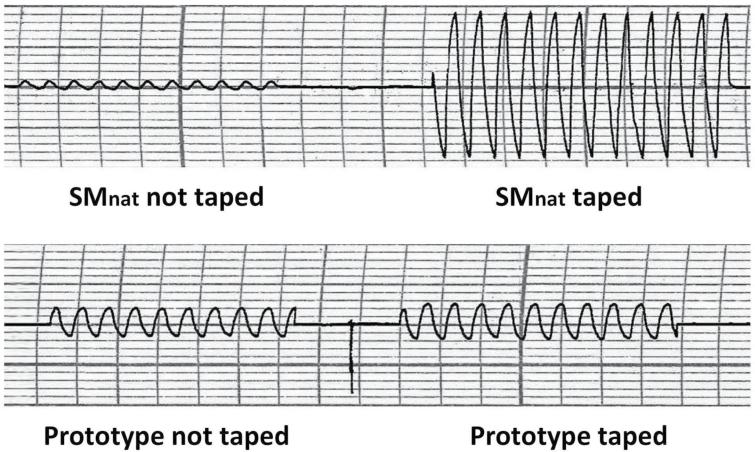
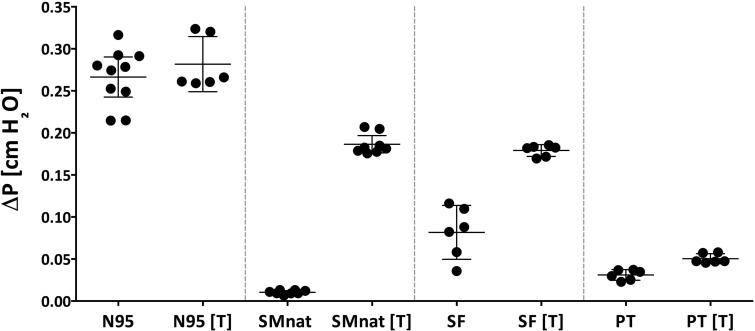
Airflow resistance [ΔP, cmH2O] across sealed surgical masks (means: 0.1865 and 0.1791 cmH2O) approached that of the N95 (mean: 0.2664 cmH2O). The airflow resistance across the nanofiber face mask whether sealed or not sealed (0.0504 and 0.0311 cmH2O) was significantly reduced in comparison. In addition, 'infected' source airflow filtration and receiver exposure levels for nanofiber face masks placed on the source were comparable to that achieved with N95 placed on the source; 98.98% versus 82.68% and 0.0194 versus 0.0557, respectively. Compared to deflection within and around the conventional face masks, Schlieren optical imaging demonstrated enhanced airflow through the nanofiber mask.
CONCLUSIONS
Substituting nanofiber for conventional filter media significantly reduced face mask airflow resistance directing more airflow through the face mask resulting in enhanced filtration. Respiratory source control efficacy similar to that achieved through the use of an N95 respirator worn by the source and decreased airflow resistance using nanofiber masks may improve compliance and reduce receiver exposure.
背景
有时会鼓励潜在感染个体(“传染源”)佩戴口罩,以减少其传染性气溶胶传播给他人(“接收者”)。为了提高通过口罩进行呼吸道源头控制的依从性,从而减少接收者的暴露风险,口罩应佩戴舒适且效果良好。我们测试了一种新型口罩,该口罩采用纳米纤维过滤技术,旨在提高透气性和过滤效果。
方法
使用放射性标记的测试气溶胶和校准的暴露舱模拟传染源与接收者之间的相互作用,通过逼真的通气人体模型测量面罩功能。测量内容包括口罩气流阻力(呼吸过程中的压差)、过滤效果(口罩对呼出的放射性标记测试气溶胶的捕获)和暴露情况(“传染性”气溶胶从“传染源”转移到“接收者”)。在源头测量多分散气溶胶,质量中位空气动力学直径为0.95µm。约90%的颗粒直径小于2.0µm。测试的面罩包括纳米纤维原型外科口罩、传统外科口罩,作为对照,还有一款N95级过滤式面罩呼吸器(通常称为“N95呼吸器”)。使用纹影光学成像技术观察通过传统外科口罩和纳米纤维原型口罩及其周围的气流情况。
结果
密封外科口罩的气流阻力[ΔP,cmH₂O](平均值:0.1865和0.1791cmH₂O)接近N95呼吸器(平均值:0.2664cmH₂O)。相比之下,纳米纤维口罩无论是否密封,其气流阻力(0.0504和0.0311cmH₂O)均显著降低。此外,放置在传染源处的纳米纤维口罩对“受感染”的传染源气流的过滤效果和接收者的暴露水平与放置N95呼吸器时相当;分别为98.98%对82.68%和0.0194对0.0557。与传统口罩内部和周围的气流偏转相比,纹影光学成像显示通过纳米纤维口罩的气流增强。
结论
用纳米纤维替代传统过滤介质可显著降低口罩气流阻力,使更多气流通过口罩,从而增强过滤效果。呼吸道源头控制效果与传染源佩戴N95呼吸器相当,且纳米纤维口罩气流阻力降低,这可能会提高依从性并减少接收者的暴露风险。


 Zotero 插件