
正常衰老和 Werner 综合征的随机模拟。
Stochastic simulations of normal aging and Werner's syndrome.
机构信息
Centre for Mathematical Medicine and Biology, School of Mathematical Sciences, University of Nottingham, Nottingham , NG7 2RD, UK,
出版信息
Bull Math Biol. 2014 Jun;76(6):1241-69. doi: 10.1007/s11538-014-9952-8. Epub 2014 Apr 26.
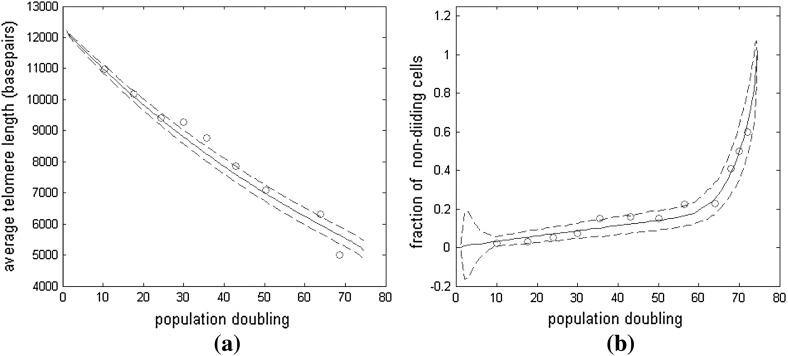
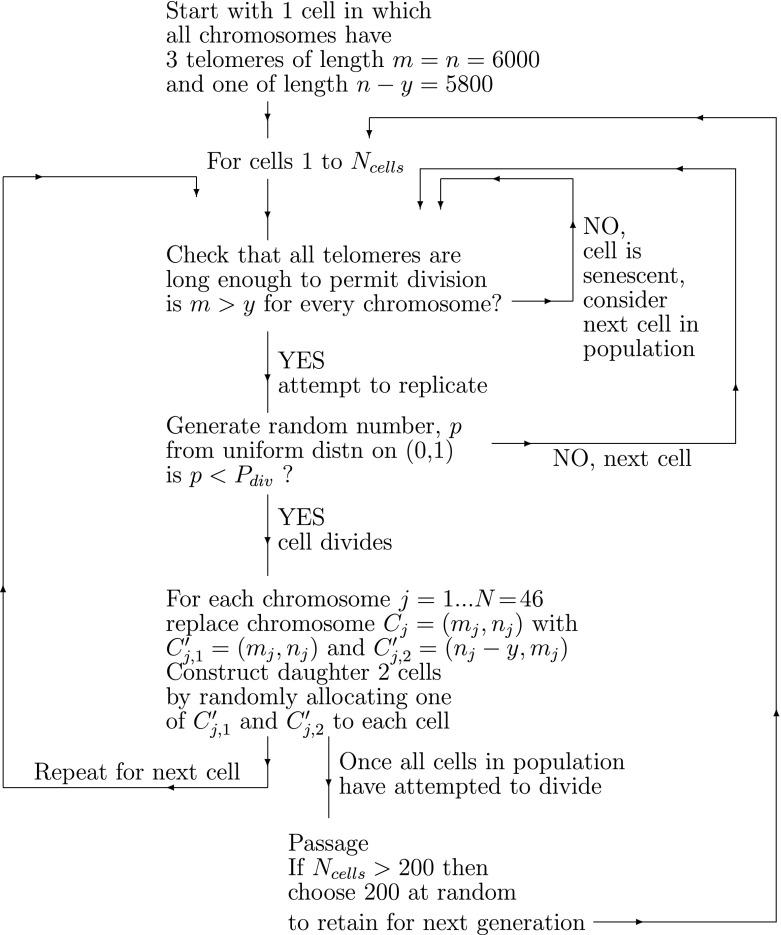
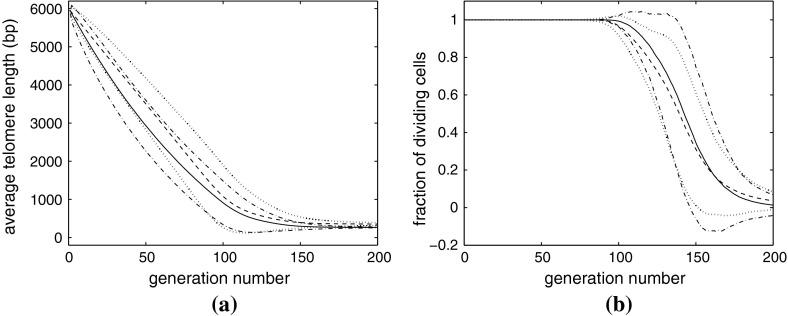
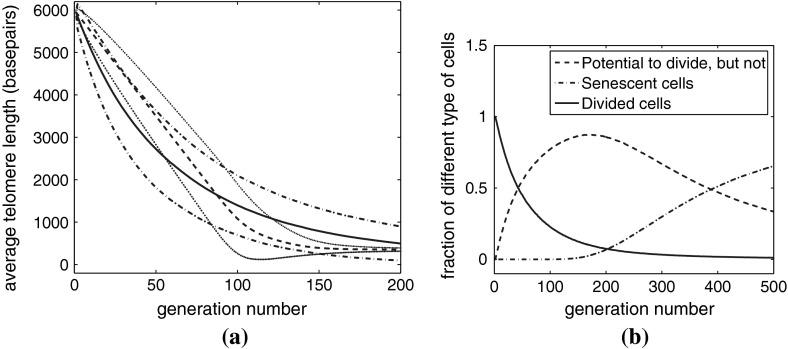
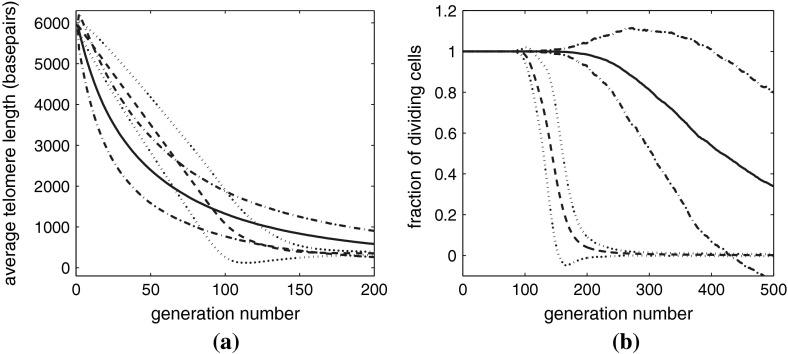
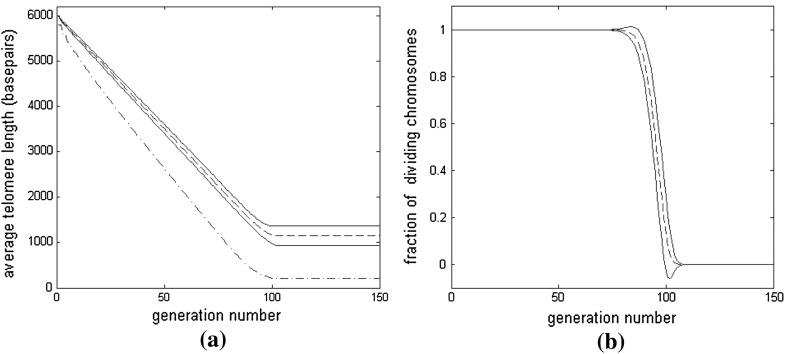
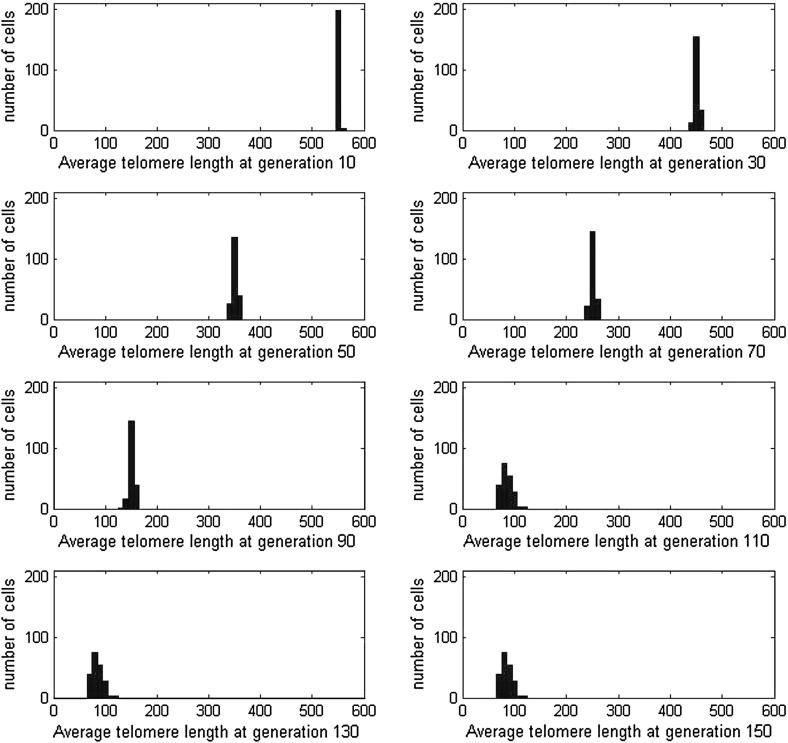
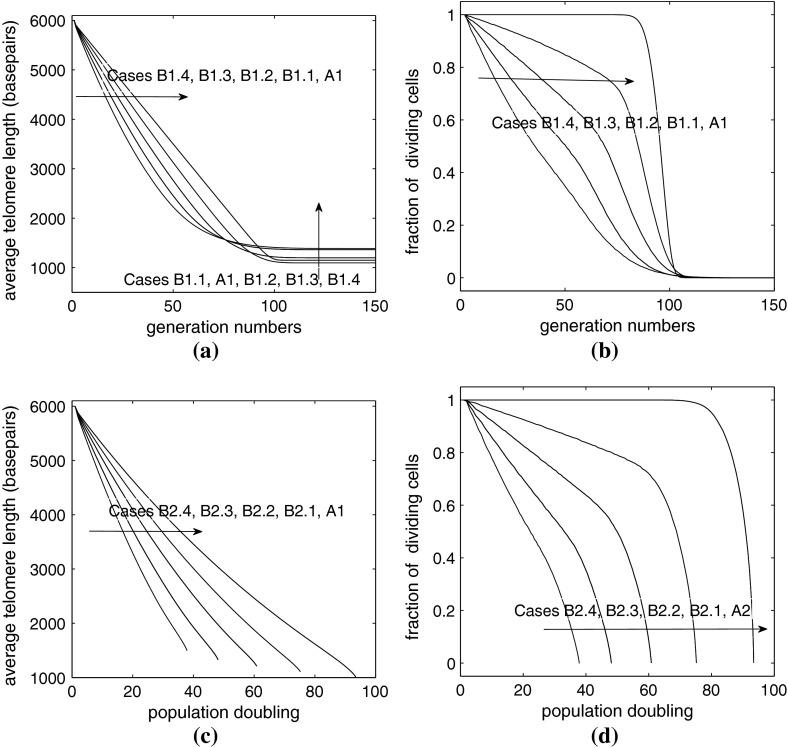
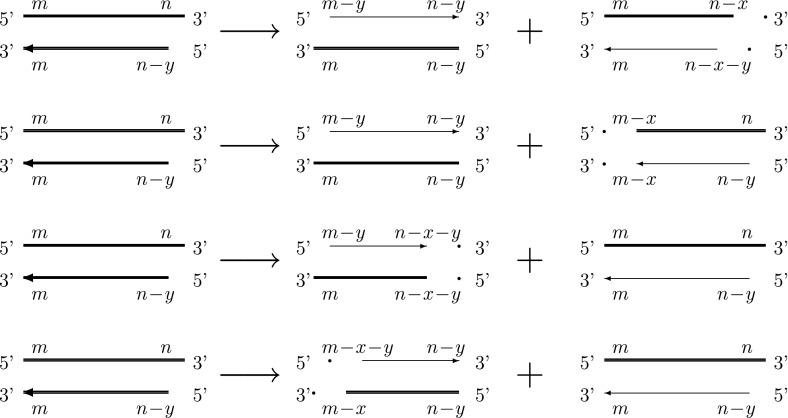
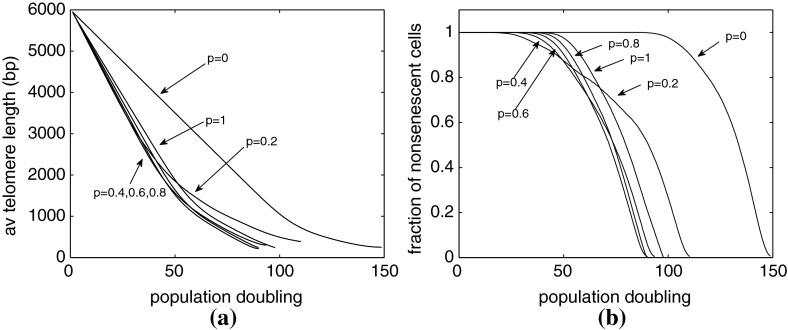
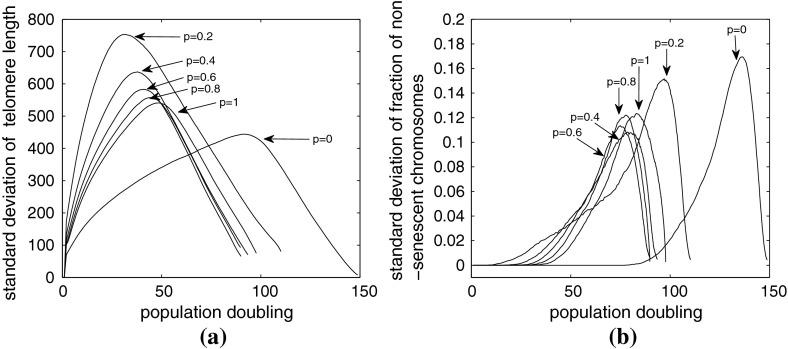
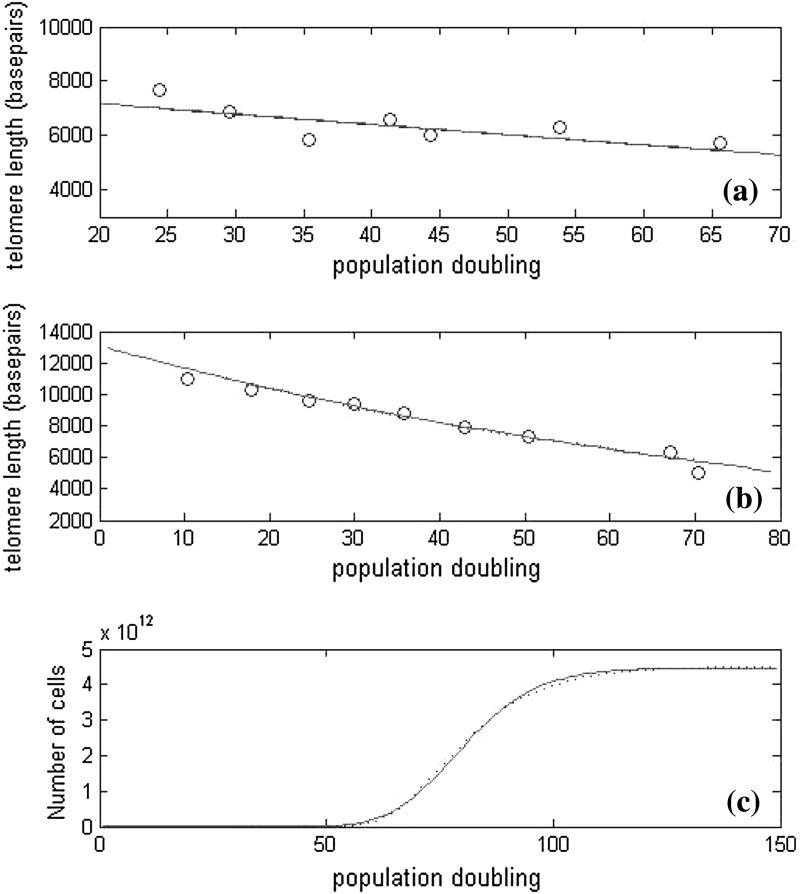
Human cells typically consist of 23 pairs of chromosomes. Telomeres are repetitive sequences of DNA located at the ends of chromosomes. During cell replication, a number of basepairs are lost from the end of the chromosome and this shortening restricts the number of divisions that a cell can complete before it becomes senescent, or non-replicative. In this paper, we use Monte Carlo simulations to form a stochastic model of telomere shortening to investigate how telomere shortening affects normal aging. Using this model, we study various hypotheses for the way in which shortening occurs by comparing their impact on aging at the chromosome and cell levels. We consider different types of length-dependent loss and replication probabilities to describe these processes. After analyzing a simple model for a population of independent chromosomes, we simulate a population of cells in which each cell has 46 chromosomes and the shortest telomere governs the replicative potential of the cell. We generalize these simulations to Werner's syndrome, a condition in which large sections of DNA are removed during cell division and, amongst other conditions, results in rapid aging. Since the mechanisms governing the loss of additional basepairs are not known, we use our model to simulate a variety of possible forms for the rate at which additional telomeres are lost per replication and several expressions for how the probability of cell division depends on telomere length. As well as the evolution of the mean telomere length, we consider the standard deviation and the shape of the distribution. We compare our results with a variety of data from the literature, covering both experimental data and previous models. We find good agreement for the evolution of telomere length when plotted against population doubling.
人类细胞通常由 23 对染色体组成。端粒是位于染色体末端的 DNA 重复序列。在细胞复制过程中,染色体末端会丢失一些碱基对,这种缩短限制了细胞在衰老或非复制状态之前可以完成的分裂次数。在本文中,我们使用蒙特卡罗模拟方法构建了一个端粒缩短的随机模型,以研究端粒缩短如何影响正常衰老。使用该模型,我们通过比较它们对染色体和细胞水平衰老的影响,研究了缩短发生的各种假设。我们考虑了不同类型的长度依赖性丢失和复制概率来描述这些过程。在分析了一个简单的独立染色体群体模型之后,我们模拟了一个包含 46 条染色体的细胞群体,其中最短的端粒决定了细胞的复制潜力。我们将这些模拟推广到 Werner 综合征,这是一种在细胞分裂过程中大量 DNA 被去除的情况,除其他情况外,还会导致快速衰老。由于控制额外碱基对丢失的机制尚不清楚,我们使用模型模拟了复制过程中端粒丢失率的各种可能形式,以及细胞分裂概率与端粒长度的关系的几种表达方式。除了平均端粒长度的演化,我们还考虑了标准偏差和分布的形状。我们将我们的结果与文献中的各种数据进行了比较,包括实验数据和以前的模型。当按群体倍增绘制时,我们发现端粒长度的演化与实验数据和以前的模型非常吻合。


 Zotero 插件