
金黄色葡萄球菌对皮肤的定植与感染:免疫系统逃避及对阳离子抗菌肽的反应
Colonization and infection of the skin by S. aureus: immune system evasion and the response to cationic antimicrobial peptides.
作者信息
Ryu Sunhyo, Song Peter I, Seo Chang Ho, Cheong Hyeonsook, Park Yoonkyung
机构信息
Department of Biotechnology, Chosun University, Gwangju 501-759, Korea.
Department of Dermatology, University of Arkansas for Medical Sciences, Little Rock, AR 72205, USA.
出版信息
Int J Mol Sci. 2014 May 16;15(5):8753-72. doi: 10.3390/ijms15058753.
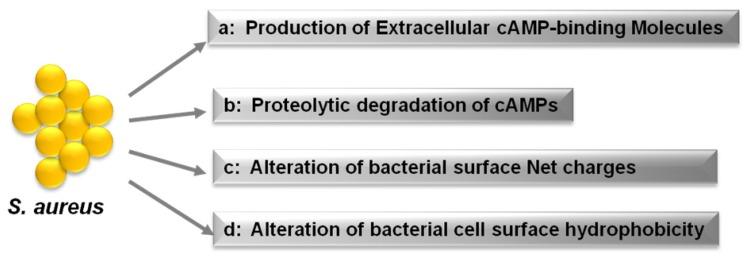
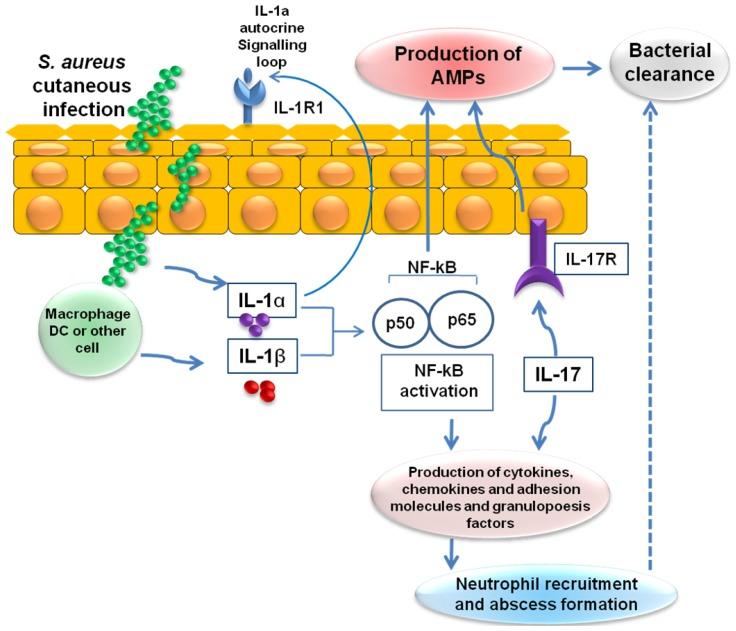
Staphylococcus aureus (S. aureus) is a widespread cutaneous pathogen responsible for the great majority of bacterial skin infections in humans. The incidence of skin infections by S. aureus reflects in part the competition between host cutaneous immune defenses and S. aureus virulence factors. As part of the innate immune system in the skin, cationic antimicrobial peptides (CAMPs) such as the β-defensins and cathelicidin contribute to host cutaneous defense, which prevents harmful microorganisms, like S. aureus, from crossing epithelial barriers. Conversely, S. aureus utilizes evasive mechanisms against host defenses to promote its colonization and infection of the skin. In this review, we focus on host-pathogen interactions during colonization and infection of the skin by S. aureus and methicillin-resistant Staphylococcus aureus (MRSA). We will discuss the peptides (defensins, cathelicidins, RNase7, dermcidin) and other mediators (toll-like receptor, IL-1 and IL-17) that comprise the host defense against S. aureus skin infection, as well as the various mechanisms by which S. aureus evades host defenses. It is anticipated that greater understanding of these mechanisms will enable development of more sustainable antimicrobial compounds and new therapeutic approaches to the treatment of S. aureus skin infection and colonization.
金黄色葡萄球菌是一种广泛存在的皮肤病原体,导致人类绝大多数细菌性皮肤感染。金黄色葡萄球菌引起的皮肤感染发生率部分反映了宿主皮肤免疫防御与金黄色葡萄球菌毒力因子之间的竞争。作为皮肤固有免疫系统的一部分,阳离子抗菌肽(CAMP),如β-防御素和cathelicidin,有助于宿主皮肤防御,防止有害微生物,如金黄色葡萄球菌,穿过上皮屏障。相反,金黄色葡萄球菌利用逃避宿主防御的机制来促进其在皮肤上的定植和感染。在这篇综述中,我们重点关注金黄色葡萄球菌和耐甲氧西林金黄色葡萄球菌(MRSA)在皮肤定植和感染期间的宿主-病原体相互作用。我们将讨论构成宿主抵御金黄色葡萄球菌皮肤感染的肽(防御素、cathelicidin、RNase7、皮肤杀菌素)和其他介质(Toll样受体、IL-1和IL-17),以及金黄色葡萄球菌逃避宿主防御的各种机制。预计对这些机制的更深入了解将有助于开发更可持续的抗菌化合物和治疗金黄色葡萄球菌皮肤感染和定植的新治疗方法。

 Zotero 插件