
氯胺酮改善儿童扁桃体切除术后疼痛的疗效:荟萃分析。
Efficacy of ketamine in improving pain after tonsillectomy in children: meta-analysis.
作者信息
Cho Hye Kyung, Kim Kyu Won, Jeong Yeon Min, Lee Ho Seok, Lee Yeon Ji, Hwang Se Hwan
机构信息
Department of Pediatrics, Graduate School of Medicine, Gachon University, Incheon, Korea.
Department of Otolaryngology-Head and Neck Surgery, College of Medicine, The Catholic University of Korea, Seoul, Republic of Korea.
出版信息
PLoS One. 2014 Jun 30;9(6):e101259. doi: 10.1371/journal.pone.0101259. eCollection 2014.
BACKGROUND AND OBJECTIVES
The goal of this meta-analysis study was to perform a systematic review of the literature on the effects of ketamine on postoperative pain following tonsillectomy and adverse effects in children.
SUBJECTS AND METHODS
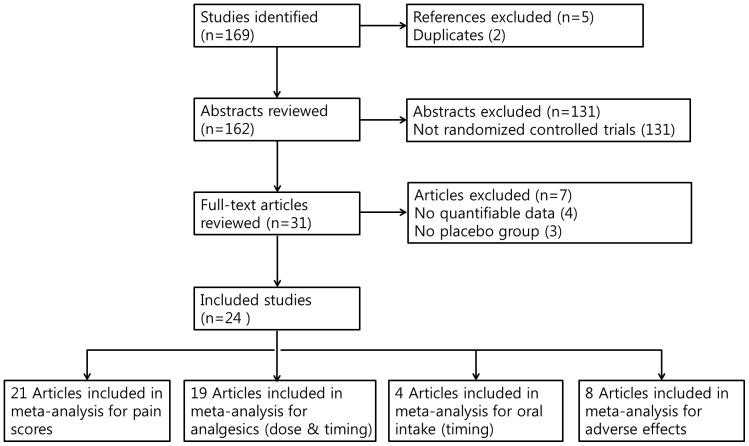
Two authors independently searched three databases (MEDLINE, SCOPUS, Cochrane) from their inception of article collection to February 2014. Studies that compared preoperative ketamine administration (ketamine groups) with no treatment (control group) or opioid administration (opioid group) where the outcomes of interest were postoperative pain intensity, rescue analgesic consumption, or adverse effects (sedation, nausea and vomiting, bad dream, worsening sleep pattern, and hallucination) 0-24 hours after leaving the operation room were included in the analysis.
RESULTS
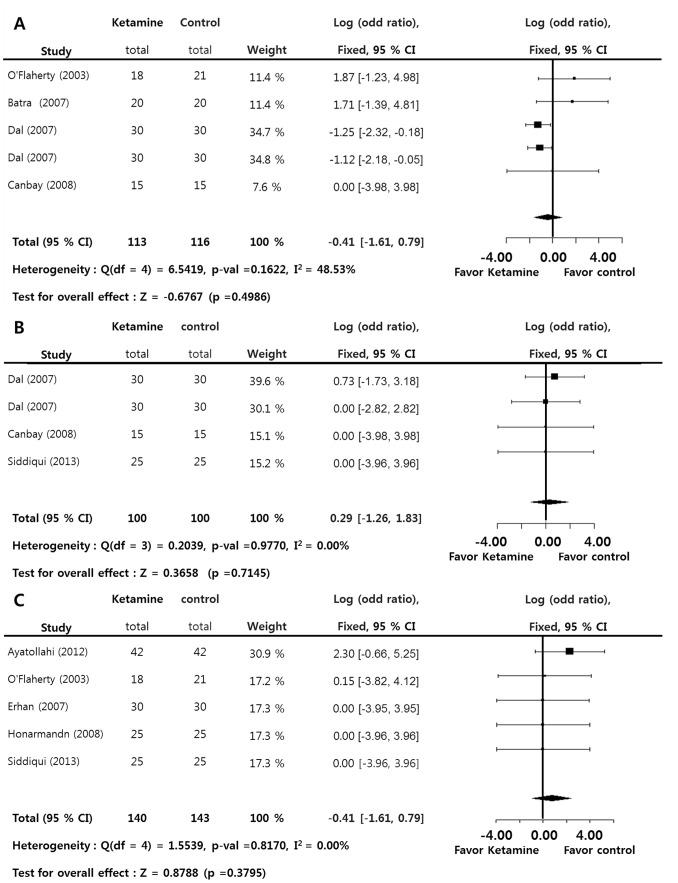
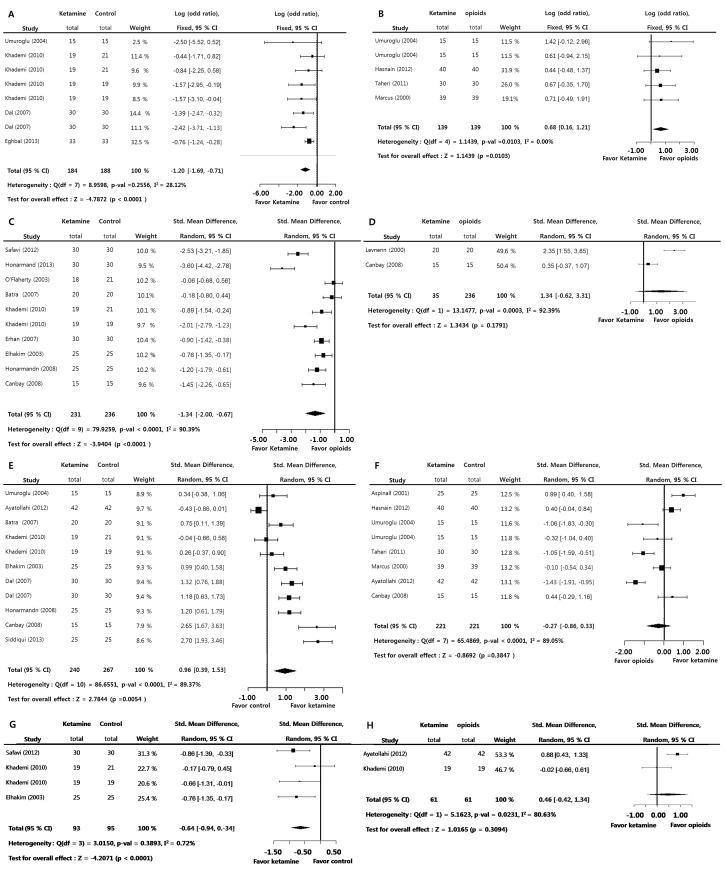
The pain score reported by the physician during first 4 hours and need for analgesics during 24 hours postoperatively was significantly decreased in the ketamine group versus control group and was similar with the opioid group. In addition, there was no significant difference between ketamine and control groups for adverse effects during 24 hours postoperatively. In the subgroup analyses (systemic and local administration) regarding pain related measurements, peritonsillar infiltration of ketamine was more effective in reducing the postoperative pain severity and need for analgesics.
CONCLUSION
Preoperative administration of ketamine systemically or locally could provide pain relief without side-effects in children undergoing tonsillectomy. However, considering the insufficient evaluation of efficacy of ketamine according to the administration methods and high heterogeneity in some parameters, further clinical trials with robust research methodology should be conducted to confirm the results of this study.
背景与目的
本荟萃分析研究的目的是对有关氯胺酮对扁桃体切除术后儿童疼痛及不良反应影响的文献进行系统综述。
对象与方法
两位作者独立检索了三个数据库(MEDLINE、SCOPUS、Cochrane),检索时间从各数据库建库至2014年2月。纳入分析的研究为比较术前给予氯胺酮(氯胺酮组)与未治疗(对照组)或给予阿片类药物(阿片类药物组),观察指标为离开手术室后0至24小时的术后疼痛强度、补救性镇痛药物用量或不良反应(镇静、恶心呕吐、噩梦、睡眠模式恶化及幻觉)。
结果
与对照组相比,氯胺酮组术后前4小时医生报告的疼痛评分及术后24小时的镇痛药物需求显著降低,且与阿片类药物组相似。此外,氯胺酮组与对照组术后24小时的不良反应无显著差异。在关于疼痛相关测量的亚组分析(全身给药和局部给药)中,氯胺酮扁桃体周浸润在减轻术后疼痛严重程度和镇痛药物需求方面更有效。
结论
术前全身或局部给予氯胺酮可为接受扁桃体切除术的儿童提供镇痛且无副作用。然而,鉴于根据给药方法对氯胺酮疗效的评估不足以及某些参数的高异质性,应采用严格的研究方法进行进一步的临床试验以证实本研究结果。




 Zotero 插件